Afterlife: MTG Mechanic Explained
When an Orzhov creature dies, the Syndicate doesn't let that soul go quietly. Afterlife is the mechanic that captures that idea perfectly: creatures that refuse to leave the battlefield empty-handed, spawning Spirit tokens as a parting gift when they're finally put down.
What is Afterlife in MTG?
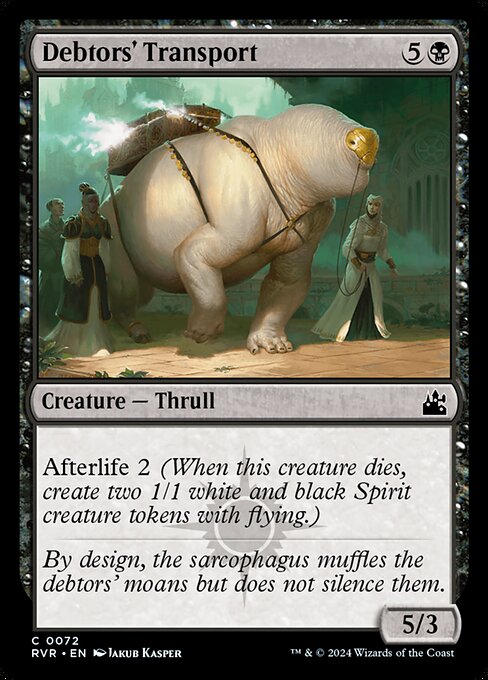
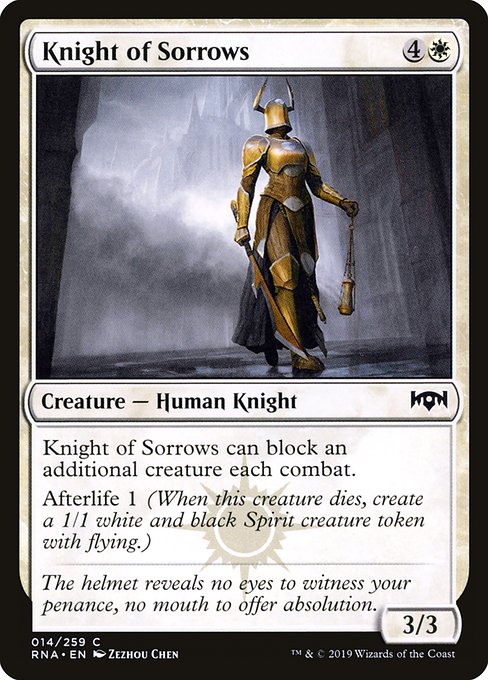
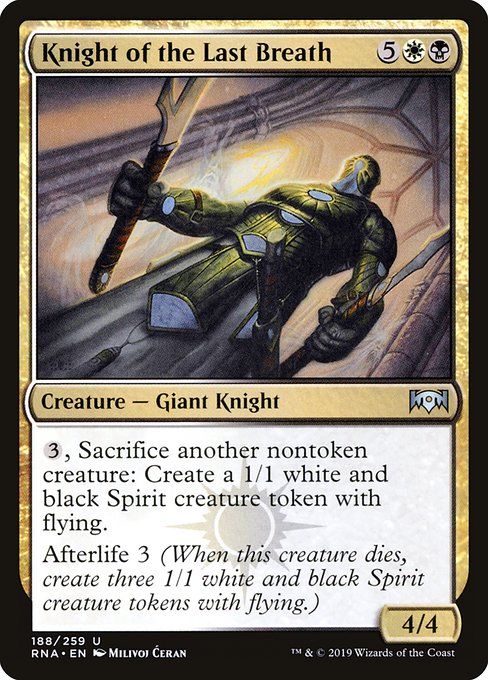
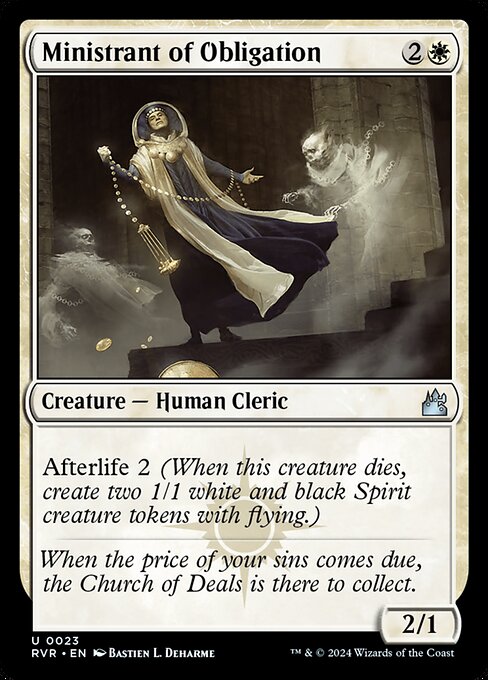
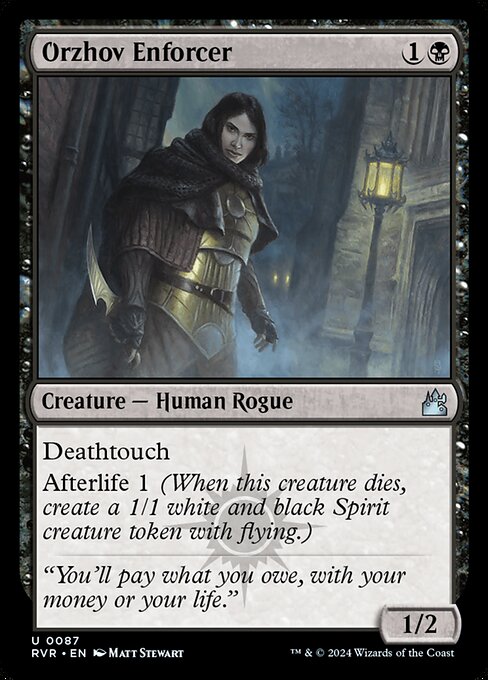
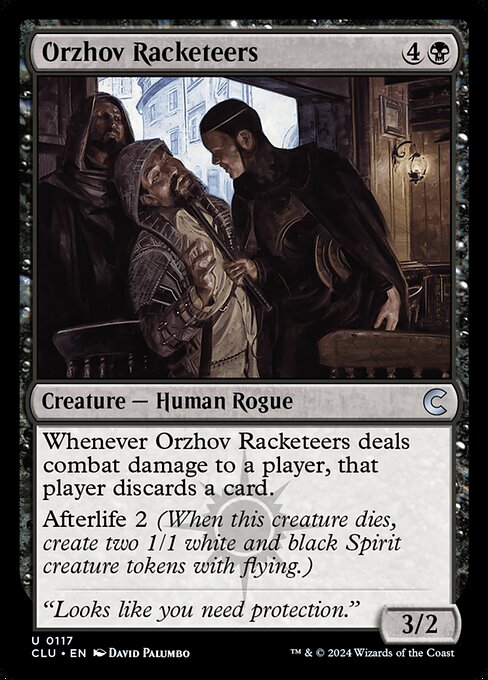
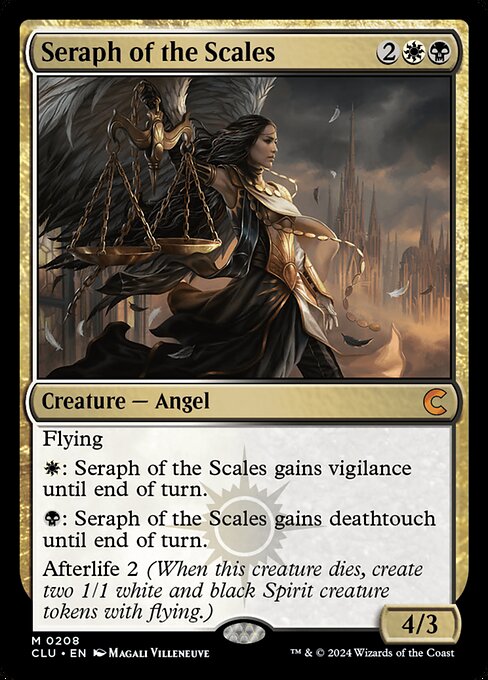
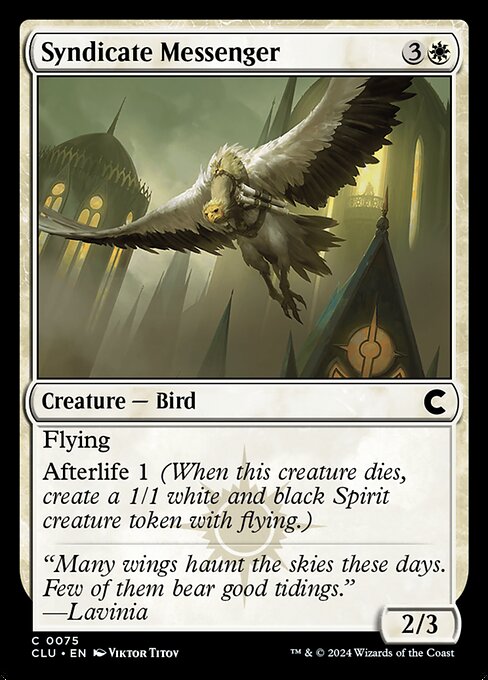
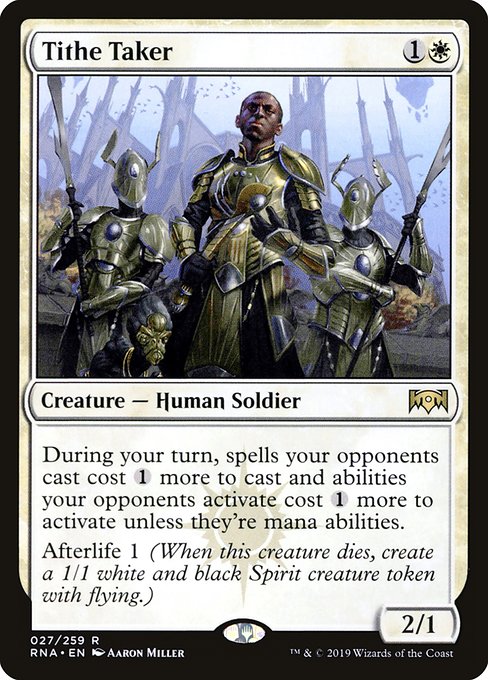
Afterlife is a triggered keyword ability found on creatures, introduced in Ravnica Allegiance (RNA) for the Orzhov Syndicate. When a creature with Afterlife N dies, it creates N 1/1 white and black Spirit creature tokens with flying.
The number - the N - matters. A creature with Afterlife 1 leaves behind a single Spirit. A creature with Afterlife 2 leaves behind two. The higher the number, the more bodies the Orzhov squeeze out of a single death.
Think of it like a built-in insurance policy: even when your opponent successfully removes your creature, you're still getting something back on the board.
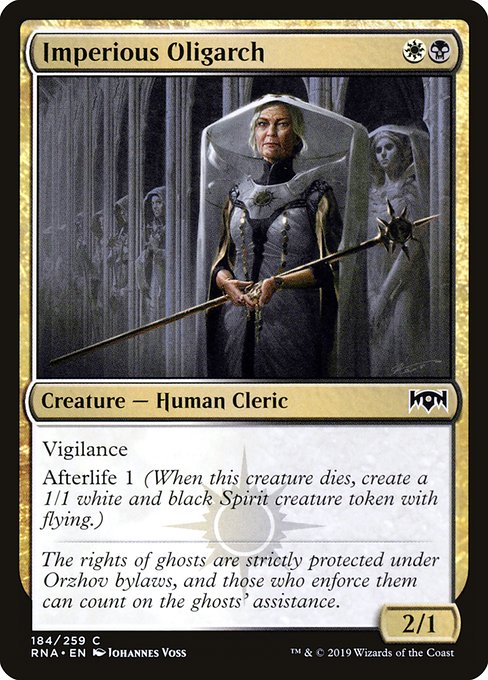
Example: Imperious Oligarch is a 2/1 Human Cleric with vigilance and Afterlife 1. When it dies, you create a 1/1 white and black Spirit token with flying. That's a 2/1 that blocks on the ground and leaves behind an evasive threat in the air.
How Afterlife rules work
Here's the official definition from the Comprehensive Rules (November 14, 2025 - Edge of Eternities):
"Afterlife N means: When this permanent is put into a graveyard from the battlefield, create N 1/1 white and black Spirit creature tokens with flying."
- CR 702.135a
A few things worth unpacking there:
The trigger condition is death, not removal
Afterlife only triggers when the creature dies - meaning it goes to the graveyard from the battlefield. If a creature with Afterlife is exiled directly (say, by Path to Exile or a similar effect), the trigger never happens. No graveyard visit, no Spirits.
This is one of the most common misunderstandings with the mechanic, and it matters a lot in matchups where opponents are packing exile-based removal.
Multiple Afterlife instances each trigger separately
If a creature somehow has Afterlife 1 and Afterlife 2 - say, through a temporary grant effect stacking with a native ability - both triggers go on the stack and resolve individually.
CR 702.135b: "If a permanent has multiple instances of afterlife, each triggers separately."
In practice this is rare, but it's worth knowing if you're combining Afterlife with effects that grant the ability.
You can't block with the tokens mid-combat
This is a key ruling: blockers are declared all at once. You can't block with a creature that has Afterlife, wait for it to die in combat, and then assign the resulting Spirit tokens to block other attackers in the same attack. The blocking window has already closed by the time the tokens exist.
Rules note: Afterlife is a triggered ability, which means it uses the stack. In response to the trigger, your opponent can do things - but they can't prevent the token creation once the trigger has resolved.
Strategy: playing with and against Afterlife
Why Afterlife rewards patience
Afterlife creatures are naturally resistant to one-for-one removal. Your opponent spends a removal spell, and you still have a flying Spirit on the battlefield. That makes these creatures feel like two cards in one slot - the creature itself, and the follow-up threat.
This is especially strong in go-wide strategies that benefit from lots of small bodies. If you can flood the board with creatures, sacrifice outlets, and aristocrats-style payoffs, Afterlife fits naturally.
Afterlife slots well into sacrifice synergies
Because Afterlife rewards your creature dying, it pairs beautifully with sacrifice effects. Cards that let you sacrifice creatures for value become significantly better when every sacrifice also creates a token. You're turning one creature into two events of value: the sacrifice payoff and the Spirit token.
This is the core reason Afterlife became the signature mechanic of the Orzhov Syndicate - black's love of sacrifice and white's token generation are both present in a single keyword.
Playing against Afterlife: reach for exile
If you're on the other side of the table, the lesson is straightforward: exile effects are better than destroy effects against Afterlife creatures. Removal that sends the creature to the graveyard still triggers Afterlife; exile skips it entirely.
In formats where Afterlife creatures are common, sideboard cards that exile become notably more valuable.
Enchantments and equipment stay relevant
Because the creature dies and leaves behind a token, any auras or equipment attached to the original creature don't automatically transfer. The Spirit token arrives fresh. Keep that in mind when suiting up Afterlife creatures with gear.
Notable Afterlife cards
Afterlife Insurance
Afterlife Insurance ({1}{W/B}) from Ravnica: Clue Edition is a genuinely interesting design: an Instant that grants Afterlife 1 to all your creatures until end of turn and draws you a card. This is the first card in Magic's history to grant the Afterlife keyword to other permanents - every other card before it had Afterlife as a native printed ability. That makes it historically notable, and practically useful in any deck that wants to protect a board from sweepers.
Imperious Oligarch
The clean example creature for the mechanic. A 2/1 with vigilance for two mana is already reasonable, and Afterlife 1 means it taxes your opponent's removal. It's a solid representation of what Afterlife looks like at its most efficient - low cost, immediate board presence, and a flying token as a consolation prize.
History of Afterlife
Afterlife was introduced in Ravnica Allegiance (RNA, 2019) as the signature mechanic of the Orzhov Syndicate - the black-white guild of wealthy aristocrats, corrupt clergy, and literal ghosts holding contracts on the living. Mechanically and thematically, it's one of the tidiest guild mechanics in Ravnica's history: the Orzhov don't let go of anything, not even souls.
The mechanic is spiritually similar to Doomed Traveler from Innistrad (ISD, 2011) - a creature that creates a flying Spirit token when it dies - which predates the keyword by nearly a decade.
Afterlife made a return in Ravnica: Clue Edition (2024), where Afterlife Insurance became the first card to grant the keyword to other creatures, adding a new dimension to how the mechanic can be used.
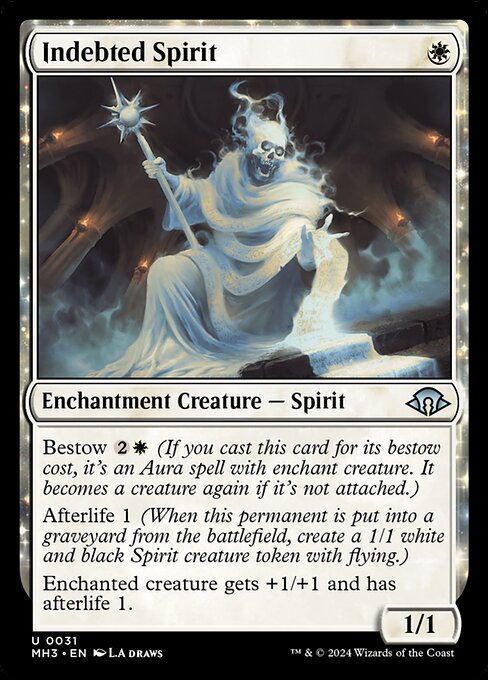
The mechanic also appeared in Modern Horizons 3 (MH3, 2024), bringing it into conversation with Modern's card pool.
Lore aside: There's also an older card simply named Afterlife from Mirage (1996) - a white Instant that destroys a creature and replaces it with a 1/1 Spirit token for the opponent. That card predates the mechanic keyword by over two decades and isn't mechanically related, but the naming connection is a fun piece of Magic history.