Enlist: MTG Mechanic Explained
Dominaria has always been a plane that rewards teamwork, and the Enlist mechanic captures that spirit in a satisfying, tactical way. Introduced in Dominaria United (2022), Enlist lets your creatures call on allies before charging into battle - turning a modest attacker into a genuine threat by borrowing power from a creature staying back at camp.
What is Enlist?
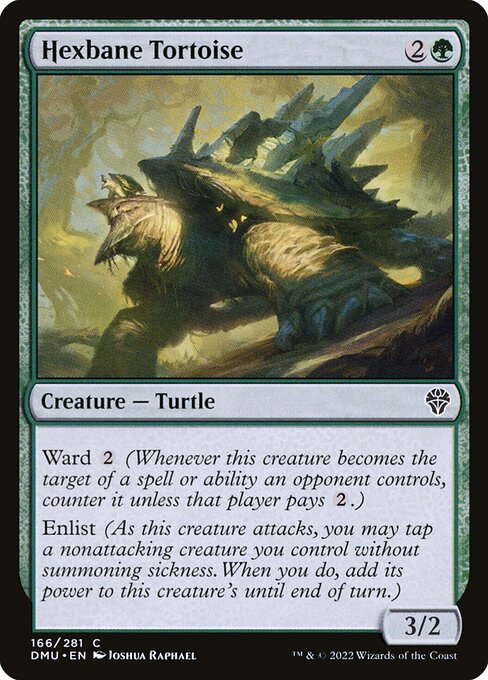
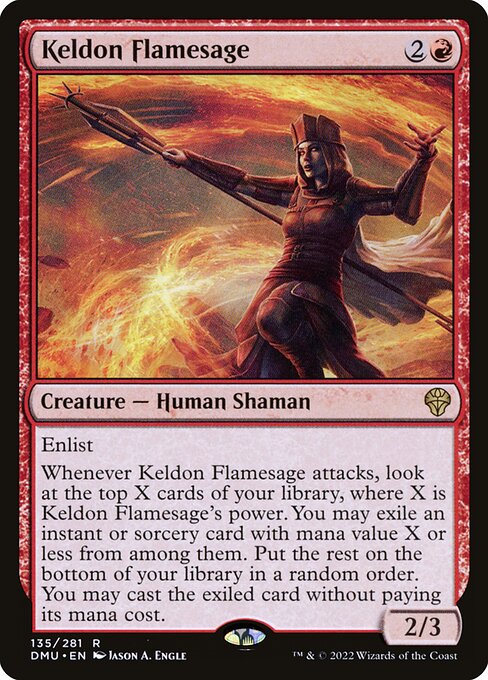
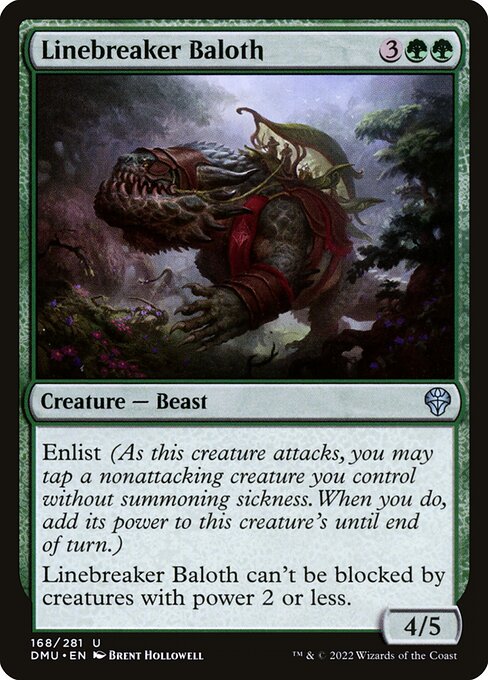
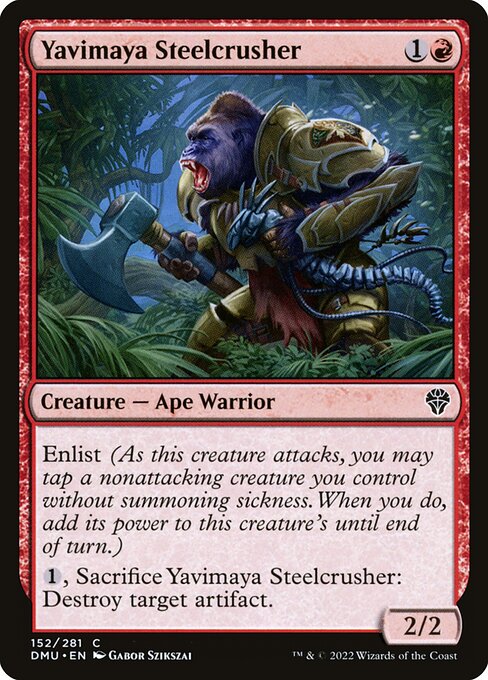
Enlist is a keyword ability on attacking creatures. When a creature with Enlist attacks, you can tap a different, non-attacking creature you control to support it. That supporting creature's power gets added to the attacking creature as a +X/+0 bonus until end of turn.
Think of it like a teammate boosting someone over a wall before the fight starts - the supporter doesn't go into the fray, but their effort absolutely shows up in the result.
The mechanic is notably described in Wizards' own source material as "a modern take on Banding" - a famously complex ability from Magic's early years. Enlist keeps the cooperative combat flavour while being much simpler to understand and execute.
How Enlist works - the rules
Here's the full picture, broken down:
702.154a defines Enlist as both a static ability and a triggered ability:
"As this creature attacks, you may tap up to one untapped creature you control that you didn't choose to attack with and that either has haste or has been under your control continuously since this turn began. When you do, this creature gets +X/+0 until end of turn, where X is the tapped creature's power."
- CR 702.154a
In plain terms:
- You declare your attackers as normal.
- Immediately after declaring attackers, you choose whether to use any Enlist ability.
- You tap one untapped, non-attacking creature you control. That creature must be free of summoning sickness - meaning it either has haste or has been under your control since the start of your current turn.
- The attacking creature gets +X/+0, where X equals the tapped creature's power at the time the triggered ability resolves.
Rules note: The +X/+0 locks in when the triggered ability resolves. If the enlisted creature leaves the battlefield before that point, X is calculated from its power when it was last on the battlefield. Once it's locked in, nothing changes it - boosting or reducing the enlisted creature's power afterwards has no effect.
Timing and restrictions
A few things to keep in mind:
- You must decide to use Enlist immediately after tapping your attackers. You can't wait and choose to enlist a creature later in the turn.
- A creature can't enlist itself.
- You can only tap one creature per Enlist ability, and a single creature can't be tapped for more than one Enlist ability in the same attack.
- A creature can still be enlisted even if it has defender or is enchanted with an Aura like Pacifism - it just needs to be untapped and free of summoning sickness.
- A creature with vigilance that chose to attack is not eligible to be enlisted, even though it's untapped. It has to not be attacking.
Rules note: If a creature has multiple instances of Enlist, each functions independently. Each instance triggers separately and each requires its own tapped creature.
Enlist vs. Banding - a quick comparison
The comparison to Banding is genuinely interesting, even if Enlist is much simpler to execute. Let's look at what they share structurally:
With Banding:
- Two creatures form a band and attack together. A single blocker can block both.
- The banding player chooses how to assign combat damage, giving them control over which attacker deals damage where.
- The blocker absorbs the combined damage of the band.
With Enlist:
- One creature attacks; one creature supports from the sideline.
- The combined power is reflected as a +X/+0 bonus on the attacker.
- The defender must deal with a single (now stronger) creature, while the enlisted creature stays back.
The tactical tension is similar - the defending player is forced to engage with a creature that's effectively representing two creatures' worth of power. Many Enlist creatures have higher toughness than power, so the defender needs to find enough power to block profitably while the enlisted creature survives safely behind the lines.
Strategy
Playing with Enlist
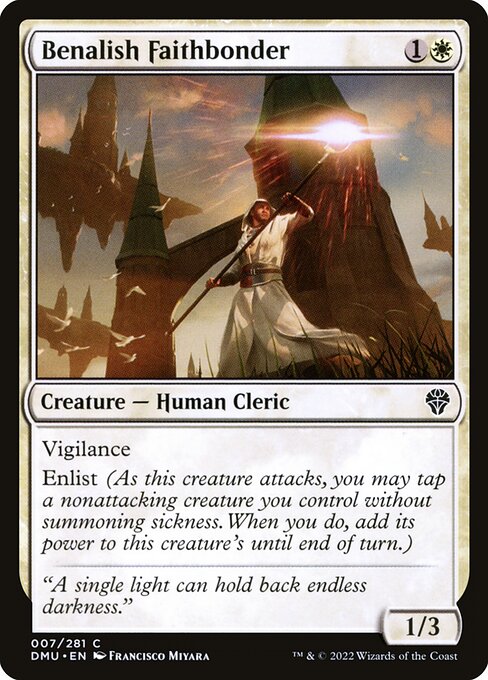
Enlist rewards you for having a wide board, even when you're not attacking with everything. A 1/1 token sitting around doing nothing suddenly becomes a free power upgrade for your Enlisting attacker. Vigilance creatures are especially efficient here - they can attack on their own turn and still be eligible to be enlisted on future turns.
The key insight: Enlist creatures tend to have higher toughness than power. That's intentional. They're designed to hit harder when supported, while their bulk makes them harder to trade into profitably. Your opponent has to commit more resources to block cleanly.
When building around Enlist, consider:
- Token generators - even small tokens become relevant as Enlist fodder.
- High-power utility creatures - something with a useful ETB (enters-the-battlefield) ability and strong power can donate that power every turn via Enlist.
- Haste creatures - they can be enlisted the same turn they enter, which is otherwise impossible without haste or summoning sickness exemptions.
Playing against Enlist
The main lines when facing Enlist:
- Remove the Enlist creature before attackers are declared. Once the Enlist trigger is on the stack, you're dealing with the buffed version.
- Instant-speed removal on the enlisting creature in response to the trigger. The attacker will still have the +X/+0 locked in at that point once the trigger resolves using the last known power, so this isn't always clean - but it does stop further Enlist attacks.
- Don't overextend your board. A wide board on your opponent's side means more Enlist options. Sometimes a conservative line denies them good targets.
- Size up your blockers carefully. The buff is only +X/+0, not toughness. A creature that's been Enlisted hasn't gotten harder to kill - it's just hitting harder. Block with enough toughness to survive, and you can trade cleanly.
Notable Enlist cards
Argivian Cavalier
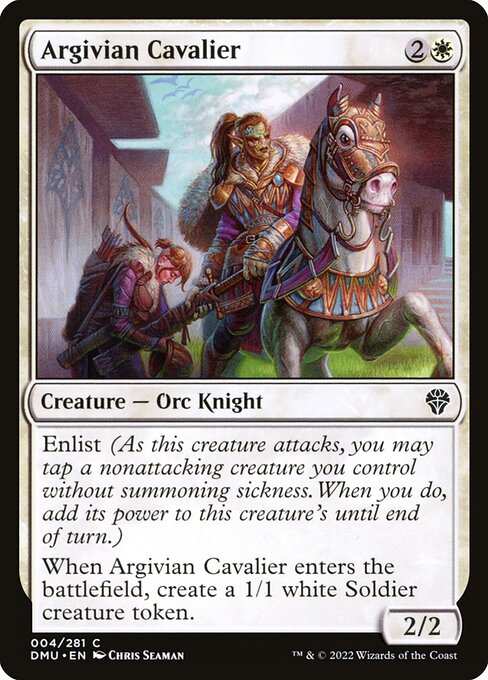
Argivian Cavalier is the cleanest example of what Enlist wants to do. A 2/2 for two mana with Enlist, it also creates a 1/1 Soldier token when it enters. That token is immediately useful as an Enlist target - it brings the Cavalier up to a 3/2 attacker on the next turn, and the token survives the transaction. It's a tidy, self-contained package that teaches the mechanic well.
The example also illustrates something broader: Enlist creatures are frequently paired with ways to generate small creatures. The mechanic is at its best when your board is buzzing with activity.
History of Enlist
Enlist was introduced in Dominaria United (September 2022), a set steeped in the history of Magic's home plane and its long tradition of warfare and alliances. The flavour fit was strong - Dominaria's history is full of soldiers, knights, and military campaigns where troops support one another in battle.
The mechanic was designed as a cleaner, more accessible evolution of the Banding concept. Banding, which dates back to Alpha (1993), was notoriously difficult to parse and appears on Wizards' own list of mechanics they'd rather not revisit due to its complexity. Enlist captures a similar fantasy - creatures combining their strength in combat - without requiring a rules degree to understand.
So far, Enlist has remained associated with Dominaria United, appearing on a small, focused cycle of creatures in that set. Whether it returns in future sets remains to be seen, but its design elegance makes it a good candidate for revisiting.