Escape: MTG Mechanic Explained
Some cards refuse to stay dead. That's the whole spirit of Escape - a keyword ability that lets you cast cards directly from your graveyard, fuelled by the other cards you're willing to sacrifice to pull them back. Introduced in Theros Beyond Death (THB, 2020), Escape is one of Magic's most flavourful mechanics: a direct reference to the Returned, souls who clawed their way back from the underworld realm of Nyx and bear the price of that journey on their faces.
What is Escape?
Escape is a keyword ability that gives a card a second life - literally. If a card with Escape is sitting in your graveyard, you can cast it by paying its escape cost instead of its normal mana cost.
That escape cost always has two components:
- A mana payment - usually cheaper than the card's printed mana cost, though not always by much.
- Exiling a number of other cards from your graveyard - those cards are the price of return.
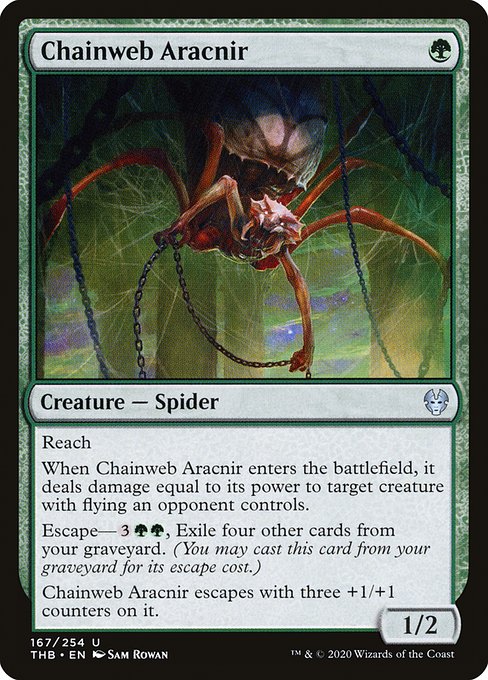
So when you cast Chainweb Aracnir with Escape, you're paying '{G}' and exiling four other cards from your graveyard. In return, it comes back as a 4/5 with reach instead of its baseline 1/2. The graveyard becomes a second hand, and the cards in it become a currency you spend to fuel your escaping threats.
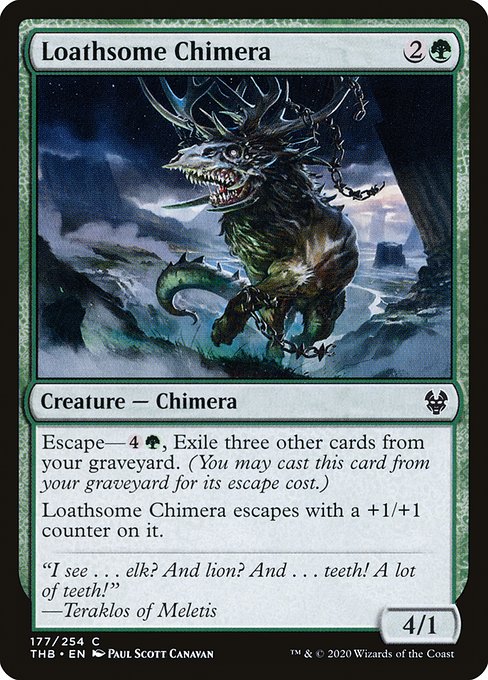
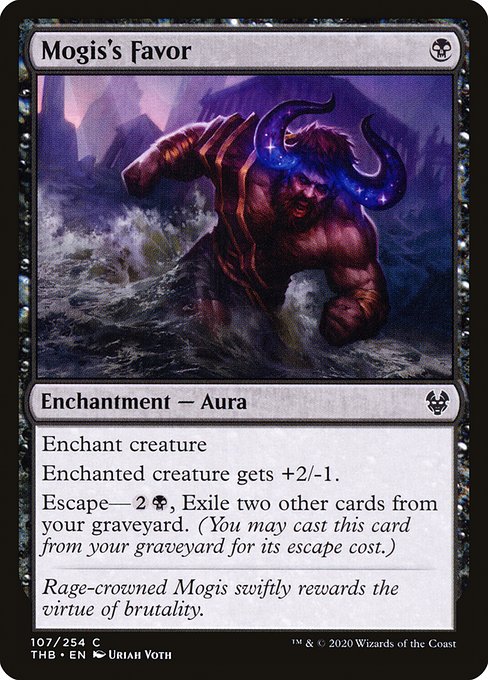
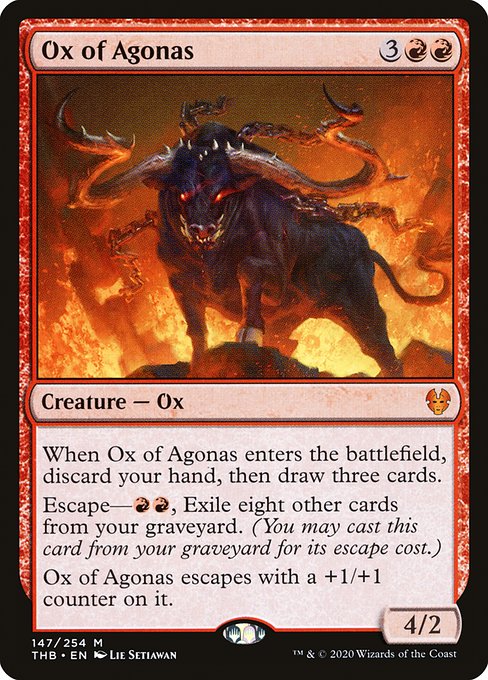
Most creatures that escape return with a number of +1/+1 counters, representing how they've grown stronger through the ordeal of return. Escape doesn't change when you can cast the spell, though - instants with Escape can be cast any time you have priority, while sorceries and other permanent types still require your main phase with an empty stack.
Rules
The comprehensive rules cover Escape under rule 702.138. Here's what you need to know:
The core rule
"Escape represents a static ability that functions while the card with escape is in a player's graveyard. 'Escape [cost]' means 'You may cast this card from your graveyard by paying [cost] rather than paying its mana cost.'" - CR 702.138a
Escape is an alternative cost, not an additional one. You're replacing the mana cost, not bolting something extra on top.
What counts as "escaped"?
A spell or permanent "escaped" if it was cast from a graveyard using an escape ability. This matters for the +1/+1 counter clause - CR 702.138c specifies that "[This permanent] escapes with [counters]" means those counters only apply if the card was actually cast with Escape.
Can you escape the same card multiple times?
Yes - as long as you have enough other cards in your graveyard and enough mana, there's no limit on how many times a single card can escape over the course of a game. When an instant or sorcery with Escape resolves, it returns to your graveyard (just like flashback does). Permanent spells go to the battlefield when they resolve, and return to the graveyard only if they die later.
Common misunderstandings
Rules note: Here are a few rules interactions that trip people up:
- Converted mana cost doesn't change. If you cast Uro, Titan of Nature's Wrath using its Escape cost, its mana value is still 3 (based on '{1}{G}{U}'), not whatever you actually paid. This matters for cards that care about mana value.
- You can't mix alternative costs. If a card has both Escape and another alternative cost (like flashback), you pick one - you can't combine them or apply both.
- You can't cast it without paying mana cost and apply Escape at the same time. Escape is the alternative cost. Once you've chosen it, that's the cost you're paying.
- Timing doesn't change. A sorcery with Escape is still a sorcery. You can't cast it from the graveyard at instant speed just because it's coming from an unusual zone.
- Once you start casting with Escape, the card immediately moves to the stack. Opponents can't respond to snatch it away before you finish casting.
Strategy
Building around Escape
Escape rewards decks that are already comfortable with the graveyard. The exile cost is real - you need other cards in your graveyard to pay for the return, which means Escape works best when you're filling your graveyard through:
- Self-mill (cards that put your own library into the graveyard)
- Cycling (discarding to draw, leaving cards behind)
- Cantrips and draw-go (naturally cycling through cards)
- Looting effects (draw and discard, like Faithless Looting effects)
The upside is that Escape turns a full graveyard from a resource you've already spent into a resource you're still spending. Cards you've already drawn and used become fuel for your Escape spells.
The exile cost as a drawback
It's worth thinking about what you're giving up when you exile those graveyard cards. If you're also running cards that care about graveyard count, or if you need specific cards in the graveyard for other abilities, Escape and those plans can work against each other. Be intentional about what you exile - strip out the least useful cards first.
Playing against Escape
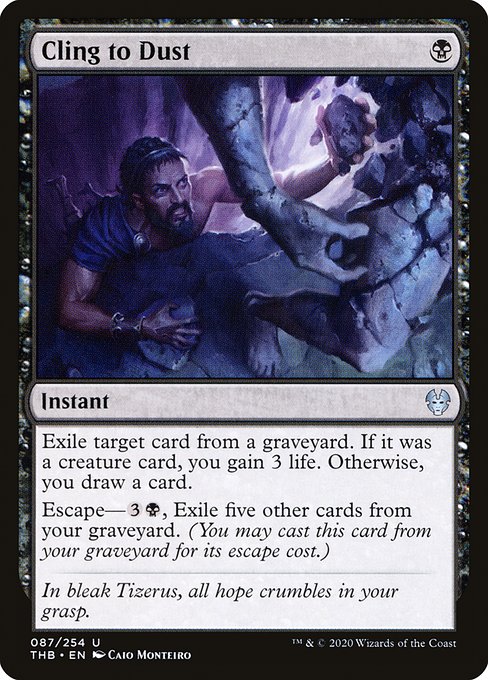
The cleanest answer to Escape is graveyard hate. Cards that exile the graveyard entirely, or hit specific cards before they can escape, short-circuit the mechanic at its source. A well-timed Cling to Dust (which itself has Escape, rather elegantly) can strip a key card before it comes back.
If you can't exile the graveyard, pressure the mana instead - an opponent who's tapping out to cast their Escape spell may be leaving themselves open elsewhere. And remember, Escape spells can be countered just like any other spell: once it's on the stack, it's fair game.
Escape in Limited
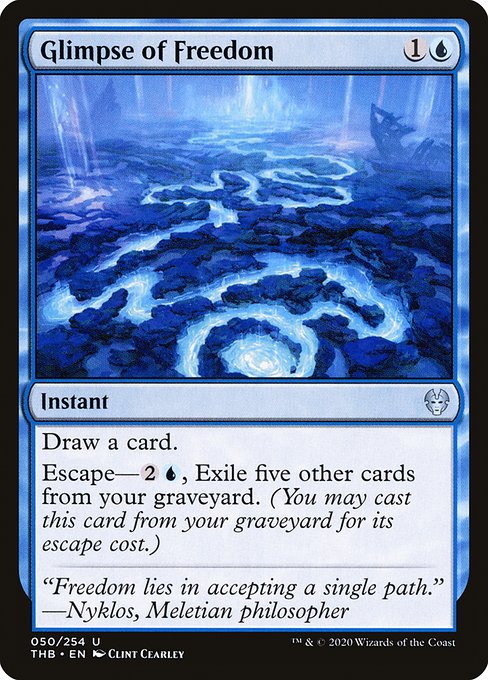
In Limited (draft and sealed), Escape is especially powerful because graveyard density tends to be lower than in Constructed. Cards that fill your graveyard fast become premium picks alongside your Escape spells. Glimpse of Freedom is a nice example - a simple draw spell at instant speed that becomes free (almost) recursion once your graveyard is deep enough.
Notable Cards
Uro, Titan of Nature's Wrath (THB)
Probably the most notorious Escape card ever printed. On its first cast, Uro is effectively a sorcery - you gain 3 life, draw a card, may put a land into play, then sacrifice it. But once it escapes from the graveyard, it becomes a 6/6 that does all of that on entry and every attack. Uro was banned in Standard (September 2020), Pioneer, and Modern (October 2020) largely because it single-handedly rewarded the kind of slow, value-generating play that blue-green decks excel at. It's still legal in Legacy and Vintage.
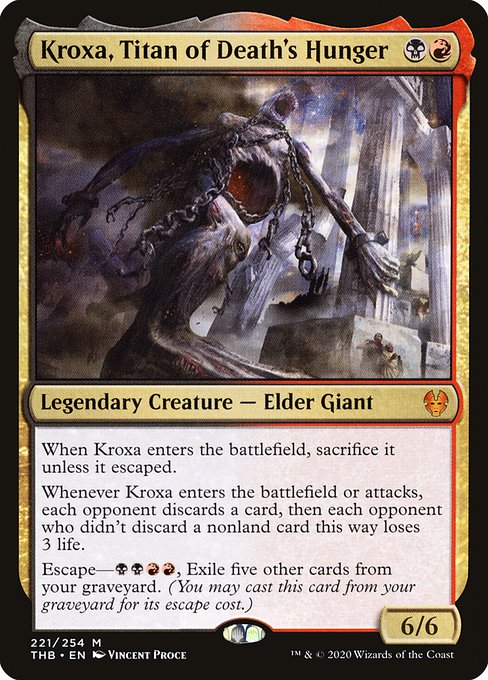
Kroxa, Titan of Death's Hunger (THB)
Uro's red-black sibling, and only marginally less oppressive. On first cast it forces an opponent to discard, dealing damage if they can't. As an escaped creature, it's a 6/6 that keeps draining resources every time it attacks. Kroxa saw significant play in both Standard and older formats.
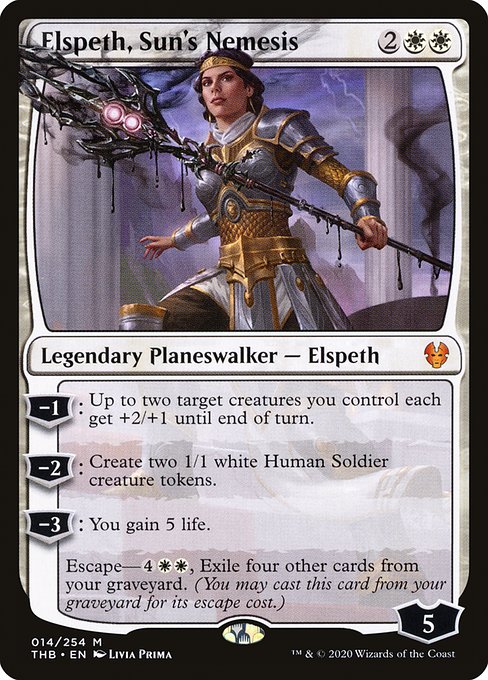
Elspeth, Sun's Nemesis (THB)
One of the few planeswalkers with Escape. Elspeth escapes from the graveyard with no additional counters - the journey back doesn't make her more powerful, just relentless. In a dedicated white-based shell, she can come back turn after turn.
Cling to Dust (THB)
A one-mana instant that exiles a graveyard card and draws you a card or gains life. Unassuming, but the Escape cost ('{3}{B}', exile five cards) means a deck with a deep graveyard can keep drawing cards throughout the game. It was a quietly persistent card in many THB-era sideboards.
Chainweb Aracnir (THB)
The textbook Escape example: a 1/2 spider with reach for '{G}', and a '{G}' escape cost (exiling four cards) that returns it as a 4/5 that bolts a flier on entry. It's an elegant showcase of how Escape changes a card's whole role depending on which mode you're in.
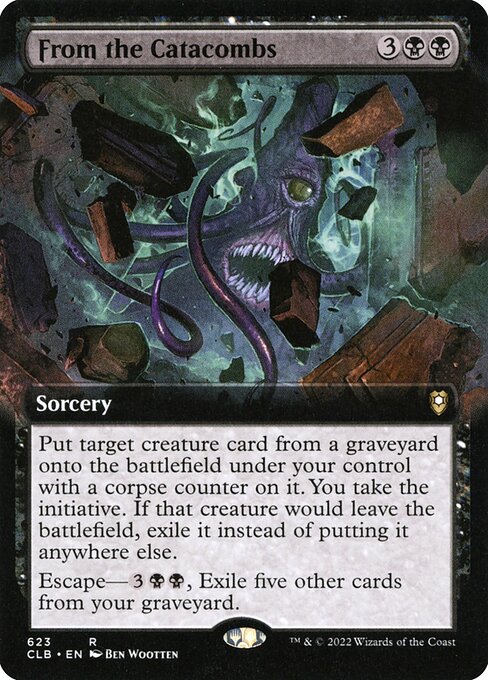
From the Catacombs (supplemental)
A later addition from a supplemental set, From the Catacombs reanimates a creature from any graveyard and takes the initiative - and then escapes itself for '{3}{B}{B}' (exiling five). A strong demonstration of how Escape on a non-creature spell can anchor a whole game plan.
Glimpse of Freedom (THB)
Drawing a card for '{1}{U}' is fine. Drawing a card for '{2}{U}' out of the graveyard, as many times as you can fuel it, is a grind engine. Glimpse of Freedom is modest on its own but shows how even a simple effect gains a lot of value when it can recur.
History
Theros Beyond Death (2020) - where it all began
Escape was introduced in Theros Beyond Death, the second visit to the Greek mythology-inspired plane of Theros. Thematically, it tied directly to the Returned - undead figures who escaped the underworld of Nyx by abandoning their faces and memories. Mechanically, the graveyard exile cost echoes that sacrifice: you're clawing something back, but at a cost, and nothing comes back quite the same (hence the +1/+1 counters on most creatures).
The set leaned heavily into graveyard play across multiple mechanics, and Escape was its centrepiece keyword. Uro and Kroxa almost immediately dominated competitive play, which shaped how the mechanic was perceived - powerful, yes, but also somewhat polarising.
The Storm Scale and return appearances
Mark Rosewater rated Escape a 6 on the Storm Scale - meaning it's possible but unlikely to return as a keyworded mechanic in a standard premier set. He noted the mechanic has structural requirements (it needs a graveyard-focused environment) and that repetition of Escape could cause fatigue. He expected it to score higher on player popularity surveys, but felt the dominance of Uro and Kroxa may have soured some players on seeing it again.
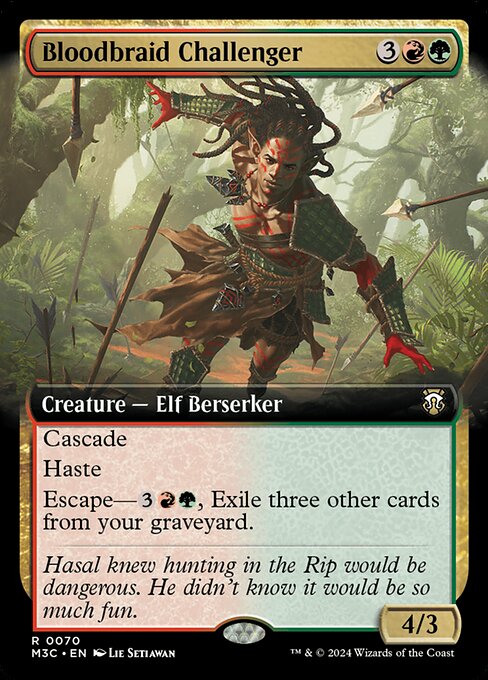
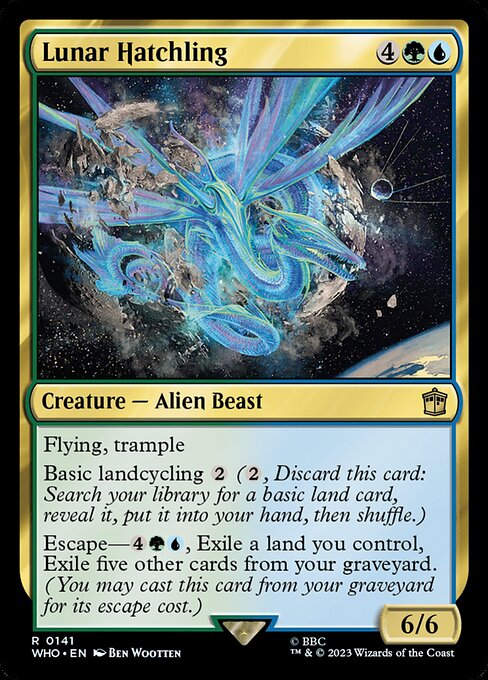
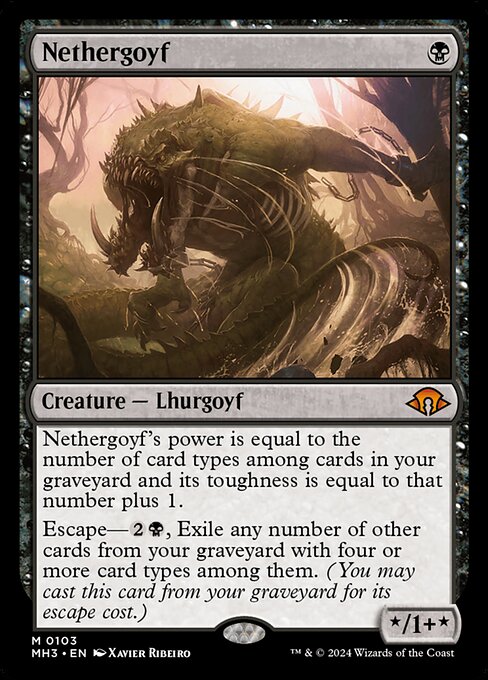
That said, Escape has appeared as a flavour-appropriate one-off in several supplemental sets: Doctor Who (2023), Fallout (2024), Jurassic World Collection (2023), and Modern Horizons 3 (MH3, 2024). Necrogoyf and Bloodbraid Challenger from MH3 are recent additions that notably do not escape with counters or additional abilities - a simpler take on the keyword.
Squee, Dubious Monarch is worth a mention here: it functionally has Escape but the ability is written out without using the keyword, following the convention that premier sets don't reuse keywords without establishing them properly.
Escape is probably here to stay as an occasional visitor - it's too flavourful to abandon entirely, and the design space for it in supplemental sets with graveyard themes is genuinely rich.