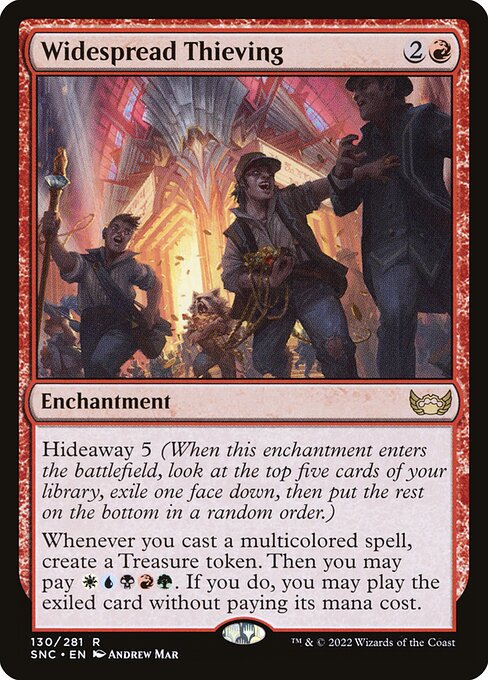
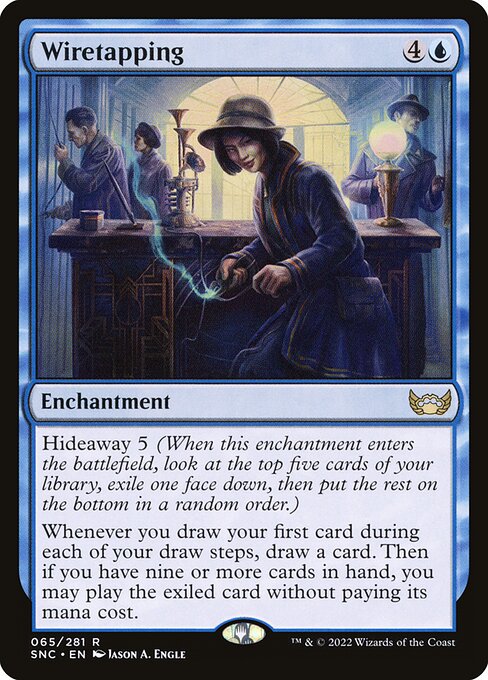
Hideaway: MTG Mechanic Explained
There's something quietly satisfying about setting up a free spell before your opponent even knows it's coming. That's exactly what Hideaway does - it lets a land tuck a card from your library into exile the moment it enters, waiting for just the right moment to be played for free.
Hideaway is a triggered ability found primarily on lands, and it rewards you for meeting specific conditions with a free cast. It's a mechanic about patience, setup, and - when everything clicks - a big payoff that can swing a game entirely.
What is Hideaway?
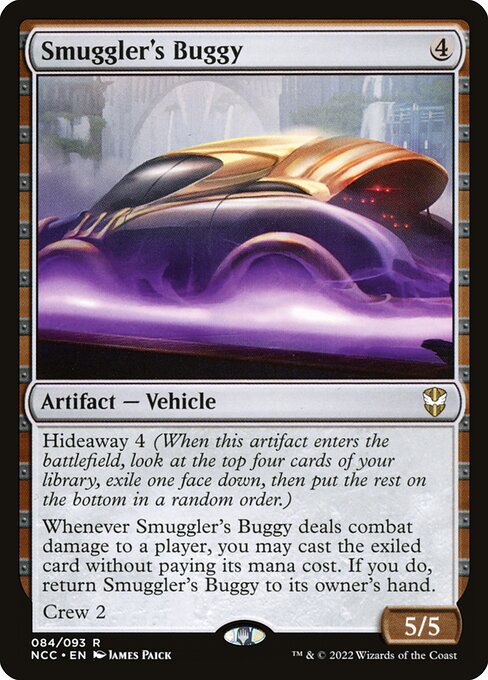
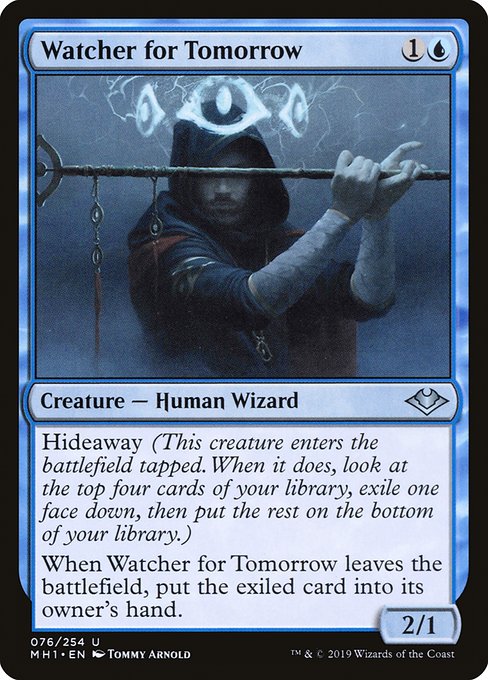
Hideaway is a triggered ability that fires when a permanent with it enters the battlefield. When it does, you look at the top N cards of your library (where N is the number printed after the word "Hideaway"), exile one of them face down, then put the rest on the bottom of your library in a random order.
That exiled card sits there, hidden, until the permanent's second ability is activated. Each Hideaway permanent has a unique condition - something you have to achieve - and if you meet it, you can play that exiled card without paying its mana cost.
In short: Hideaway is a two-part setup. First, you stash a card. Then, when you meet the condition, you get to play it for free.
Rules
How the trigger works
Hideaway is a triggered ability that uses the stack, just like any other triggered ability. When the permanent enters, the trigger goes on the stack, and players can respond before you look at your library. Once it resolves, you look at the top N cards, choose one to exile face down, and put the rest on the bottom in a random order.
The exiled card is face down, meaning opponents can't see it. However, the player who controls the permanent that exiled the card can look at it at any time - that permission is granted by a static ability that the exiled card itself gains.
Rules note: The comprehensive rules define Hideaway as follows:
"Hideaway N" means "When this permanent enters, look at the top N cards of your library. Exile one of them face down and put the rest on the bottom of your library in a random order. The exiled card gains 'The player who controls the permanent that exiled this card may look at this card in the exile zone.'" - CR 702.
Playing the hidden card
Each Hideaway permanent has a second, separate activated ability with a condition. If that condition is met when you activate the ability, you may play the exiled card without paying its mana cost. "Playing" here means you can cast it if it's a spell, or put it onto the battlefield if it's a land.
Important: you still have to follow the normal timing rules for whatever card you're playing. If you exile a sorcery, you can only play it at sorcery speed, even if you somehow activate the Hideaway ability at instant speed.
Common misunderstandings
- The exiled card belongs to you, not the land. If the Hideaway land is destroyed, the card stays exiled - but the ability to play it is tied to controlling the permanent that exiled it. If that land is gone, you can no longer meet that requirement unless the land returns.
- The condition must be met at activation time. You can't activate the ability in anticipation of meeting the condition - the condition has to be true when you pay the activation cost.
- "Without paying its mana cost" doesn't mean truly free. You still have to pay any additional costs, and if the card has an alternative cost, the rules for "without paying its mana cost" apply normally per the comprehensive rules.
The rules update: numbered Hideaway
Hideaway originally had a fixed behaviour: look at the top four cards, and the land always entered tapped. That was baked into the rules, not the card text. When Wizards of the Coast updated the rules to make Hideaway more flexible - allowing different values of N on newer printings - older cards received Oracle errata.
Cards printed before the update now have the Oracle text "Hideaway 4" and an explicit line reading that the land enters tapped. The gameplay is identical to their original printing; only the card text representation changed.
Strategy
Picking the right card to exile
The most important decision Hideaway gives you is what to tuck away. You're looking at N cards and choosing one to set up for a future free cast. Ideally, you want to exile the highest-impact card you can find - something expensive, something that wins games, something you couldn't otherwise afford to cast.
The classic move is to hide a giant threat or a game-ending spell. A land that lets you cast a free card with mana value seven or eight is essentially giving you a significant tempo advantage the moment you meet the condition.
Think of it like a layaway plan. You're not casting the card today - you're reserving it for the moment the stars align.
Meeting the condition
Each Hideaway land has a different unlock condition, and building around that condition is where the real deckbuilding work happens. Some conditions are harder to achieve than others, and the best Hideaway decks are built to make meeting the condition feel almost inevitable.
For example:
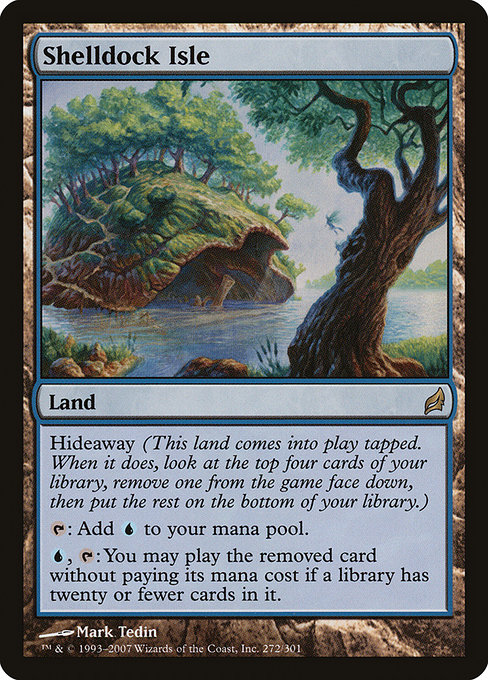
- Shelldock Isle unlocks when a library has twenty or fewer cards in it - a natural fit for mill strategies or decks that want to end the game in a long grind.
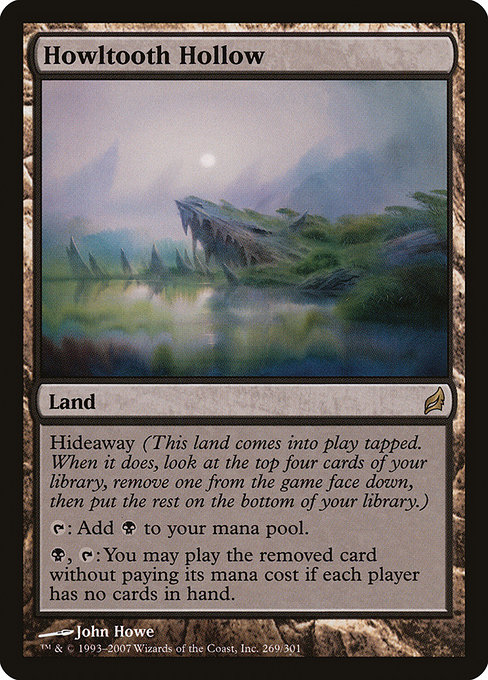
- Howltooth Hollow fires when each player has no cards in hand - pointing toward discard-heavy builds or resolved Ensnaring Bridge situations.
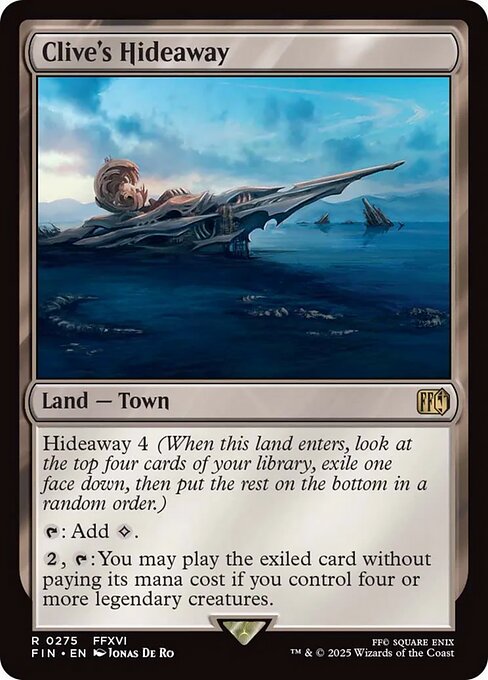
- Clive's Hideaway asks you to control four or more legendary creatures - clearly at home in a Legends-matter Commander deck.
Playing against Hideaway
When your opponent has a Hideaway land on the battlefield, the face-down exiled card is information you don't have - but you can make educated guesses. What does their deck do? What cards in their library would be most threatening if cast for free?
One line of play is to simply try to never let them meet the condition. If Howltooth Hollow is waiting and you're nearly hellbent, hold your last card. If Shelldock Isle is online, don't let your library drop low unless you have the mana to deal with whatever they cast.
Remember: the exiled card isn't in their hand, so hand disruption won't touch it.
Notable cards
Shelldock Isle
The most famous Hideaway land by a wide margin. Its condition - a library with twenty or fewer cards - was easy to engineer with self-mill, and competitive players discovered very quickly that you could exile Emrakul, the Aeons Torn (or similar haymakers) and cast it for free. Shelldock Isle was a key piece of several combo-adjacent decks in Modern and Legacy, and it remains one of the more powerful Hideaway lands printed.
Howltooth Hollow
Howltooth Hollow is the black Hideaway land, and its condition - each player having no cards in hand - makes it a strong fit for discard-heavy shells. Eight-rack style decks can drain both hands quickly, and then Hollow becomes a source of free spells. Getting everyone to zero cards is the challenge, but decks built around that gameplan can make it feel routine.
Clive's Hideaway
The newest addition to the cycle, Clive's Hideaway is a Town land that rewards legendary-creature density. Four or more legendary creatures is a condition that Commander players can meet almost accidentally, making this an interesting Commander role-player. It produces colourless mana, which is a downside in colour-hungry decks, but the free-spell upside is hard to ignore if you're already running legends.
History
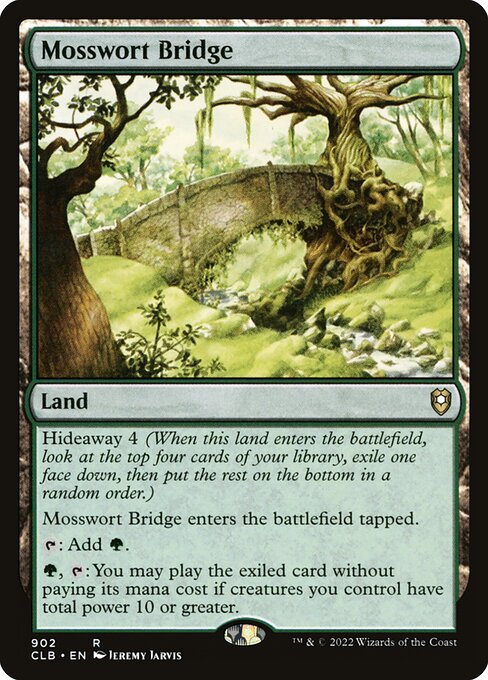
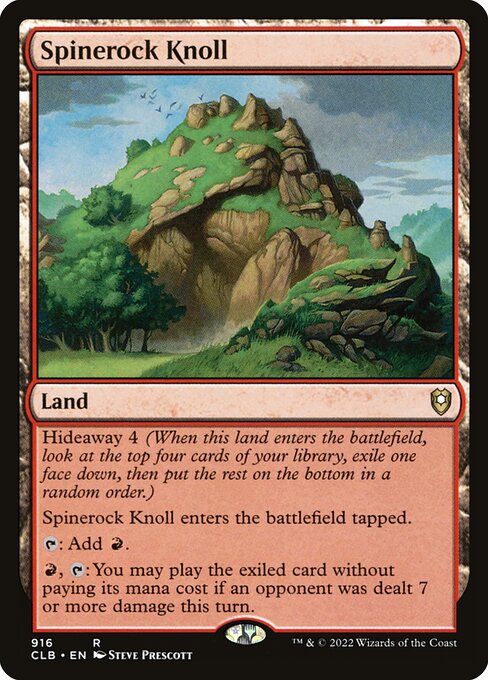
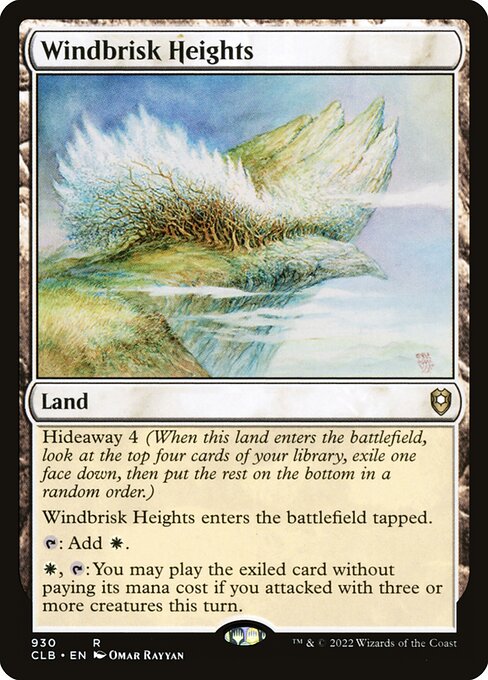
Hideaway debuted in Lorwyn (LRW, 2007), as part of the original cycle of five Hideaway lands - one for each colour. The original five were Windbrisk Heights (white), Shelldock Isle (blue), Howltooth Hollow (black), Mosswort Bridge (green), and Spinerock Knoll (red). Each had its own unlock condition tied loosely to that colour's themes.
At the time of release, the rules folded two things directly into the Hideaway definition: the land always entered tapped, and the player always looked at exactly four cards. There was no numeral on the keyword - it was simply "Hideaway."
The mechanic returned in Commander sets and other supplemental products, always on lands, and with the same fixed-four-card window.
When Wizards eventually updated the rules to allow variable values of N - making Hideaway more flexible for future design space - the keyword became "Hideaway N". Older cards received Oracle errata to explicitly say "Hideaway 4" and to state that the land enters tapped, preserving their original function while making the new templating consistent.
Clive's Hideaway, from Outlaws of Thunder Junction (OTJ, 2024), is a modern example of the updated template, using "Hideaway 4" in its printed text and exploring the mechanic's potential on non-basic land types beyond the original cycle.