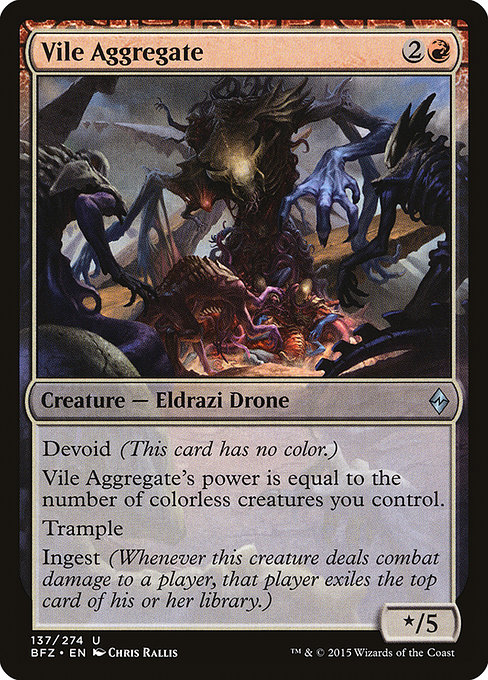
Ingest: MTG Mechanic Explained
Exile is one of Magic's most powerful zones - cards sent there are usually gone for good. Ingest flips that idea into a weapon, letting small Eldrazi creatures chip away at an opponent's library one card at a time, feeding a whole ecosystem of nastier abilities. If you've ever wondered what those little colorless drones are actually doing, this is the mechanic you're looking for.
What is Ingest?
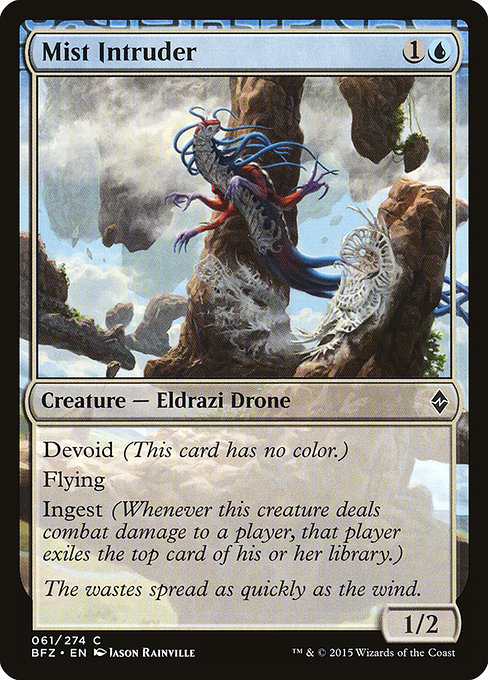
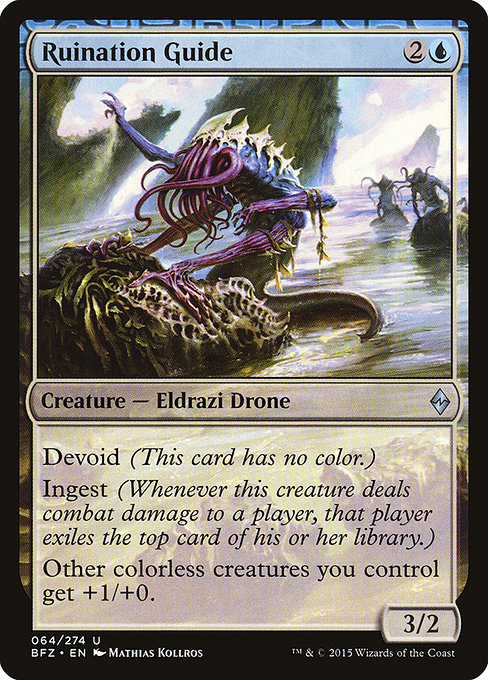
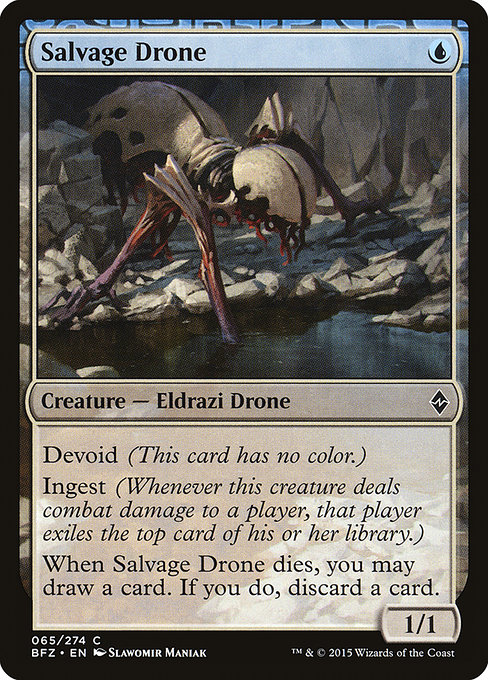
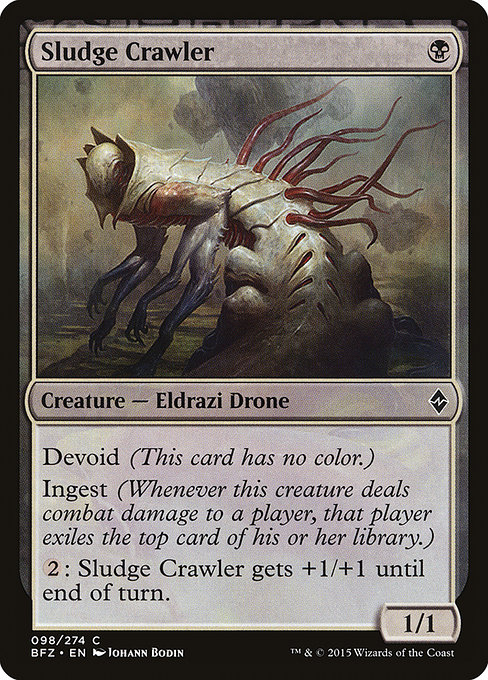
Ingest is a keyword ability found on Eldrazi creatures. Whenever a creature with ingest deals combat damage to a player, that player exiles the top card of their library - face up.
That's the whole thing. No choice involved, no targeting. You connect with the creature, the trigger goes on the stack, and a card disappears from your opponent's library into exile. It doesn't mill (put into the graveyard), it doesn't draw - it exiles, which is a meaningful distinction once you understand what Ingest was designed to support.
Lore aside: Ingest is mechanically tied to Ulamog's lineage of Eldrazi. Thematically, these creatures don't just consume matter - they unmake it, which is exactly what exiling a card represents. The card isn't destroyed; it simply ceases to exist in the game in any meaningful way.
Rules
Ingest follows a clean, simple rules entry - CR 702.115 - but there are a few edge cases worth knowing.
How the trigger works
Ingest is a triggered ability, not a static or activated one. The full rules text reads:
"Whenever this creature deals combat damage to a player, that player exiles the top card of their library."
- CR 702.115a
This means:
- The trigger only fires on combat damage, not damage from other sources (like a spell or ability).
- It triggers on damage to a player, which includes damage dealt to opponents in Commander.
- The exiled card goes face up, so both players can see what was removed.
Multiple instances of Ingest
If a creature somehow has multiple instances of ingest - through a copy effect or a rules text addition - each instance triggers separately (CR 702.115b). One hit from such a creature would exile multiple cards.
Empty library
If the player being damaged has no cards left in their library when the ingest ability resolves, nothing happens. They don't lose the game from the trigger itself - that only happens when they're required to draw from an empty library and can't.
Common misunderstandings
- Ingest is not a mill effect. Milled cards go to the graveyard; ingested cards go to exile. This matters because graveyard recursion, flashback, and similar abilities can't retrieve them.
- Ingest only triggers on combat damage. A creature with ingest dealing damage via Fling or a similar spell won't trigger it.
Strategy
On its own, a single ingest trigger isn't going to win you a game. Sending one card to exile - even repeatedly - doesn't dramatically change the board state. So why run ingest creatures at all?
The Processor connection
Ingest was designed as the engine for a draft archetype built around Processors - a creature type introduced in Battle for Zendikar (BFZ, 2015). Processors are Eldrazi with abilities that consume exiled cards from your opponents' zones as a resource. To use a Processor's ability, you need cards in your opponents' exile - and ingest creatures are the reliable, repeatable way to put them there.
This is the key insight: ingest creatures aren't the payoff, they're the setup. Think of them as the opening act for your Processors. A cheap, evasive ingest creature that sneaks in a few points of damage is quietly stockpiling fuel for bigger plays later.
Draft vs. Constructed
Ingest shines brightest in Battle for Zendikar Limited (draft and sealed). The archetype rewards you for picking up a critical mass of ingest creatures and Processors, then sequencing them correctly - get cards into exile early, then cash them in with Processors for incremental advantages.
In Constructed formats, ingest never found a foothold. The payoffs are too slow and the setup too creature-dependent for competitive 60-card environments. In Commander, there's some novelty value in multiplayer - four opponents means four libraries being slowly shaved - but it's more of a flavour choice than a power pick.
Playing against Ingest
If someone is running a dedicated ingest-Processor shell, the most direct answer is keeping their creatures off the board. No combat damage, no triggers, no exiled cards, no Processor fuel. Ingest creatures are typically small, so early removal is efficient against them.
Also worth noting: the exiled cards are face up. You always know what your opponent has access to through their Processors, which gives you some information to work with.
Notable cards
Most ingest creatures are commons and uncommons from Battle for Zendikar, reflecting their role as draft workhorses rather than format staples. Here are a few worth knowing.
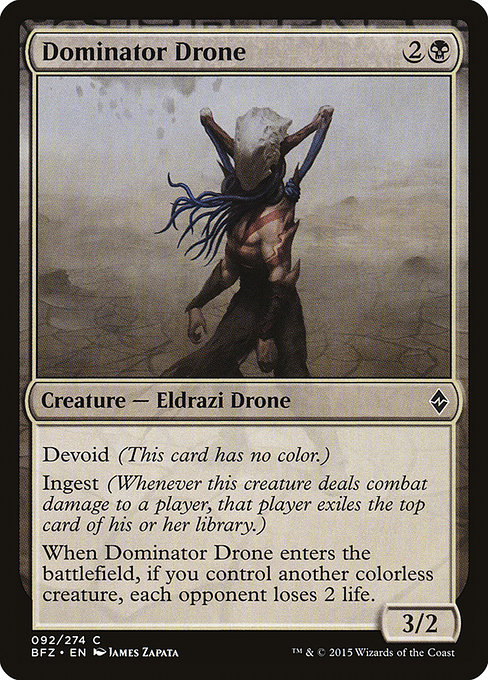
Dominator Drone
A 3/2 for three mana with both ingest and a life-drain trigger when it enters - provided you control another colorless creature. In a dedicated colorless/Eldrazi shell, this is easy to activate, and the combination of a solid body, ingest, and immediate life loss makes it one of the more efficient ingest creatures printed.
The BFZ ingest suite
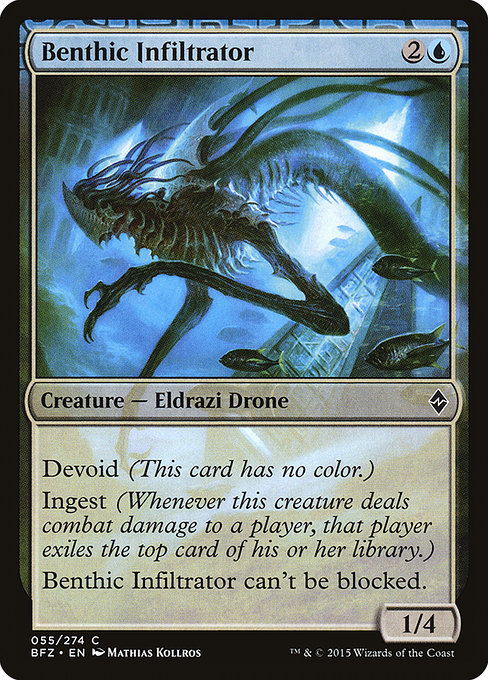
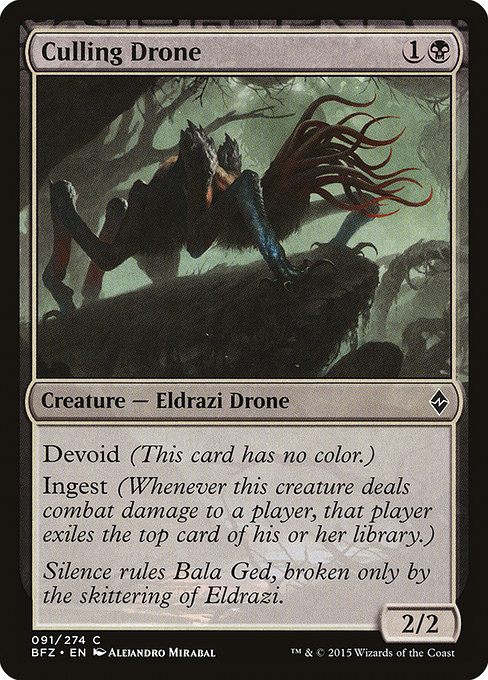
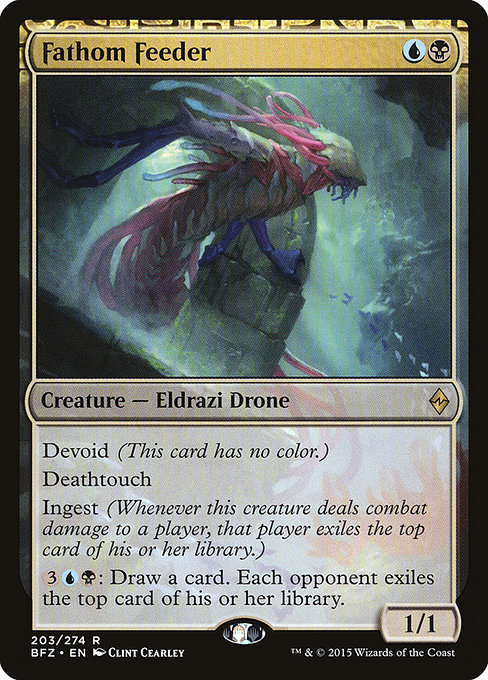
The ingest creatures in Battle for Zendikar cluster in blue and black, which are the colours of Ulamog's brood. They're generally small - 1/1s and 2/2s with evasion keywords like flying or menace - designed to get through blockers and connect repeatedly. Their low mana cost means you can get them on the table early and start building up your exile count before your Processors come online.
History
Ingest made its first appearance as a preview card in Duel Decks: Zendikar vs. Eldrazi before being fully introduced in Battle for Zendikar (BFZ, October 2015). It was created specifically for that set's draft environment and was not carried forward into later sets as a returning mechanic.
The Battle for Zendikar block told the story of the Eldrazi titans - Ulamog, Kozilek, and Emrakul - threatening to consume the plane of Zendikar entirely. Ingest fits neatly into that narrative: small Eldrazi drones consuming pieces of reality (your library) to feed larger processes. It's one of the more flavourful mechanical implementations in recent Magic history, even if the competitive ceiling was always limited.
Because ingest is mechanically dependent on the Processor creature type, it's unlikely to return in a set that doesn't also bring back Processors. If the Eldrazi ever get another dedicated block treatment, ingest would be a natural fit to revisit.