Myriad: MTG Mechanic Guide
In a multiplayer game, one of the most satisfying feelings is when a single attack threatens the entire table at once. Myriad makes that literal. Introduced in Commander 2015, this keyword turns every swing into a multi-front assault - sending token copies of your attacker into simultaneous combat across the board.
It's a mechanic built for Commander, and it shows. Let's dig into how it works.
What is Myriad?
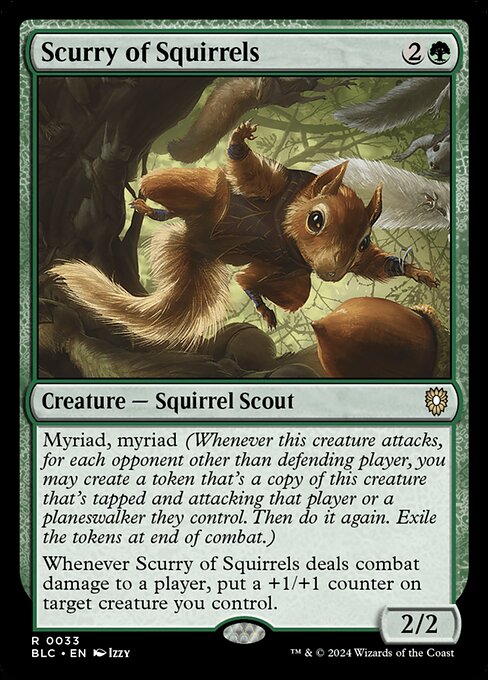
Myriad is a triggered keyword ability that lets a creature effectively attack every opponent at the same time. When a creature with myriad attacks, you may create token copies of it - one for each opponent other than the player you're actually attacking - and those tokens enter the battlefield already tapped and attacking the corresponding opponent (or a planeswalker they control).
At the end of combat, all those tokens are exiled. They're temporary, but the damage - and any triggered abilities that fire off combat damage - is very real.
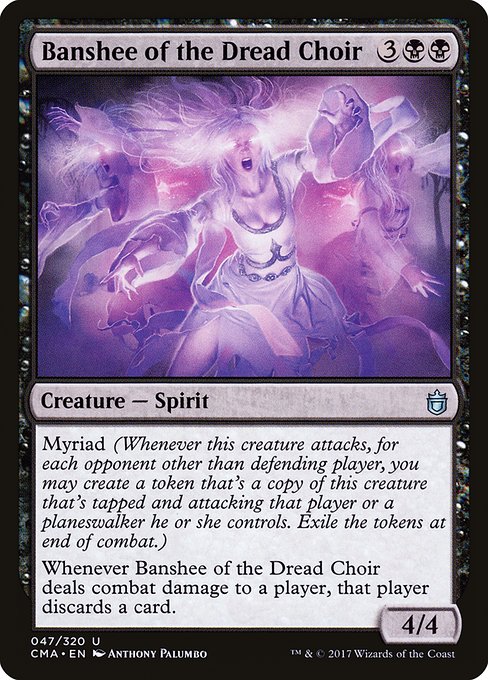
Banshee of the Dread Choir is a clean example of why this matters. Its second ability triggers whenever it deals combat damage to a player, making that player discard a card. With myriad, a single attack can force every opponent to discard - a swing that hits the whole table at once.
How the rules work
The official rules text (CR 702.116a) reads:
"Whenever this creature attacks, for each opponent other than defending player, you may create a token that's a copy of this creature that's tapped and attacking that player or a planeswalker they control. If one or more tokens are created this way, exile the tokens at end of combat."
A few things worth unpacking there:
The tokens are copies
The tokens are full copies of the attacking creature - same power, toughness, abilities, everything. This means any triggered abilities that care about combat damage or attacking will fire off the tokens too, just like the original.
It's optional
The rules text says "you may." You don't have to create tokens for every opponent. You can choose to create them for some opponents and not others. This gives you meaningful choices about where your pressure lands.
The tokens attack planeswalkers too
Each token can attack either the opponent directly or a planeswalker that opponent controls. Useful when someone is quietly ticking up a Doubling Season combo behind a wall of blockers.
Multiple instances trigger separately
CR 702.116b confirms that if a creature has myriad more than once - through, say, an equipment and an enchantment - each instance triggers separately. That doesn't create duplicate tokens for the same opponents, but it does mean each trigger resolves on its own, which can matter in edge cases involving replacement effects.
The delayed trigger exile happens automatically
The tokens are exiled "at end of combat" by a delayed triggered ability that fires when combat ends. You don't have to do anything. They go away regardless of what happened during combat - whether they were blocked, survived, or activated abilities.
Rules note: Because the tokens enter the battlefield tapped and attacking, they skip the beginning of combat and declare attackers steps entirely. This means abilities that trigger "whenever a creature attacks" won't trigger for them - they're already past that point when they enter.
Strategy
Why Myriad is strong in Commander
Commander is a four-player format by default, which means a single creature with myriad can create up to three simultaneous attacks. That's an enormous amount of pressure for one card to generate.
The real value isn't just combat damage, though. It's the abilities that trigger on combat damage or on attacking. A creature with myriad that draws you a card when it deals damage to a player becomes a three-card draw engine on a good swing. A creature that forces discard hits the whole table. A creature with lifelink gains you life from every token hit.
Look for creatures whose abilities scale with the number of opponents they damage. That's where myriad generates the most value.
Building around Myriad
When building a deck around myriad, I'd focus on a few things:
- Combat damage triggers. Cards like Banshee of the Dread Choir that do something whenever they deal combat damage are the prime candidates. The more opponents you hit, the more those triggers fire.
- Attack triggers. Some abilities fire just from attacking. Because the tokens enter tapped and attacking, they won't trigger "whenever this creature attacks" abilities - but the original still does. Keep that distinction in mind.
- Evasion. Myriad tokens need to connect to matter. Flying, trample, or unblockable effects help your tokens punch through. A 4/4 myriad creature that gets chump-blocked on all fronts isn't generating much value.
- Granting myriad broadly. Legion Loyalty ({6}{W}{W}) gives all your creatures myriad. In a creature-heavy deck, that's a potential board-wide multi-attack engine - though the mana cost means you're committing to the late game.
Playing against Myriad
The tricky part about facing myriad is that the tokens are only around for one combat step. You can block them and kill them, but they're gone at end of combat regardless - so assigning your best blockers to hold them back is often just trading resources. Sometimes the right call is to take the hit and use your blockers elsewhere.
The more important question is which opponents are being attacked. The myriad controller is choosing to send tokens at specific opponents (or their planeswalkers), so there's a political element: if someone's being targeted by all the tokens while you're left alone, that's information about threat assessments around the table.
If you're the one being attacked by the original creature, the tokens aren't heading your way - they go to everyone else. That's worth remembering when you're thinking about whether to offer to let the attacker through.
Notable cards with Myriad
Banshee of the Dread Choir
The cleanest example of myriad working as intended. A 4/4 Spirit that forces the defending player to discard whenever it deals combat damage. With myriad tokens hitting up to three opponents simultaneously, that's potentially three forced discards from one attack. It's the card I'd point a new player to for understanding why this mechanic exists.
Legion Loyalty
Legion Loyalty ({6}{W}{W}) is the marquee enchantment for myriad-focused builds. It grants every creature you control myriad, turning your whole board into a multi-front threat. The mana cost is steep - eight mana isn't nothing - but in a game that regularly goes to turns 10 and beyond, the payoff is real. This card showed up in Commander Legends: Battle for Baldur's Gate (CLB).
History and appearances
Myriad debuted in Commander 2015 (C15), designed specifically for multiplayer gameplay. It was never intended for 1v1 formats - the mechanic's whole identity is the "all opponents" clause, which does nothing meaningful in a duel.
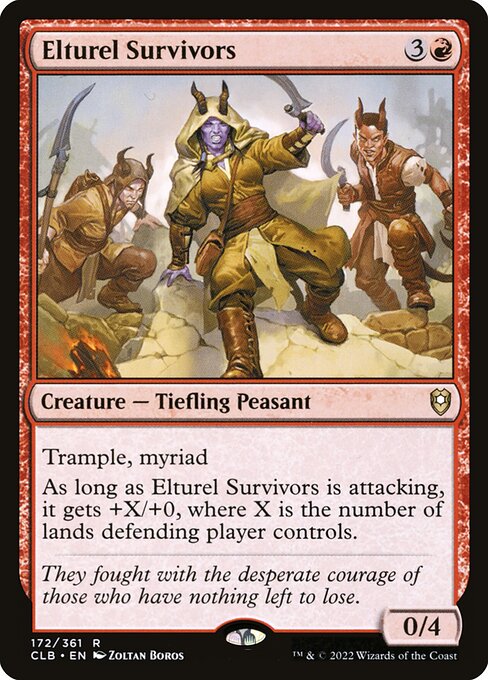
It returned in Commander Legends: Battle for Baldur's Gate (CLB)**, where Duke Ulder Ravengard can grant another creature myriad, and Legion Loyalty gives the whole team the ability.
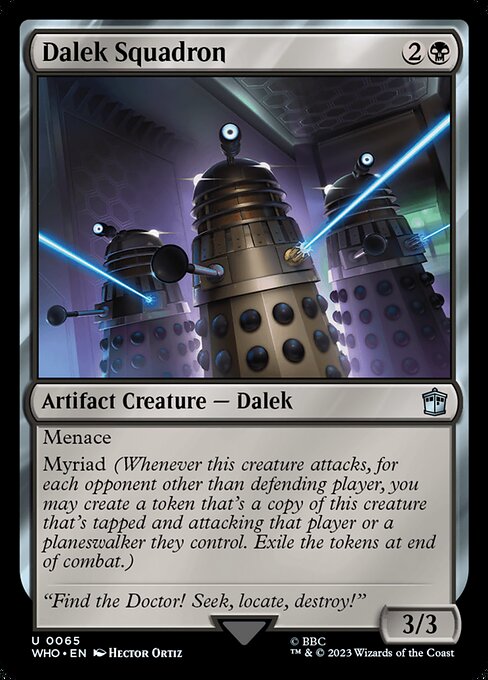
The mechanic appeared again in the Doctor Who Commander decks**, representing the overwhelming forces of the Masters of Evil - which, honestly, is a flavourful fit. An army attacking from every direction maps naturally to a villain with time-spanning reach.
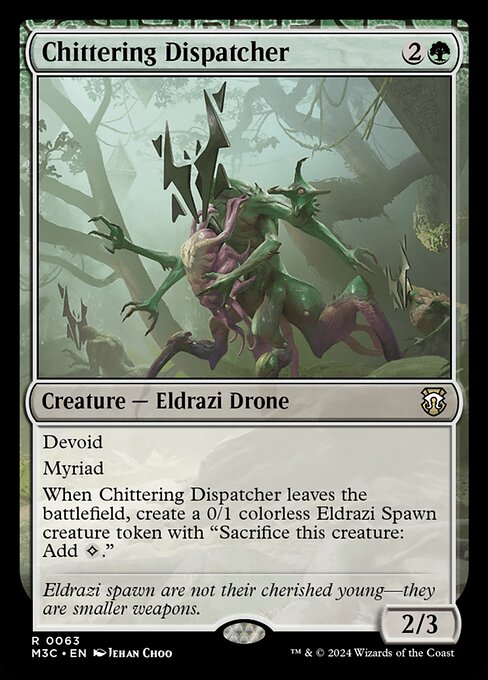
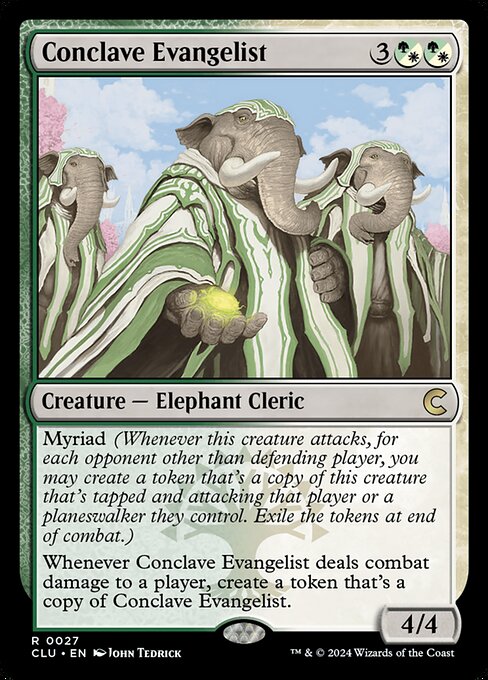
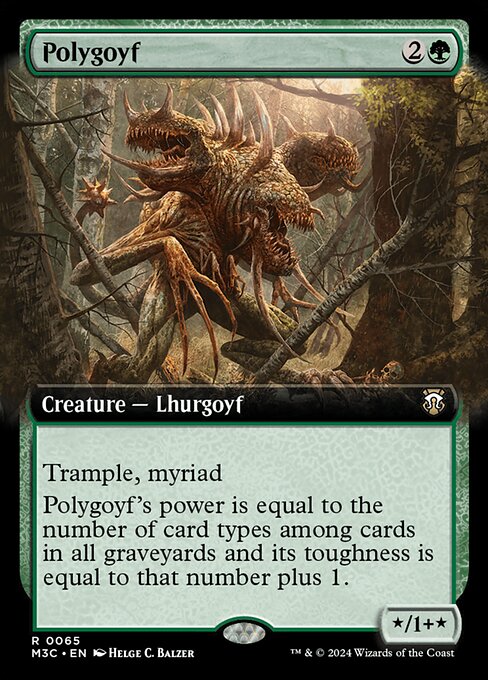
More recently, myriad has shown up in Ravnica: Clue Edition and the Modern Horizons 3 Commander product - continuing its role as a Commander-focused mechanic that surfaces in supplemental products rather than Standard-legal sets.
Format check: Myriad has appeared exclusively in Commander products and supplemental sets. None of the cards with printed myriad are Standard-legal, and the mechanic is largely designed for multiplayer Commander.
Quick reference
| What it does | Details | |---|---| | Trigger condition | When the creature attacks | | Token targets | Each opponent except the defending player | | Token state on entry | Tapped and attacking | | Token exile | End of combat (delayed trigger) | | Planeswalker option | Tokens can attack planeswalkers instead | | Multiple instances | Each triggers separately | | Format home | Commander |