Overload: The MTG Mechanic Explained
There's a particular kind of satisfaction in casting a spell that wipes the board clean - and Overload is the mechanic built entirely around that feeling. Pay a little, hit one thing. Pay a lot, hit everything.
Overload is a keyword ability that gives a spell two modes: a cheap, targeted version and an expensive version that swaps every instance of "target" in the card's text for "each." The result is the same effect, just applied to all legal objects at once. It's a simple idea with genuinely interesting strategic depth.
What is Overload?
Overload is an alternate casting cost printed on Instant and Sorcery cards. When you cast a spell with Overload, you choose: pay the regular mana cost and target a single object, or pay the Overload cost instead and affect every valid object simultaneously.
The mechanic was introduced in Return to Ravnica (RTR, 2012) as the signature ability of the Izzet guild - the blue-red league of mages and experimenters led by Niv-Mizzet. It's been a flavour fit ever since. The Izzet don't do anything at a sensible scale if they can help it.
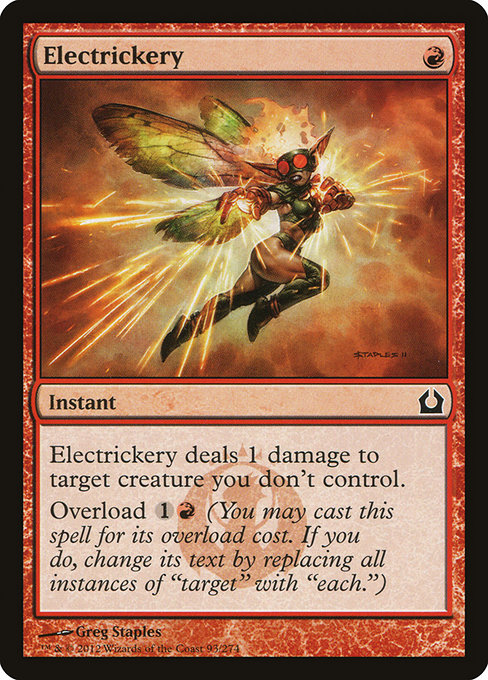
A clean example is Electrickery: for '{R}', it deals 1 damage to a single creature you don't control. Pay its Overload cost of '{1}{R}' instead, and that 1 damage hits every creature you don't control. Same spell, wildly different scope.
How Overload works: the rules
Overload is defined in CR 702.96, and it actually does something mechanically unusual: it creates a text-changing effect on the stack.
"Overload [cost] means 'You may choose to pay [cost] rather than pay this spell's mana cost' and 'If you chose to pay this spell's overload cost, change its text by replacing all instances of the word "target" with the word "each."'"
- CR 702.96a
That text-swap is the whole trick. The spell isn't gaining a new ability or creating copies - the word "target" literally becomes "each" for the purposes of how the spell resolves.
Rules note: Because the overloaded version doesn't use the word "target" at all, it has no targets. That has real consequences:
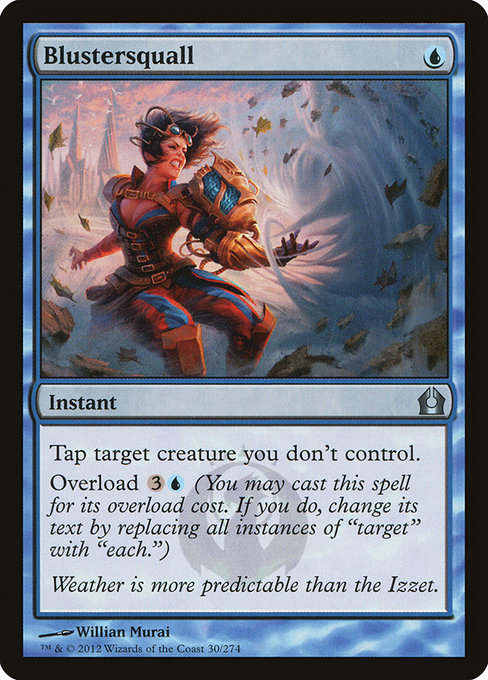
- Hexproof and protection don't block the overloaded spell from affecting a permanent** - those abilities only stop targeting, and the overloaded spell never targets. So if you cast Blustersquall with its Overload cost of '{3}{U}', even creatures with hexproof or protection from blue get tapped. (Protection will still prevent damage, though - see below.)
- Protection from a colour still prevents damage. If the spell deals damage, protection from the relevant colour stops that damage even though the spell didn't target the permanent.
- The spell's mana value doesn't change. Paying the Overload cost is an alternative cost, not a new spell. Blustersquall's mana value is always 1 whether you paid '{U}' or '{3}{U}'.
- Cost increases and reductions apply to the Overload cost too. If something makes your spells cost '{1}' more, that applies when you're paying the Overload cost as well.
- You can't choose to pay an Overload cost if you're casting the spell "without paying its mana cost." Effects like Cascade or Omniscience let you skip the mana cost entirely - but that doesn't mean you get to swap to the Overload cost instead.
Common misunderstandings
"Does Overload change the CMC?" No. The converted mana cost (now called mana value) is calculated from the printed mana cost in the upper right corner, always. Paying the Overload cost doesn't affect that number.
"Can I pay the Overload cost if someone lets me cast a spell for free?" No - if you're casting without paying the mana cost, you can't substitute the Overload cost. You'd cast it for free and still have to pick a target.
"Does Overload work like a modal spell where I pick at casting time?" In practice, yes - you make the choice when you're paying costs. But mechanically it's an alternative cost, not a mode. The distinction matters in niche rules situations.
Strategy: playing with and against Overload
Playing with Overload
The core tension of Overload cards is mana efficiency versus board impact. The targeted version is usually cheap enough to be playable on its own. The Overload version is typically several mana more expensive, but it converts a single-target spell into something that can reshape the entire game state.
The right choice depends on timing:
- Early turns: Cast it cheap, hit the thing that matters most right now.
- Midgame or lategame: If the board is wide and you've got the mana, the Overload version can generate value that no single-target version could match.
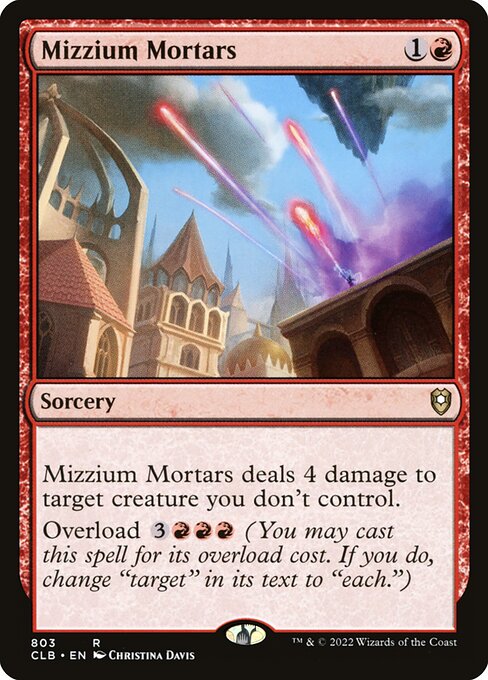
Overload cards reward patience. Holding Mizzium Mortars ({1}{R} deal 4 to a creature, or '{4}{R}{R}' deal 4 to each creature you don't control) until the moment your opponent has three or four creatures means the overloaded version does the work of three or four separate removal spells.
Deck-building note: Because Overload spells are flexible across the game, they're particularly good in formats where you expect to hit your land drops. In Commander especially, the Overload mode on a strong spell can be a legitimate win condition or game-reset on its own.
Playing against Overload
Countering a spell with Overload before the mana is available for the Overload cost is good timing - your opponent likely can't threaten the mass version yet, so you're trading your counterspell for a smaller version of their threat.
Once an opponent can afford the Overload cost, treat the spell like any board wipe or mass effect and play around it accordingly: keep your board state lean if the Overload version would hurt, or hold up interaction.
Remember that hexproof and protection don't save your creatures from an overloaded spell - so don't assume your shroud-creature is safe. Protection from the relevant colour will still prevent damage, but the spell can still affect a protected permanent in other ways (tapping it, giving it -X/-X, and so on).
Notable Overload cards
Electrickery
A '{R}' Instant that deals 1 damage to a creature you don't control, with an Overload cost of '{1}{R}'. The overloaded version is a legitimate sweeper against go-wide token strategies. It's seen play in Pauper for exactly that reason - cheap and effective against swarms of 1/1s.
Blustersquall
For '{U}', tap a creature you don't control. For '{3}{U}', tap all creatures you don't control. The overloaded version is a one-sided pseudo-Fog that can lock down an opponent's combat step entirely. Good in tempo and combo strategies that need one clear turn to win.
Mizzium Mortars
Possibly the most famous Overload card. '{1}{R}' kills a single tough creature (4 damage, enough to handle most threats). '{4}{R}{R}' kills all of your opponent's creatures with 4 or less toughness. In Standard during the Ravnica era, this was one of the premier red removal spells.
Dynacharge
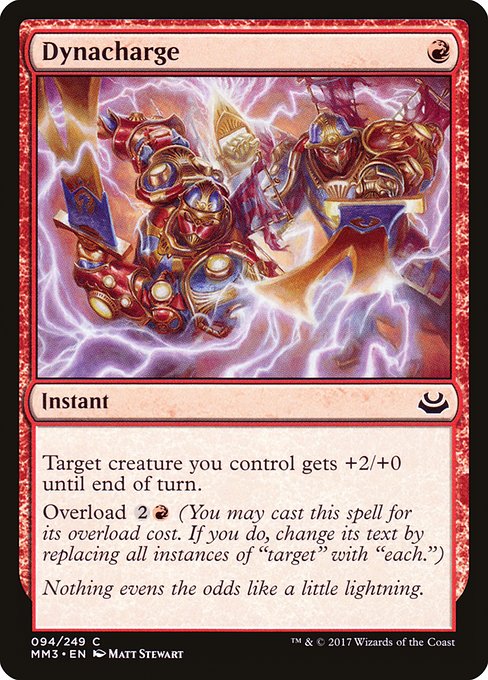
A pump spell that gives a single creature +2/+0 for '{R}', or all your creatures +2/+0 for '{2}{R}'. The overloaded version is a combat trick that can swing a wide attack into lethal damage out of nowhere.
Mizzium Skin
Protects a single creature with hexproof and +0/+1 for '{U}', or gives the same to all your creatures for '{1}{U}'. The overloaded version is genuinely powerful - protecting your entire board from a targeted removal spell or wipe for two mana is a serious tempo play.
Spectacular Showdown
A later addition from a one-off printing. '{1}{R}' puts a double strike counter on a creature and goads it. For '{4}{R}{R}{R}', every creature gets double strike counters and gets goaded. This is a wild Overload cost for a chaotic combat-oriented effect - very much in the spirit of the Izzet.
Stirring Address and Downsize
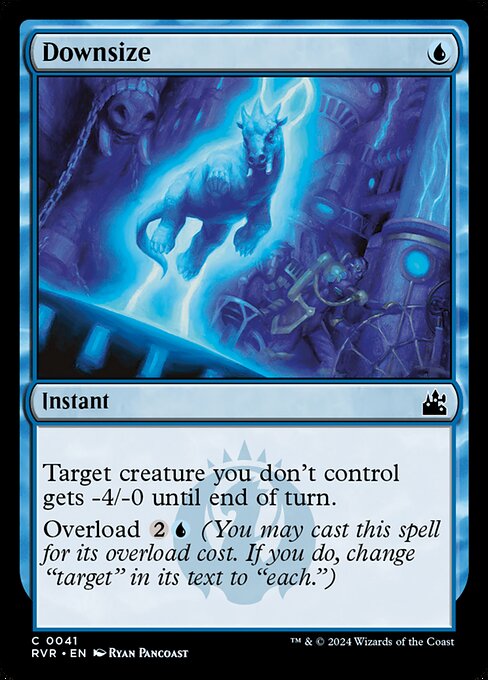
These represent the breadth of colours Overload has appeared in beyond its Izzet roots. Stirring Address ({1}{W}, Overload '{5}{W}') gives +2/+2 to a creature or all your creatures. Downsize ({U}, Overload '{2}{U}') shrinks an opponent's creature or all their creatures. Neither is a format staple, but both show how well the mechanic translates across colours.
History of Overload
Overload was designed by Ken Nagle during the original Great Designer Search, eventually finding its home as the Izzet mechanic in Return to Ravnica (RTR, 2012). The blue-red guild of chaotic magical engineers was a natural fit - their identity is scaling things up to absurd degrees, and Overload captures that in rules text.
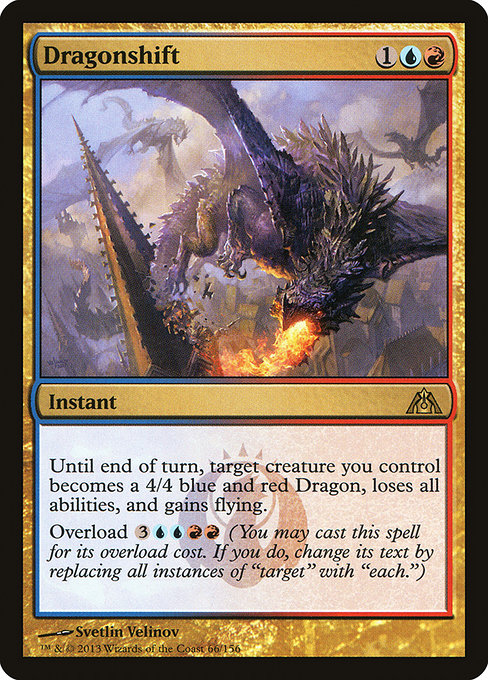
After RTR, the mechanic returned in Dragon's Maze (DGM, 2013) with two additional cards. It then went quiet for several years before reappearing in Commander 2015, where a handful of Overload cards were added for multiplayer contexts - a good fit given how much more impactful mass effects are across four players.
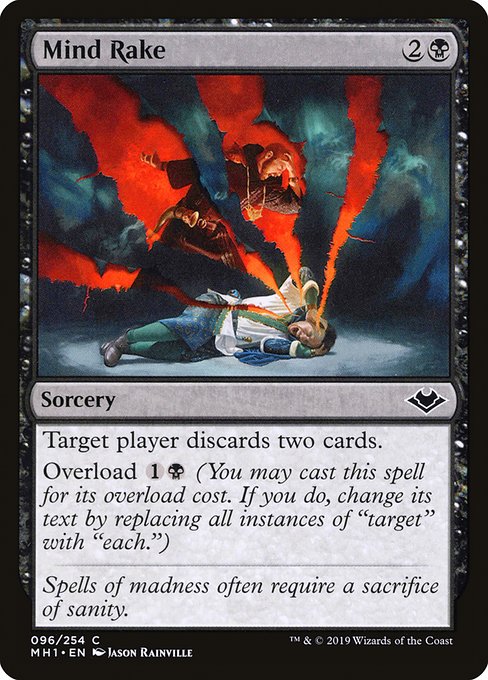
Modern Horizons (MH1, 2019) brought it back again with an interesting twist: it used Overload only in colours the mechanic hadn't appeared in before, deliberately expanding its footprint beyond Izzet. More notably, Mind Rake in that set became the first Overload card where the Overload cost is less expensive than the regular mana cost - a deliberate design choice, because the overloaded version also hits the casting player's hand.
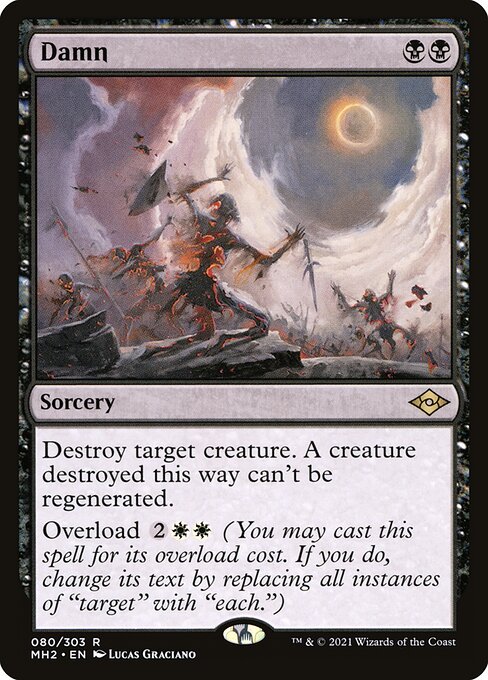
Modern Horizons 2 (MH2, 2021) pushed the mechanic further with Damn, a black card whose Overload cost uses a different coloured pip than its base cost. This was the first time Overload had ever changed colour requirement between its two modes, and Damn went on to see real competitive play in Modern and Legacy as a flexible removal spell.
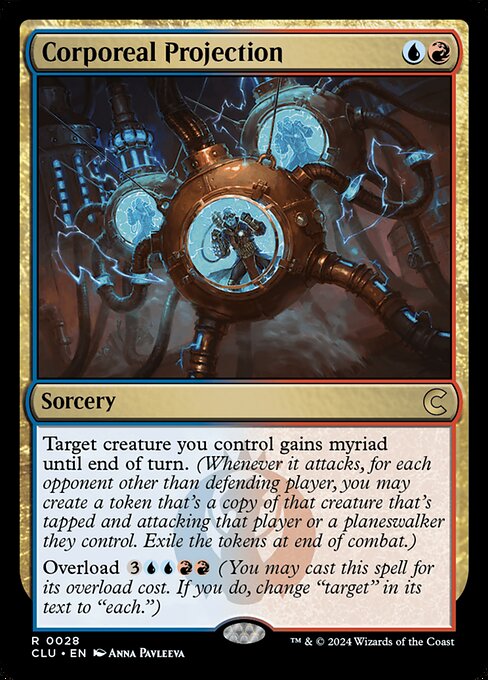
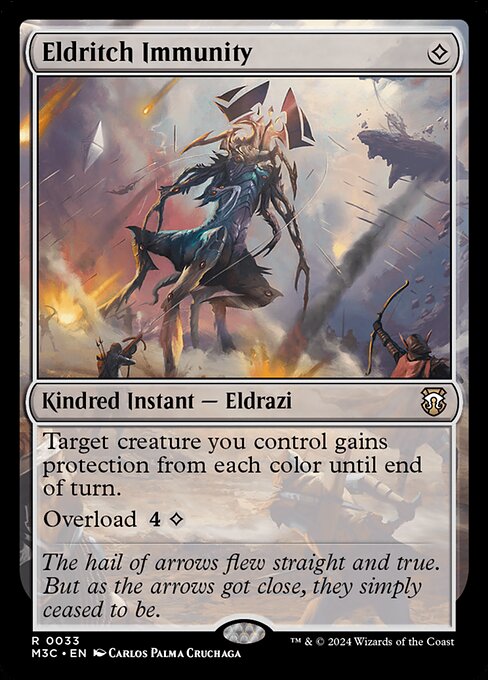
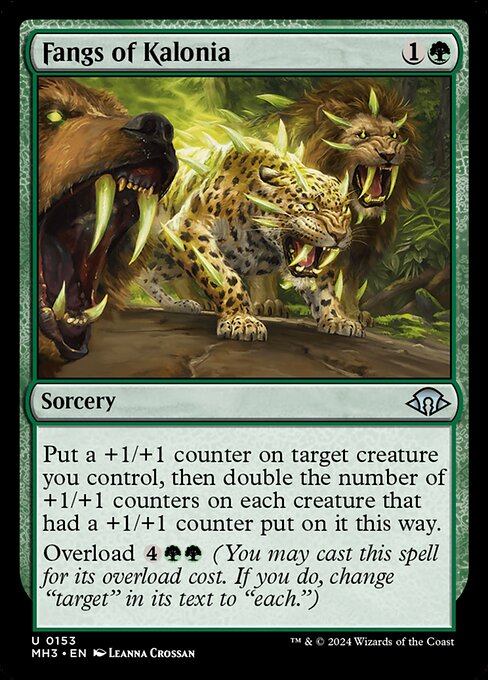
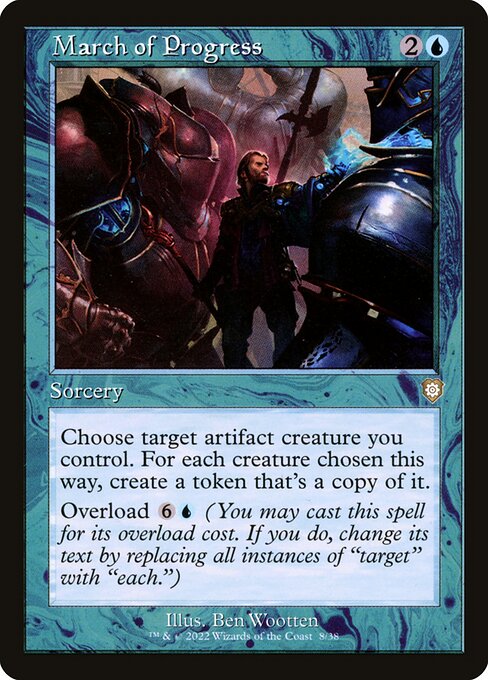
One-off printings have appeared in Ravnica: Clue Edition, Modern Horizons 3, and the MH3 Commander decks - keeping Overload alive as a mechanic even outside dedicated Izzet sets.
Lore aside: The Izzet guild in Ravnica's story is defined by grandiose, often reckless experimentation. Their spells don't just hit one target when they could hit every target. Overload expresses that philosophy more elegantly than almost any other mechanical-flavour pairing in the game.