Prowl: The MTG Mechanic Explained
Sneaking a creature past your opponent's defenses is satisfying enough on its own. Prowl makes it pay off.
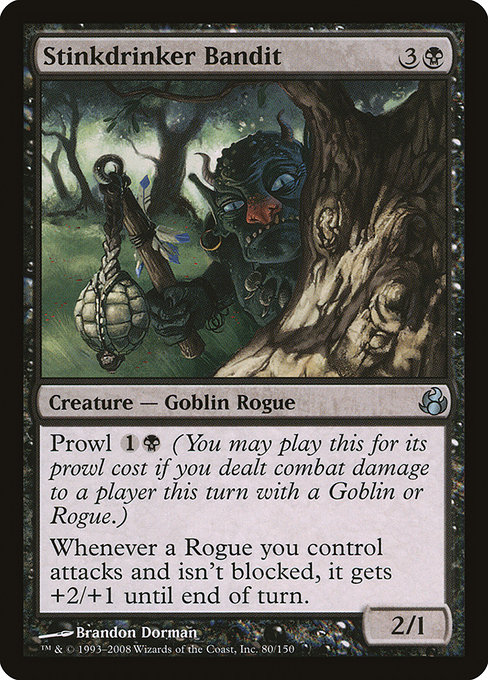
Prowl is an alternative cost mechanic tied to one of Magic's most flavourful creature types: Rogues. Land a hit with the right creature, and suddenly you're casting spells for dramatically less mana - sometimes for free. It's a mechanic that rewards aggression, punishes slow opponents, and fits the thieving fantasy of a Rogue deck perfectly.
What is Prowl?
Prowl is an alternative cost that appears on Rogue creatures and kindred Rogue spells. Each Prowl card has two costs: its normal mana cost, and the Prowl cost printed on the card. You can pay the Prowl cost instead of the regular mana cost if you dealt combat damage to a player that turn with a creature that shares a creature type with the card you want to cast.
In practice, this means you're setting up a small Rogue (or other qualifying creature) to sneak through for damage early in combat, then following up with a discounted spell in your second main phase. The discount can be massive - sometimes cutting several mana off the cost, sometimes making the spell free entirely.
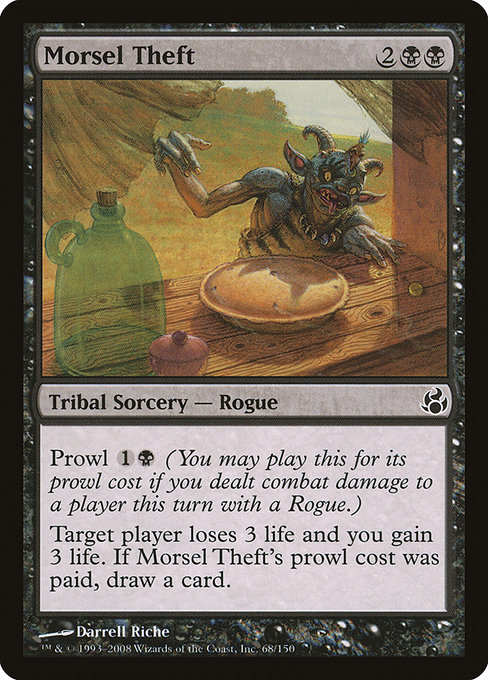
Morsel Theft is a clean example of how this plays out:
Tribal Sorcery - Rogue Prowl {1}{B} (You may cast this for its prowl cost if you dealt combat damage to a player this turn with a Rogue.) Target player loses 3 life and you gain 3 life. If Morsel Theft's prowl cost was paid, draw a card.
Pay the Prowl cost, and you get a life swing and a free card draw. That's the kind of two-for-one that defines whether a deck has inevitability.
Prowl Rules
The comprehensive rules (CR 702.76a) define Prowl precisely:
"Prowl [cost]" means "You may pay [cost] rather than pay this spell's mana cost if a player was dealt combat damage this turn by a source that, at the time it dealt that damage, was under your control and had any of this spell's creature types."
A few things worth unpacking from that wording:
The damage has to come from combat
Prowl cares specifically about combat damage. Ping effects, activated abilities that deal damage, or non-combat sources don't count. Your creature has to connect in the attack step.
It checks the creature type at the time damage was dealt
This matters if something changes a creature's types after it deals damage. The game looks back at what the creature was when it actually connected, not what it is now. In most situations this won't come up, but it's worth knowing if you're playing with type-changing effects.
The creature types have to match the spell's types
Prowl spells have creature types printed on them - usually Rogue, but occasionally others (more on that below). The creature that dealt combat damage needs to share at least one of those types. A kindred Rogue sorcery needs a Rogue to have connected; it doesn't matter if you also attacked with a Wizard.
Prowl is an alternative cost, not an additional cost
This is an important rules distinction. Because Prowl replaces the mana cost rather than adding to it, you cannot pay both the Prowl cost and the regular mana cost together. You choose one or the other. Effects that let you cast spells without paying their mana cost (like certain "cast for free" abilities) interact with Prowl differently than you might expect - if you're ever unsure how a specific interaction resolves, checking with a judge is the safest call.
Bonus effects for paying Prowl
Some Prowl cards have additional effects that only trigger if the Prowl cost was paid - like the card draw on Morsel Theft or the extra turn on Notorious Throng. These aren't part of the Prowl ability itself; they're separate clauses on the card that check whether you chose to pay the alternative cost.
Strategy
Building around Prowl
Prowl decks are fundamentally aggro-tempo strategies. The core game plan is: deploy cheap, evasive Rogues in the early turns, connect for combat damage before your opponent stabilises, and then cash in with discounted spells that push your advantage further.
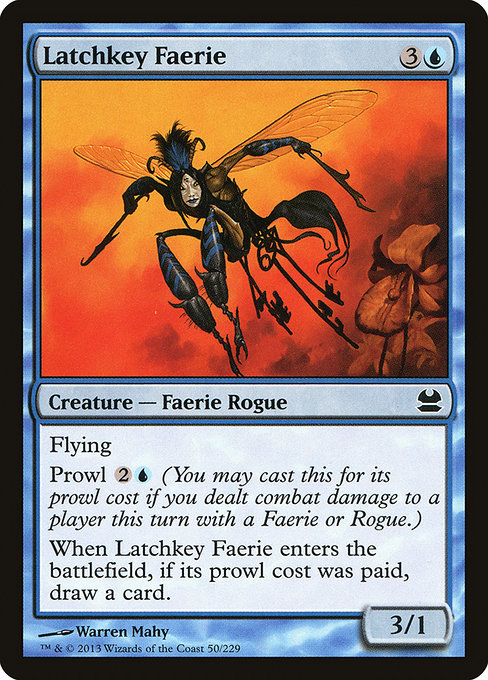
The most important thing to optimise for is evasion. Prowl does nothing if your creatures can't get through. Flying, skulk, unblockability, and menace are all valuable here. A 1/1 with flying that costs {U} is often more useful to a Prowl deck than a 3/3 ground creature, purely because it's more reliable at triggering the condition.
A rough checklist for Prowl deck construction:
- Include enough small, evasive Rogues to consistently trigger Prowl by turn 3-4
- Make sure your Prowl spells' creature types match what you're running
- Build in redundancy - you want multiple Prowl payoffs so a single answer doesn't strand your setup
- Watch your curve; the whole point of Prowl is mana efficiency, so the deck should reward early pressure
Playing against Prowl
The single best answer to Prowl is not letting the creature connect. Block early, even at a card disadvantage, if it prevents the discount on a powerful spell. Once the combat damage goes through, there's nothing you can do to prevent the Prowl cost from being available.
If you can't stop the attack, think about whether holding up interaction for the spell itself is worth it. A Rogue player who has to pay the full mana cost for their payoffs is operating at a significant disadvantage - many Prowl spells are costed with the assumption that you'll pay the Prowl cost. Taxing them out of the discount is a legitimate way to slow the deck down.
The kindred Sorcery and Instant angle
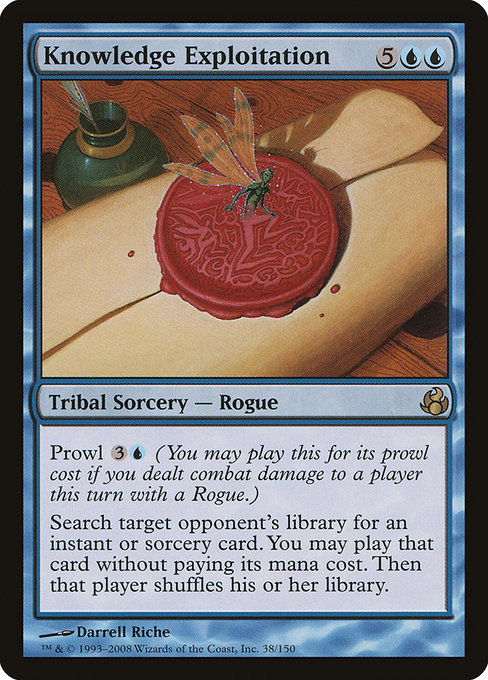
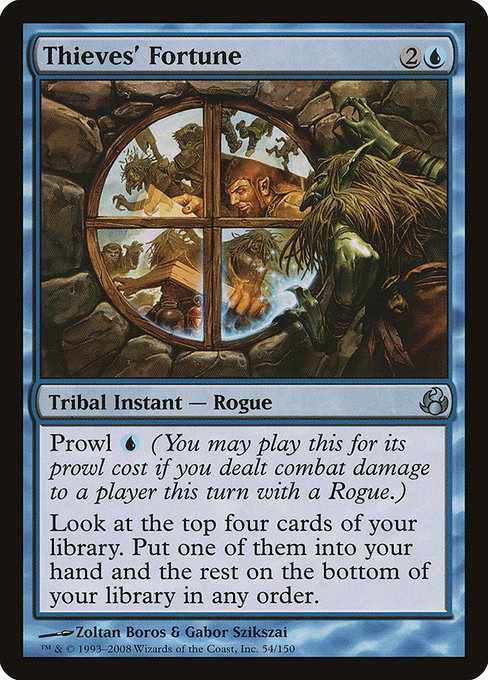
Not every Prowl card is a creature. Several are kindred Sorceries or kindred Instants with the Rogue subtype. These can only be played for their Prowl cost if you connected with a creature sharing their type - which for most of them means a Rogue. This is worth keeping in mind when you're building: if your Prowl payoffs are non-creature spells, your creature suite needs to reliably be the right type.
Notable Cards with Prowl
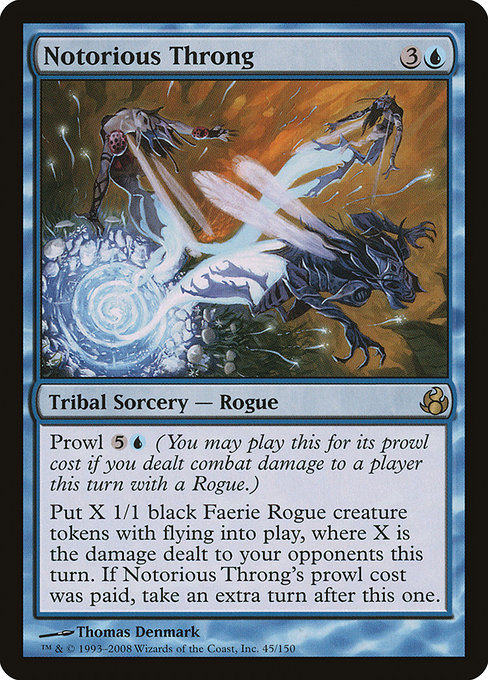
Notorious Throng is probably the most dramatic Prowl payoff ever printed. At its full cost of {3}{U}, you get a number of 1/1 flying Faerie Rogue tokens equal to the damage dealt to opponents that turn. Pay the Prowl cost of {5}{U} instead... and you take an extra turn. That's a Rogue deck closing out games.
Wait - the Prowl cost is more than the regular cost? Yes, intentionally. The extra turn rider is so powerful that Wizards priced the Prowl version above the base version. It's one of the more unusual applications of the mechanic: you're not saving mana, you're buying an effect that couldn't safely be on the base card.
Morsel Theft (mentioned above) is the cleaner, more typical example. Three life swung plus a card draw for {1}{B} is genuinely strong, and it illustrates how Prowl turns a fair-looking spell into a tempo-positive play.
History and Evolution of Prowl
Prowl was introduced in Morningtide (2008), the second set of the Lorwyn block. Morningtide leaned heavily into creature type matters themes - it was the set where Changling reached its fullest expression and tribal mechanics ran deep - and Prowl fit the Rogue identity of that world naturally. Rogues in Lorwyn were thieves and tricksters who struck fast and vanished; rewarding a successful hit with discounted spells captured that flavour well.
The original Prowl cards were all Rogues, with a handful of Goblin and Faerie Rogues rounding out the creature types involved.
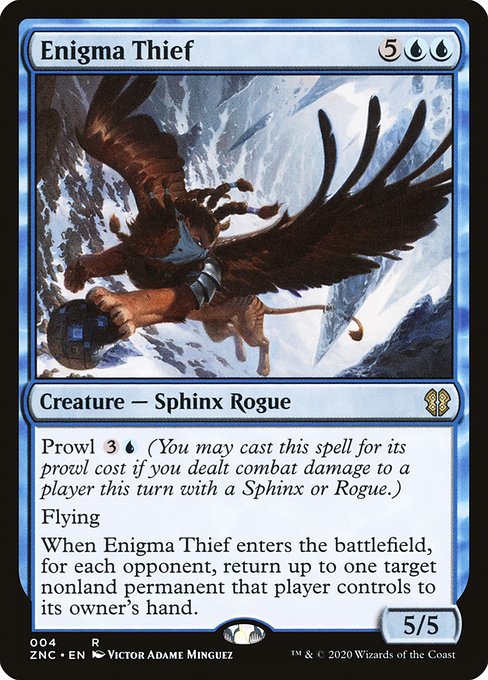
Prowl sat largely dormant as a named mechanic for years. It returned in a Commander product tied to Zendikar Rising (2020) with Enigma Thief, which added Sphinx to the creature types that could trigger Prowl - a notable expansion beyond the original Rogue focus.
The mechanic took a more surprising turn in the Jurassic World Collection (2023), which introduced the first red Dinosaur Prowl card: Hunting Velociraptor. A Dinosaur triggering a Prowl condition is about as far from Lorwyn's sneaky faerie thieves as you can get, which is either charming or jarring depending on your perspective - but it shows how the mechanic can stretch to fit different flavour contexts.
Format check: Most original Prowl cards from Morningtide are legal in Legacy and Vintage. Check your specific format's legality before building - card legality varies significantly across Standard, Pioneer, and Modern.
Freerunning: Prowl's spiritual successor
The mechanic Freerunning - introduced in Assassin's Creed (2024) - is considered a variant of Prowl. It works on a similar trigger (dealing combat damage with the right creature type), but the execution and specific rules differ. If you enjoyed Prowl, Freerunning is worth a look as a modern iteration of the same design space.