Surge: MTG Mechanic Guide
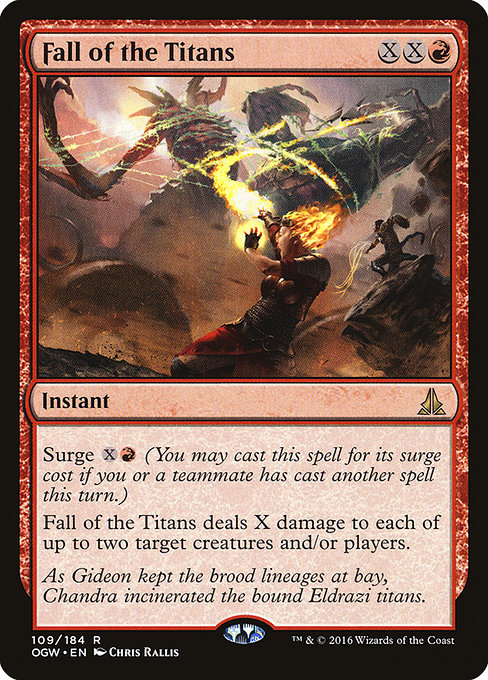
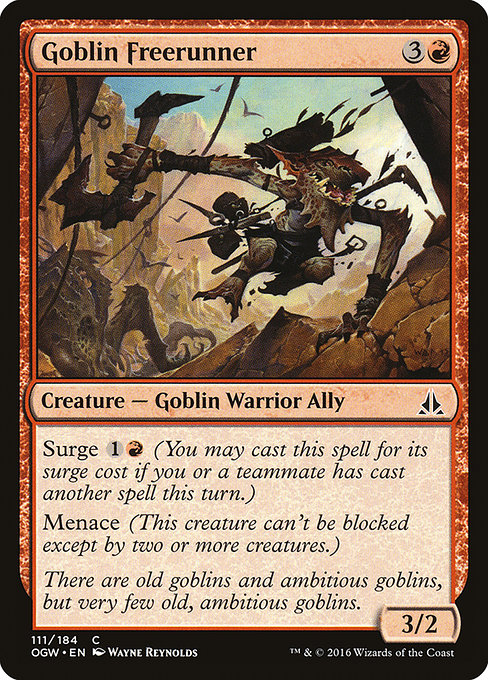
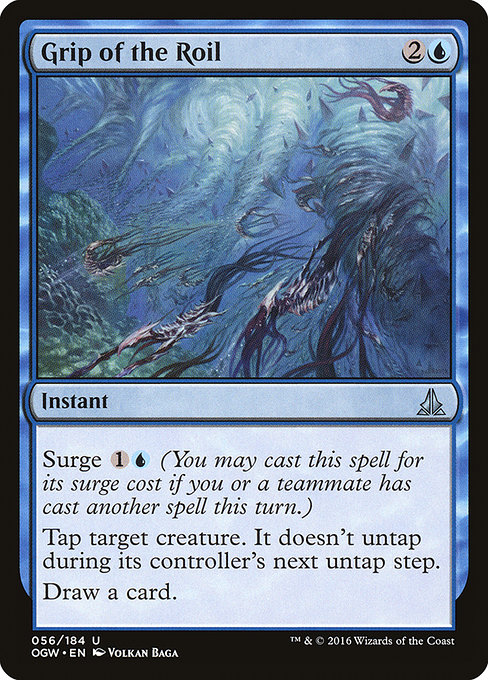
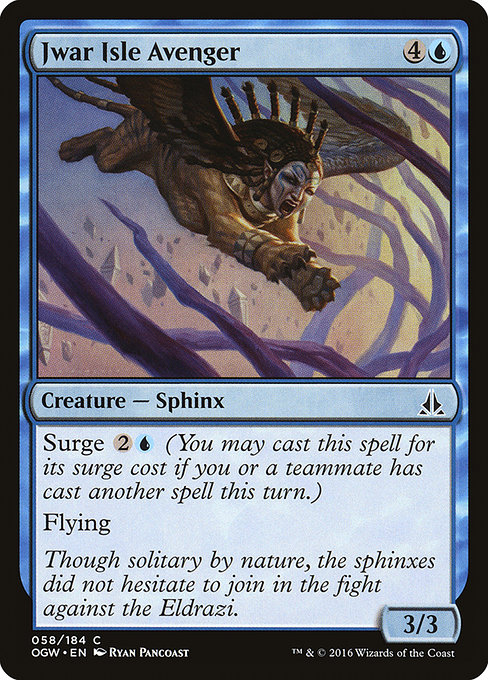
Some Magic mechanics reward patience. Surge rewards momentum. If you or a teammate has already cast a spell this turn, a surge card lets you pay a cheaper alternative cost - and in some cases, unlocks a bonus effect on top of the discount. It's a mechanic built around the simple, satisfying idea that spells should feed off each other.
What is Surge?
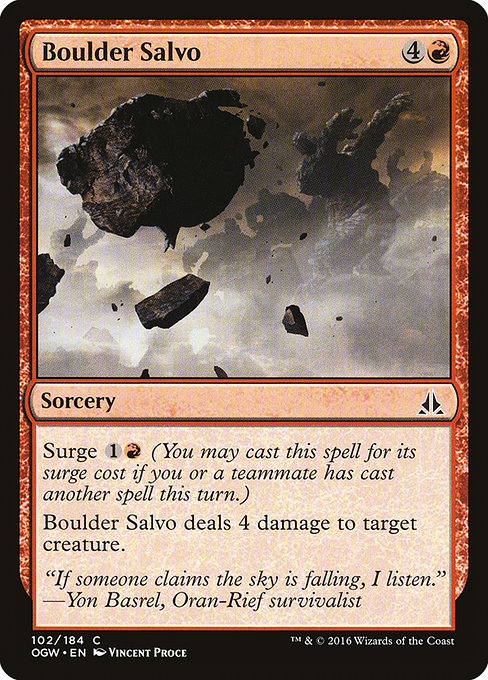
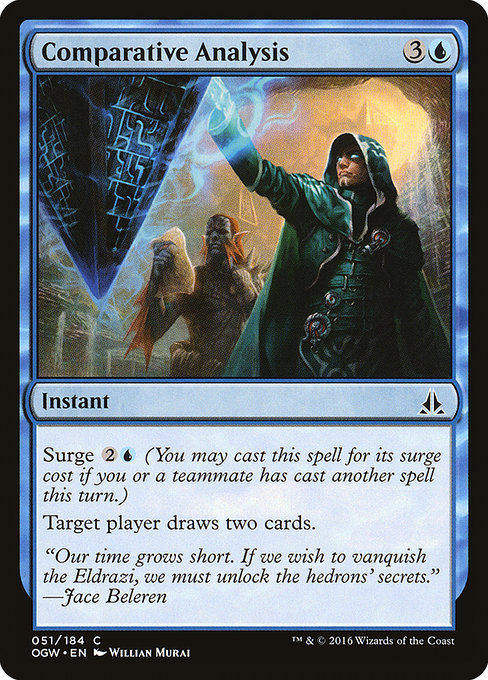
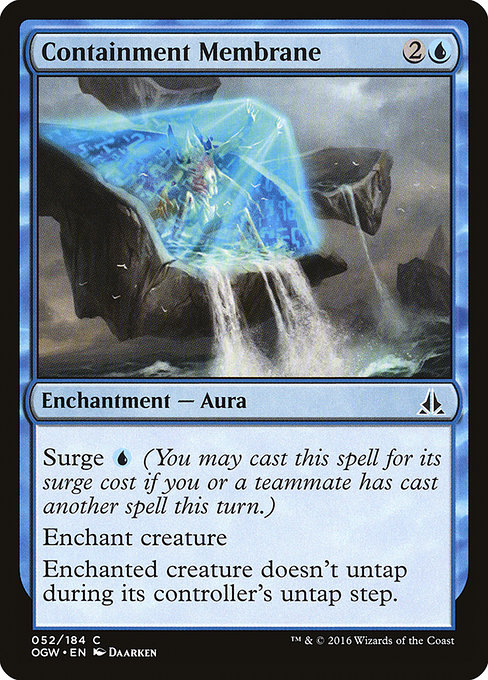
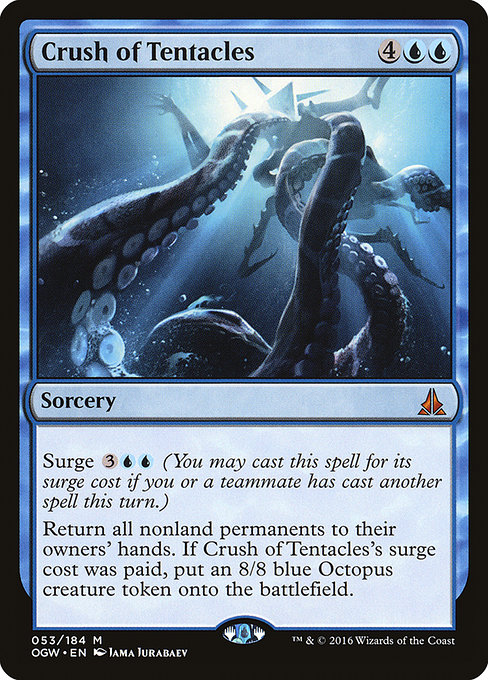
Surge is a keyword ability introduced in Oath of the Gatewatch (OGW, 2016). It gives a spell an alternative cost you can pay instead of its normal mana cost, but only if you or one of your teammates has already cast another spell earlier that same turn.
The condition is deliberately broad: the triggering spell doesn't have to have resolved, doesn't have to have been yours, and doesn't even have to be any particular type. You just need something to have been cast first. Once that condition is met, you unlock the surge cost - which is cheaper, more powerful, or sometimes both.
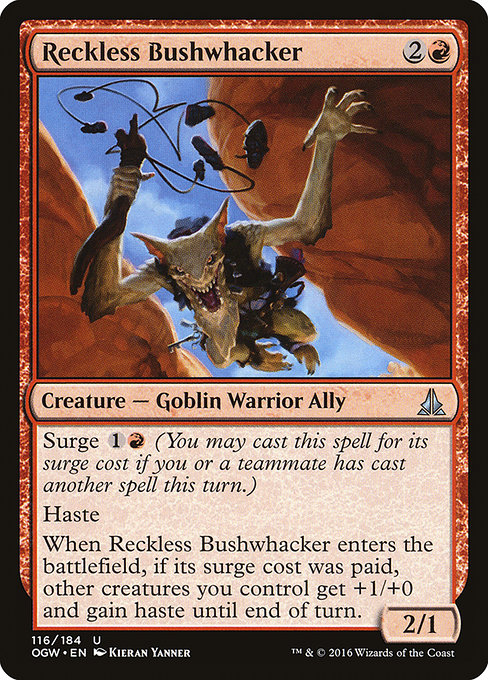
Reckless Bushwhacker is the clearest illustration of what surge looks like in practice. Normally a 2/1 with haste for {2}{R}, its surge cost drops to {1}{R}. And if you paid that surge cost, every other creature you control gets +1/+0 and haste until end of turn. One mana cheaper and a board-wide pump - that's the surge promise.
How Surge Works: The Rules
The comprehensive rules define surge precisely:
"Surge is a static ability that functions while the spell with surge is on the stack. 'Surge [cost]' means 'You may pay [cost] rather than pay this spell's mana cost as you cast this spell if you or one of your teammates has cast another spell this turn.'" - CR 702.117a
A few rulings are worth understanding before you sleeve up a surge deck:
- The triggering spell doesn't have to resolve. If you cast a spell and it gets countered, that still counts. Surge cares only that a spell was cast this turn, not what happened to it afterward.
- For instants, the trigger can still be on the stack. If you cast a spell and, while it's waiting to resolve, you hold priority and cast a surge instant - that works. The first spell is on the stack, which is enough.
- Surge doesn't change mana value. Casting a spell for its surge cost doesn't change what the card costs on paper. If an effect cares about a spell's mana value, that number is calculated from the printed mana cost, not the surge cost you actually paid.
- Copies inherit the surge payment. If you cast an instant or sorcery for its surge cost and then copy it, the copy is also considered to have had the surge cost paid - which matters for cards like Reckless Bushwhacker where the bonus effect is tied to how you cast it.
- Teammates count in multiplayer. In Two-Headed Giant, Emperor, and similar formats, a spell cast by an ally on your team satisfies the surge condition. The bonus effects, however, only help your own creatures - surge enables cooperation without being completely uncontrollable.
Rules note: Surge is an alternative cost, not an additional cost. You're paying instead of the normal mana cost, not on top of it. You can still apply cost reductions and other modifications when casting for the surge cost.
Strategy: How to Play With and Around Surge
Building a surge deck
The fundamental demand surge makes is simple: don't lead with your surge card. You need something cast first. In practice, this shapes your curve in a very specific way - you want cheap, impactful one-drops or cantrips that can fire off early and open the door for a surge play on the same turn.
The most efficient surge lines tend to look like this: cast a one-mana spell, then use the mana you've freed up (thanks to the discount) to deploy a surge card. You've spent less mana than normal, gotten two spells into play, and potentially triggered an additional bonus. That's a good turn.
In Commander and Two-Headed Giant, surge becomes easier to enable - teammates can do the work of casting the first spell, so you can hold your surge card and wait for the right moment without it blocking your own early turns. That said, the mechanic was deliberately balanced to work in one-on-one games too, so it's not entirely reliant on the multiplayer setup.
Playing against surge
Knowing how surge works gives you an edge against opponents using it. The key moment is recognising when an opponent has just cast their first spell of the turn and may be setting up a surge follow-up. Instant-speed interaction becomes particularly valuable here - counter or remove the first spell before it resolves, and you may deny the surge condition entirely.
That said, remember that even a countered spell satisfies surge. You'd need to prevent the first spell from being cast in the first place, not just from resolving.
Deck-building considerations
- Prioritise cheap, castable spells for turns where you want to surge later. Cantrips (spells that replace themselves with a card draw) do double duty: they enable surge and find you more cards.
- Surge cards that care whether the surge cost was paid (like Reckless Bushwhacker) are more sequencing-dependent than those that offer only a flat discount. Plan your turn order before you commit.
- In Limited formats, surge rewards dense spell counts. The more spells you have, the more often the condition is naturally met in the course of a normal turn.
Notable Surge Cards
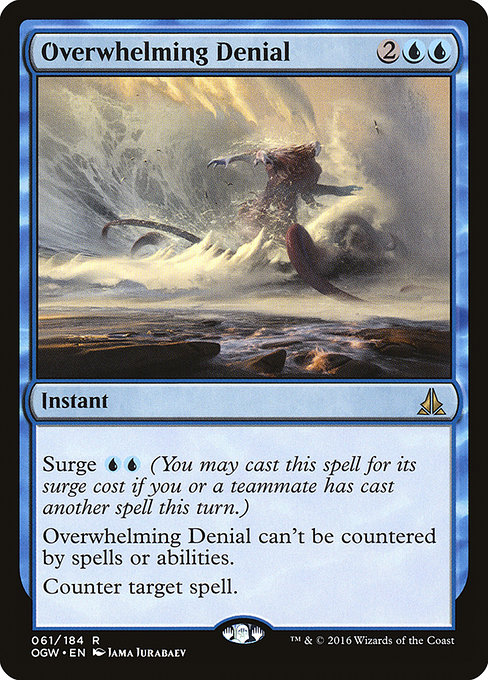
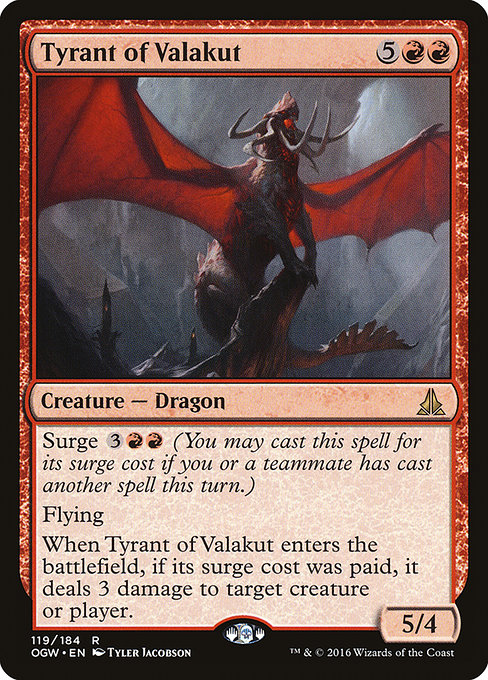
The surge mechanic appeared in Oath of the Gatewatch and hasn't received major reprints or expansions into other sets. Here are the standout cards from that original printing:
Reckless Bushwhacker
Reckless Bushwhacker is the poster child for surge doing everything right. A 2/1 Goblin with haste that drops from {2}{R} to {1}{R} when surge is active - and more importantly, it pumps your entire board. In aggressive red strategies, the combination of haste and a global +1/+0 on the same turn you're likely swinging anyway made this a genuine tournament card in its day. The surge cost creates a real decision: do you cast it cheaply and get the bonus, or cast it normally when you need it on an empty-spell turn?
Comparative analysis of other surge cards
The source material includes several cards with "Surge" in their name that don't actually use the surge keyword mechanic - Invigorating Surge, Surge of Salvation, Voltage Surge, and others are independent cards whose names happen to include the word. They're worth knowing in their own right, but they're not part of this mechanic.
The true surge mechanic cards are specifically those printed in Oath of the Gatewatch with the surge keyword in their rules text.
History of Surge
Surge was introduced in Oath of the Gatewatch in January 2016, set on the plane of Zendikar during the climactic battle against the Eldrazi. Thematically, it fits the set's focus on cooperation - the idea of allied forces building off each other's momentum.
The development team's stated goal was to balance the mechanic so it worked in two-player games without becoming broken in multiplayer. Teammates enabling each other's surge is a powerful advantage in Two-Headed Giant, but because the bonus effects only benefit your own permanents (not your teammates'), there's a natural ceiling on how much the multiplayer version spirals.
Surge has not returned as a keyword in a Standard-legal set since OGW, making it one of Magic's "one-set wonders" - mechanics that did their job for a single release and haven't been revisited. Whether it returns someday is, in my opinion, genuinely interesting design space - the mechanic is clean, intuitive, and easy to print at various power levels.