Training in MTG: Rules, Strategy & Notable Cards
Training is one of those mechanics that rewards you for thinking about your whole attack step, not just one creature at a time. Introduced in Innistrad: Crimson Vow (VOW) in 2021, Training captures the flavour of Innistrad's Humans perfectly - a scrappy fighter getting better in the field by fighting alongside stronger allies.
What is Training?
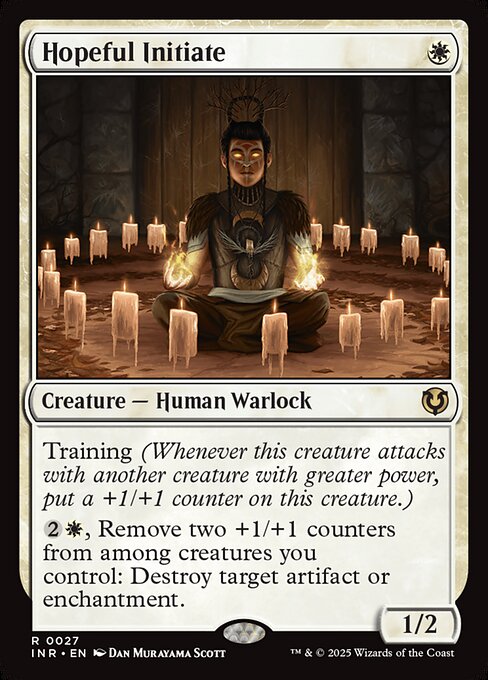
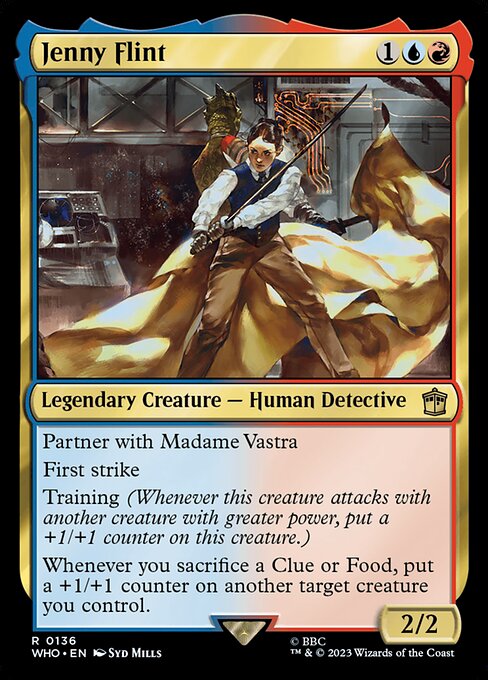
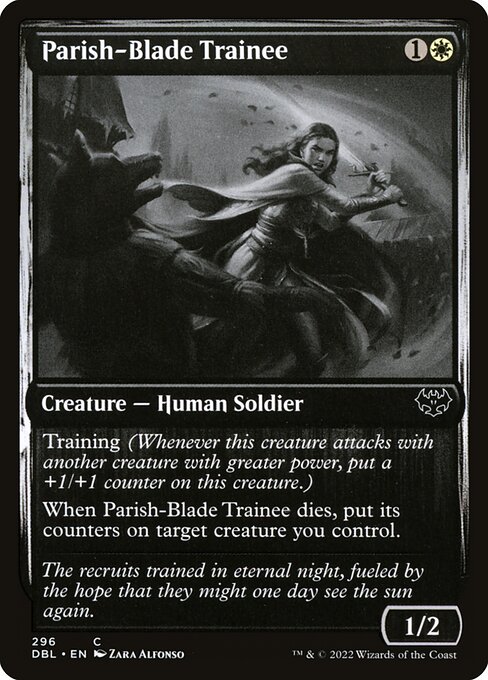
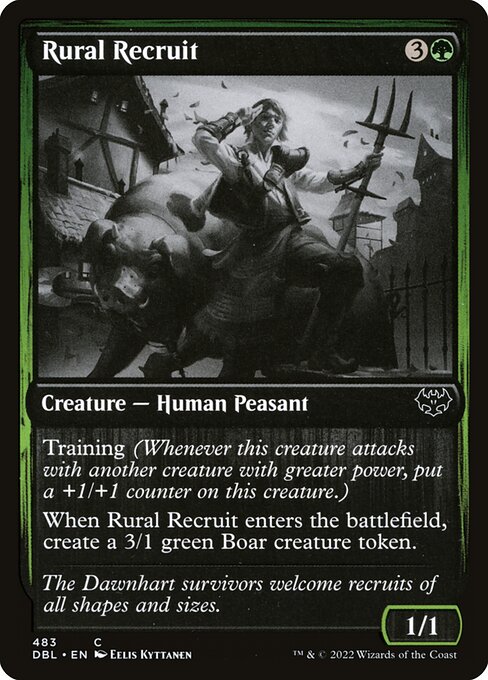
Training is a keyword ability found exclusively on creatures. When a creature with Training attacks at the same time as at least one other creature with greater power than it, the training creature gets a +1/+1 counter placed on it.
The printed reminder text says it plainly: "Whenever this creature attacks with another creature with greater power, put a +1/+1 counter on this creature."
In practice, you're building a small creature up over several turns by attacking with it alongside a bigger threat. Think of it as the junior fighter sharpening their skills against the veterans - each battle makes them a little tougher.
Lore aside: Training was designed specifically for the Humans of Innistrad, reflecting the idea that the monster-hunters of that plane are always pushing themselves harder to survive against overwhelming threats.
Rules
Training has a few rules wrinkles worth knowing clearly before you sit down with a deck built around it.
The full rules text
From the Comprehensive Rules (November 14, 2025 - Edge of Eternities):
702.149a. Training is a triggered ability. "Training" means "Whenever this creature and at least one other creature with power greater than this creature's power attack, put a +1/+1 counter on this creature."
- CR 702.149a
When is power checked?
Power is only checked at the moment the creatures attack - that's it. Once Training triggers, it doesn't matter what happens afterward. The other creature could die, leave the battlefield, or have its power reduced. The Training creature could gain power from another effect and now be equal to or greater than its training partner. None of that matters. As long as the Training creature itself is still on the battlefield when the ability resolves, it gets its counter.
This is good news for you as the Training player - your opponent can't just kill the big creature in response to deny the counter. The trigger is already on the stack.
Multiple instances of Training
If a creature somehow has multiple instances of Training (through copying effects, for example), each instance triggers separately. That means two Training abilities would each try to put a +1/+1 counter on the creature - so it could end up with two counters from a single attack.
More attackers don't mean more triggers
Here's a common misread: having three, four, or five creatures with greater power attacking alongside your Training creature does not cause Training to trigger multiple times. The ability triggers once per attack step, regardless of how many qualifying allies join the assault. One trigger, one counter.
No targeting involved
This is the key structural difference from the similar Mentor mechanic (which puts counters on other creatures and does require targeting). Training has no target. That means it can't be responded to by removing the "target" - there isn't one. It also means Training isn't affected by protection, hexproof, or shroud on either creature.
"When this creature trains"
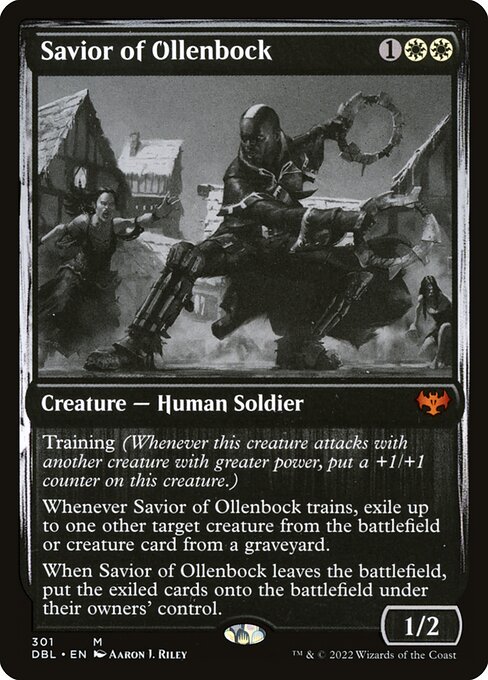
One card - Savior of Ollenbock - uses a secondary trigger tied to the training event itself. The rules cover this in:
702.149c. Some creatures with training have abilities that trigger when they train. "When this creature trains" means "When a resolving training ability puts one or more +1/+1 counters on this creature."
- CR 702.149c
So "trains" as a verb in rules text is specific shorthand for "a training ability resolves and puts counters on this creature." It won't trigger off other ways of putting +1/+1 counters on the creature.
Common misunderstandings
- "I need to keep the big creature alive to get my counter." - You don't. Once Training triggers, the counter is coming regardless.
- "Multiple big attackers give me multiple counters." - They don't. One trigger per Training ability per attack.
- "My opponent can counter the training trigger by giving my creature a power boost." - They can, if they increase the Training creature's power above the partner's before the trigger resolves. Power is checked on trigger, but the counter only goes on if the ability resolves with the creature still present.
Strategy
Building around Training
Training rewards you for maintaining a wide board with varied power levels. The ideal situation is having a few small Training creatures and one or two naturally large threats - your big creatures provide the "teachers" while your small creatures grow into threats themselves.
A few things to keep in mind when building:
- Redundancy in big attackers matters. If your one large creature gets removed, your Training creatures stall out. Running multiple high-power threats keeps the engine running.
- Training creatures snowball. A 2/1 with Training that has accumulated three +1/+1 counters is now a 5/4 - it no longer needs a trainer to attack effectively, and it might itself become the trainer for other small Training creatures.
- Attack every turn you safely can. Training only triggers on attacks. A slow, defensive game doesn't grow your creatures. White-red Human decks tend to suit Training naturally because they're already inclined toward aggressive, wide attacks.
Playing against Training
The key insight when playing against Training is that removal is most efficient before the attack step. Once the attack is declared and Training triggers, killing the large "trainer" creature accomplishes nothing for that trigger. If you want to deny a counter, remove the big creature before your opponent attacks.
Alternately, keeping the Training creature small matters less than keeping the board clear. A 2/1 that never attacks never trains.
Format check: Training was introduced in Innistrad: Crimson Vow (November 2021). It has appeared in sets tied to Innistrad's Human creature type. Check current format legality on Scryfall or the official Wizards site, as Standard rotations will have moved VOW out of that format by now.
Notable cards
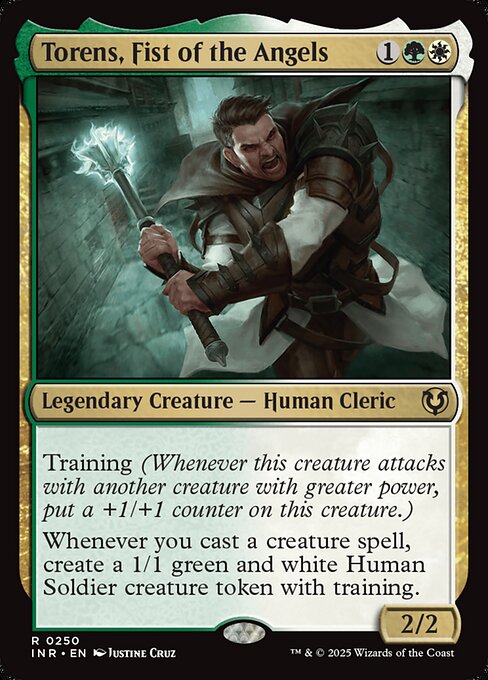
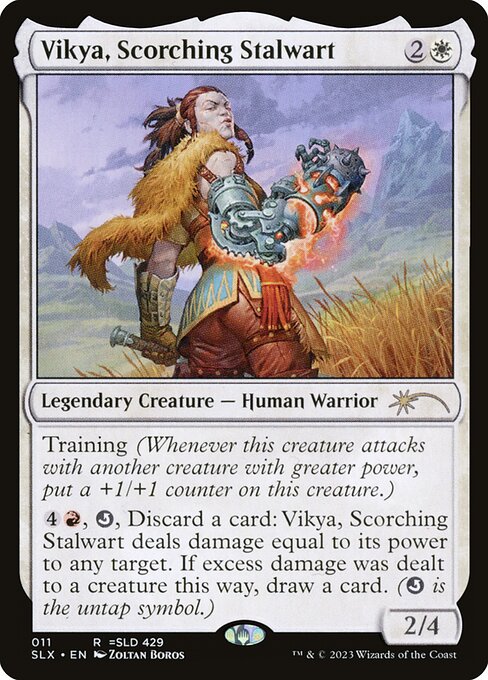
Training was primarily found in Innistrad: Crimson Vow's Human tribal theme. A few cards stand out as particularly interesting.
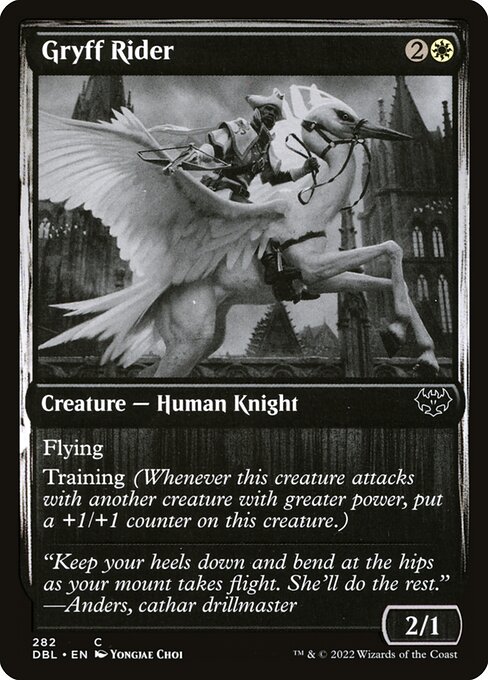
Gryff Rider
The textbook example creature for Training - a 2/1 with flying and Training for two mana. It illustrates the core appeal cleanly: a small evasive creature that can grow into a real threat over multiple attacks alongside larger allies. Flying is a natural pairing because it means your Gryff Rider often connects for damage even as it grows.
Savior of Ollenbock
The most mechanically interesting Training card. It's the only creature that uses the "when this creature trains" phrasing from CR 702.149c, triggering an additional ability each time its Training resolves. This layered design rewards you for building a dedicated Training shell - the more you can reliably trigger Training, the more value Savior of Ollenbock generates beyond just growing in power.
Training vs. Mentor - a comparison
It's genuinely hard to talk about Training without mentioning Mentor, the mechanic it most closely mirrors. The table below captures the key differences:
| | Training | Mentor | |---|---|---| | Introduced | Innistrad: Crimson Vow (2021) | Guilds of Ravnica (2018) | | Direction | Counter goes on the smaller creature | Counter goes on the smaller creature | | Trigger condition | Smaller creature attacks with a bigger one | Bigger creature attacks with a smaller one | | Uses targeting | No | Yes | | Flavour | Student learns from stronger allies | Master trains a weaker student |
The lack of targeting in Training has real gameplay implications - it's harder for opponents to disrupt, and it sidesteps the whole question of protection or hexproof on the recipient. In exchange, Mentor has slightly more flexibility because the active player chooses which smaller creature receives the counter.
In my opinion, Training is the more self-contained mechanic - the creature grows itself, which makes individual Training creatures feel more rewarding to invest in over a long game.
History
Training debuted in Innistrad: Crimson Vow (VOW), released November 19, 2021, as a mechanical identity for the Humans of Innistrad. Wizards of the Coast designed it to complement the Human tribal theme already present in the Innistrad setting - the idea that humans survive against vampires, werewolves, and worse by constantly pushing themselves to improve.
The mechanic exists alongside Mentor as a thematic sibling: both use the relative power of attacking creatures to distribute +1/+1 counters, but from opposite vantage points. Where Mentor (from Guilds of Ravnica, 2018) represents a master teaching a student, Training represents the student learning through experience in the field.
So far, Training has remained tied to Innistrad's Human creature type and has not appeared in subsequent sets as a recurring mechanic - though the "when this creature trains" template from Savior of Ollenbock has since been mirrored in how Mentor is templated on newer cards (such as Aegis of the Legion), showing that Wizards found the phrasing useful enough to carry forward.