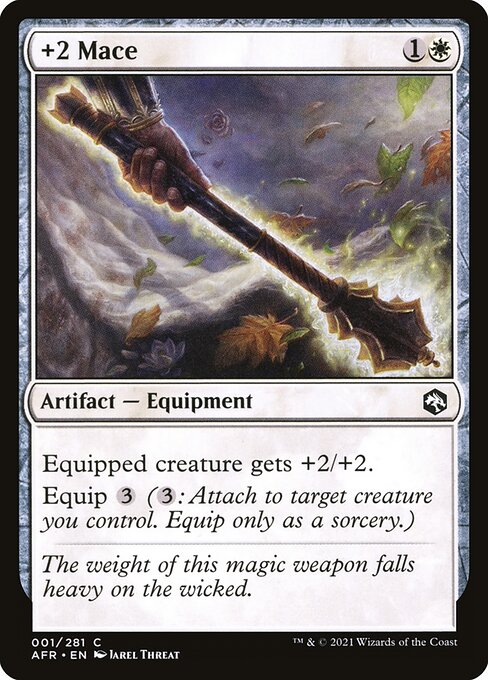
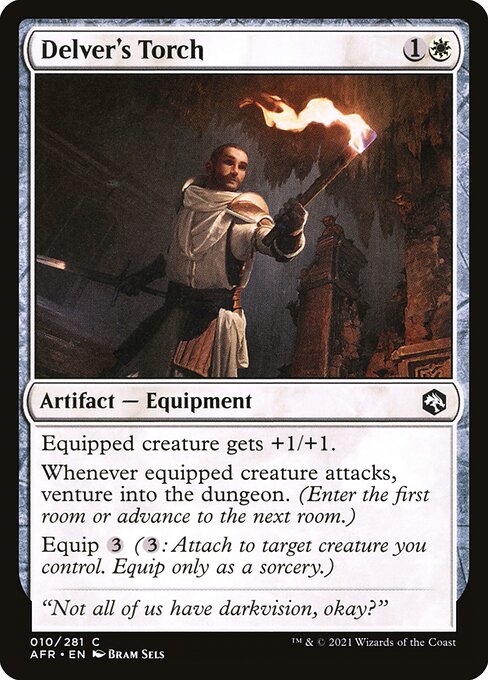
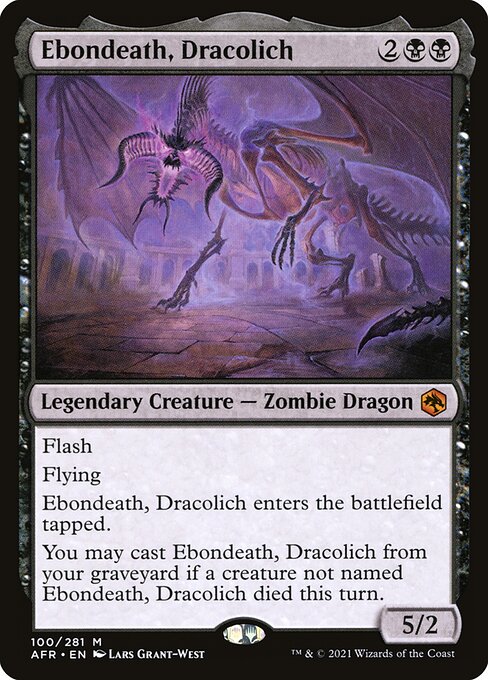
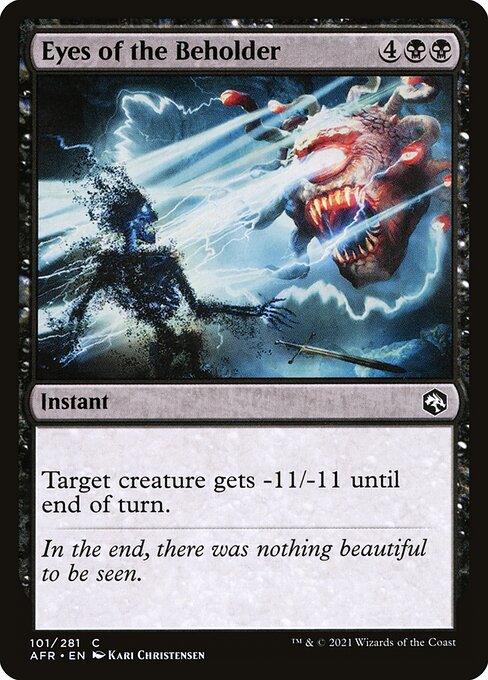
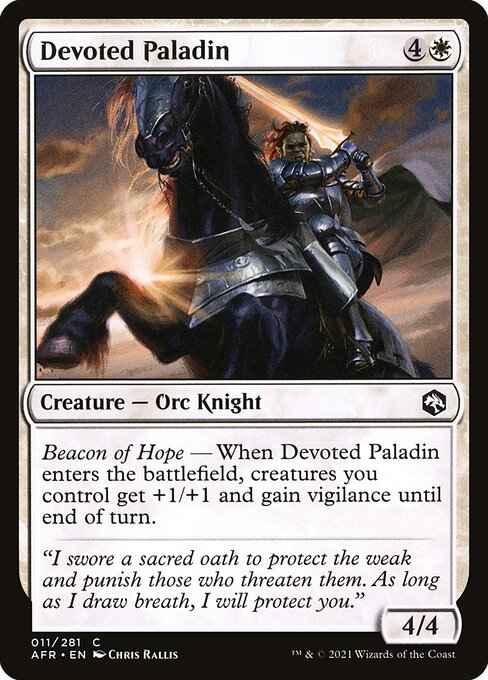
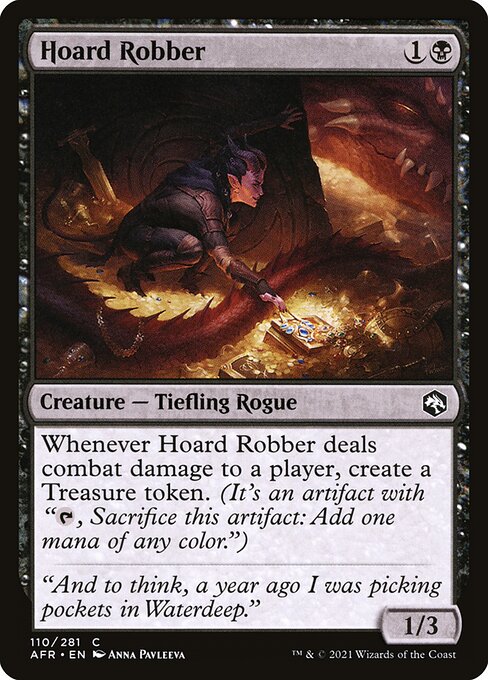
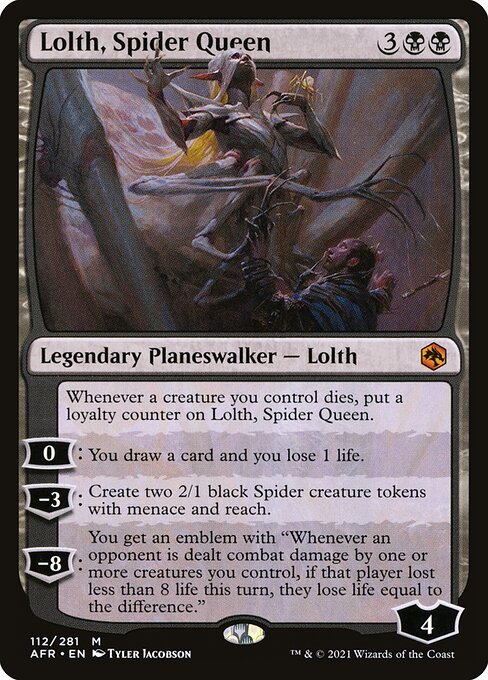
Adventures in the Forgotten Realms (AFR) Set Guide
In the summer of 2021, Magic: The Gathering did something it had never quite done before - it handed over a core set slot to another game entirely. Dungeons & Dragons: Adventures in the Forgotten Realms (AFR) replaced the traditional core set for the 2021-2022 Standard rotation, making it the first time a D&D crossover filled that structural role in Magic's calendar.
The result was a set soaked in Forgotten Realms flavour, from the dungeons beneath Waterdeep to the frozen tundra of Icewind Dale - and it brought a handful of genuinely novel mechanics along for the ride.
What is Adventures in the Forgotten Realms?
AFR is Magic's 88th expansion. It was released on July 23, 2021, and contains 281 cards in the main set (with the full product including variants and Commander extras reaching 402 cards). Wizards of the Coast published it as a crossover product with Dungeons & Dragons, specifically using the Forgotten Realms campaign setting - the sprawling, medieval-flavoured world of Faerûn on the planet Toril.
Importantly, the Forgotten Realms is not canonically part of Magic's Multiverse. Think of AFR less like a story set visit and more like a themed crossover celebration - the two games sharing a table rather than merging their continuities. Wizards were transparent about this: some characters from D&D appear as Planeswalker cards not because they have a planeswalker's spark in the Magic sense, but because Planeswalker was simply the most exciting card type to put iconic D&D characters on.
Lore aside: The set shipped alongside a five-episode D&D campaign written by Will Hindmarch, published through Magic Story. It features character sheets for Chandra, Liliana, Kaya, Yanggu, and Narset - though their presence is purely a creative blend of the two games, not canon for either.
Themes and mechanics
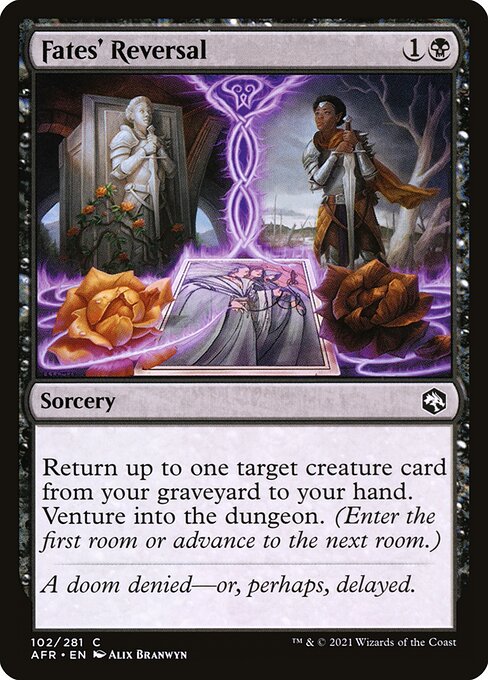
Venturing into the dungeon
The headline mechanic of AFR is venture into the dungeon - an ability that sends your player token progressing through one of three dungeon cards placed outside the game: Dungeon of the Mad Mage, Lost Mine of Phandelver, or Tomb of Annihilation. Each dungeon is a branching map of rooms with triggered effects, and you work your way through it over multiple venture triggers until you reach the final room and "complete" it.
This is genuinely unlike anything Magic had done before. Dungeons exist in a zone of their own - not in your hand, library, or battlefield - and completing one earns a bonus effect unique to that dungeon. It's a lovely mechanical translation of what it actually feels like to explore a D&D dungeon: incremental progress, choices along the way, and a payoff at the end.
The party mechanic returns
AFR brought back the party mechanic first introduced in Zendikar Rising (ZNR, 2020). A "full party" consists of one each of a Cleric, Rogue, Warrior, and Wizard among your creatures, and several cards reward you for having a complete or partial party. Given the D&D setting, it fits naturally - you're literally assembling an adventuring party.
Dice rolling
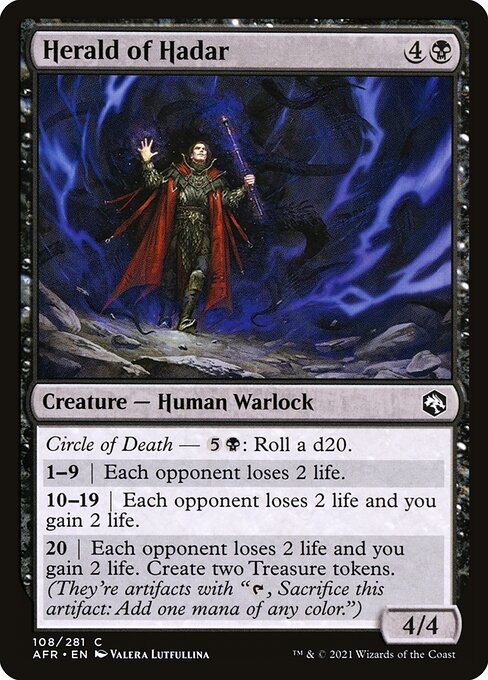
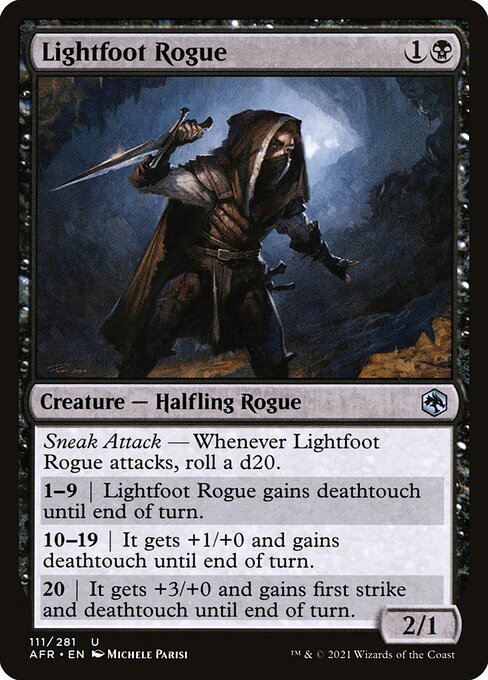
AFR leaned heavily into dice rolling as a mechanic, building on what was introduced in Commander Legends (CMR, 2020). Many cards ask you to roll a d20 - a twenty-sided die - and deliver different outcomes based on ranges of results. Rolling a 1 is usually the worst outcome; rolling a 20 is the "natural twenty" moment that D&D players know well, and Magic rewards it accordingly.
This mechanic is intentionally swingy and flavourful. It won't win over players who prefer deterministic game states, but it captures the chaotic spirit of rolling dice around a D&D table perfectly.
Flavour-first design throughout
Beyond those three pillars, AFR is a set where flavour does a lot of heavy lifting. Cards like You Meet in a Tavern and You Find the Villains' Lair are part of a cycle of "choose your own adventure" style encounters that tell a small story across the set - following a party of four characters: Ellywick, Hama, Nadaar, and Varis.
The set has no Story Spotlights in the traditional Magic sense. Instead, those adventure-card cycles carry the narrative.
Limited and Draft
AFR Draft was defined by a few core tensions. The dungeon mechanic encourages patience and incremental value - you want multiple venture triggers over the course of a game, not just one. That creates a natural push toward midrange and value-oriented strategies in most colour pairs.
Dice rolling adds a layer of variance that can feel chaotic in Limited. Getting a natural 20 on a key d20 roll can swing a game dramatically, which some players love and others find frustrating. Going in with realistic expectations about that variance makes the format more enjoyable.
The party mechanic gives Limited deckbuilders a puzzle to solve: building a deck with a reasonable spread of Clerics, Rogues, Warriors, and Wizards while also maintaining a coherent game plan. It's a satisfying puzzle when it comes together.
Format check: AFR was legal in Standard from its release in July 2021 until the rotation in September 2022. It's currently legal in Historic, Pioneer, Modern, Legacy, Vintage, and Commander.
Lore and setting
The Forgotten Realms is one of D&D's most beloved and long-running campaign settings. Faerûn - the continent at the heart of it all - is a world of city-states, ancient ruins, magical academies, and civilisations roughly analogous to pre-industrial Europe, elevated by the presence of magic.
AFR's cards range across the breadth of that setting. The basic lands alone are a tour of iconic locations:
- Waterdeep, the great city of the North (Island)
- Baldur's Gate, the sprawling Sword Coast metropolis (Swamp)
- Neverwinter Wood, a dense and magical forest (Forest)
- Silverymoon, jewel of the Silver Marches (Plains)
- The Spine of the World, the mountain range of the frozen North (Mountain)
The Underdark - the vast cavern network beneath Faerûn - features on several cards, as does the Yawning Portal tavern in Waterdeep, the traditional entry point to the Dungeon of the Mad Mage. Iconic D&D locations like the Tomb of Annihilation and the Lost Mine of Phandelver appear as the actual dungeon cards players navigate through gameplay.
Some of D&D's most recognisable characters appear on cards. Iconic figures from the Forgotten Realms share the set with classic D&D monsters - beholders, mind flayers, owlbears, xorns - rendered faithfully in Magic card form.
Set legacy
AFR holds an interesting place in Magic's history as the set that proved a full crossover product could occupy a structural slot in the release calendar - not just as a supplemental product, but as a replacement for the core set.
The venture into the dungeon mechanic was well-received as a flavourful and mechanically novel design, though it saw limited competitive play outside of certain Commander builds and a handful of Standard and Historic applications. The d20 rolling mechanic remains one of Magic's more divisive designs: celebrated for its table feel and D&D authenticity, criticised for its inherent randomness in a game where many players value skill expression.
For Commander players, AFR delivered four Commander precons alongside the main set, each built around Forgotten Realms themes and using the dungeon and party mechanics. Those decks introduced several cards that became Commander staples.
In my opinion, AFR is best understood as a celebration set - its ambitions were flavour-first, and it largely succeeded on those terms. It might not have reshaped competitive formats the way some sets do, but it created a genuinely joyful experience for players who love D&D, and it showed that Magic's card frame is flexible enough to hold the spirit of almost any game universe you put inside it. ✨