Betrayers of Kamigawa (BOK): Set Guide
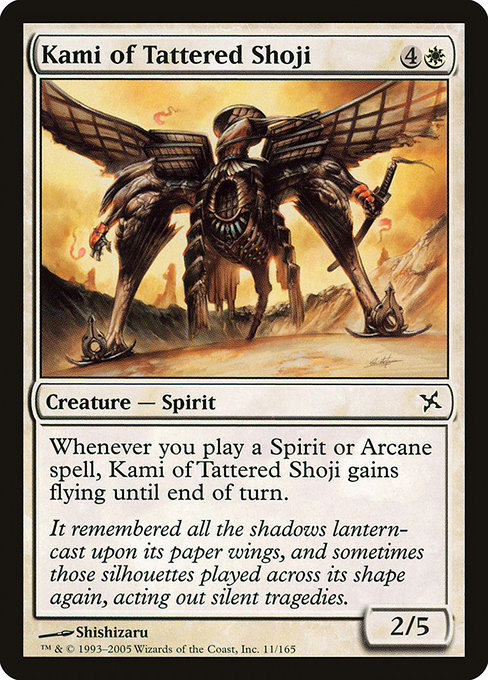
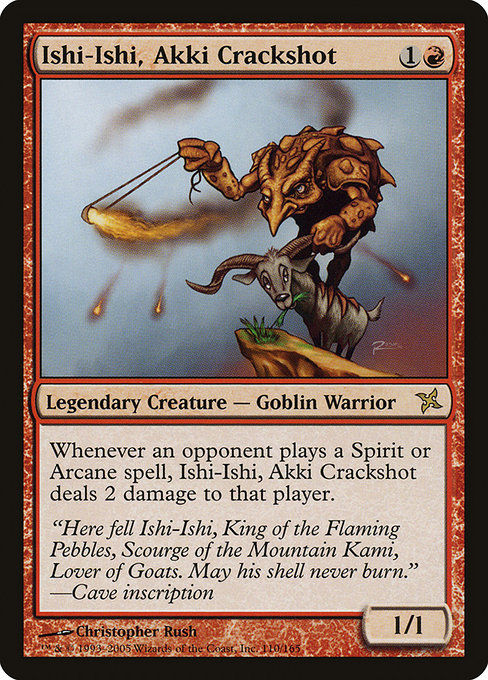
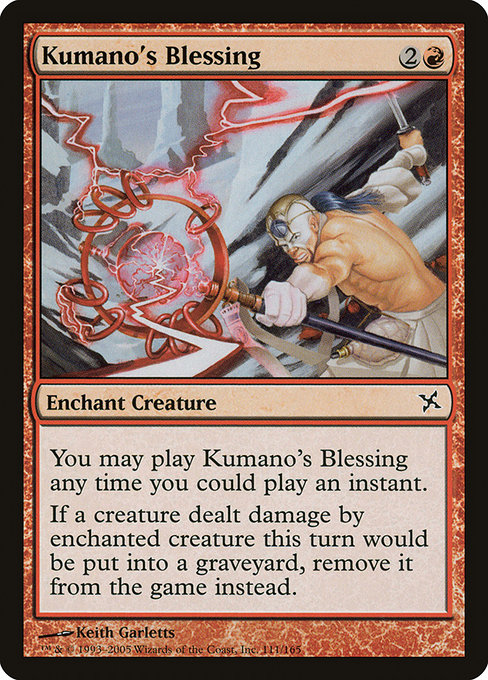
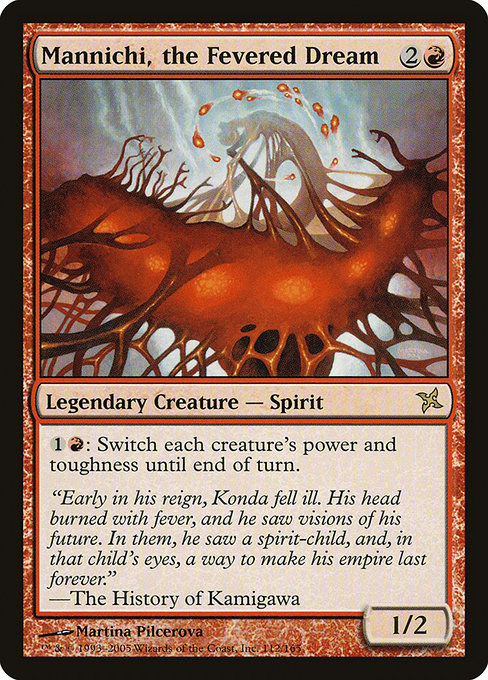
The middle chapter of a block is where things get complicated - and Betrayers of Kamigawa earns that description fully. Released in February 2005, it's the second set in the Kamigawa block and the first small expansion of that cycle, sitting between Champions of Kamigawa (CHK) and Saviors of Kamigawa (SOK). At 165 cards, it's a tightly focused set that deepens the mechanical and narrative threads the block started.
What is Betrayers of Kamigawa?
Betrayers of Kamigawa (set code: BOK) is the thirty-fourth Magic: The Gathering expansion overall. It released in February 2005, with a prerelease on January 22, 2005. As a small expansion - a set size structure Wizards used frequently in this era - its 165 cards are designed to supplement and enrich Champions of Kamigawa rather than stand alone.
The Kamigawa block tells the story of a war between the mortal world and the spirit world (kami) on a plane inspired by feudal Japan. Betrayers, as the name suggests, is where allegiances fracture and the conflict deepens. It came out during a period when Magic sets were built around flavour-dense, mechanically ambitious blocks, and Kamigawa is one of the more distinctive environments in the game's history - for better or worse, depending on who you ask.
Format check: Betrayers of Kamigawa has long since rotated out of Standard. It is legal in Legacy, Vintage, and any format that allows older card sets.
Themes and mechanics
Betrayers of Kamigawa continues the mechanical themes established in Champions of Kamigawa - most centrally the tension between spirits and non-spirit creatures, and between the mortal world and the kami that inhabit Kamigawa's spirit realm.
The Kamigawa block as a whole is known for its Splice onto Arcane mechanic, which let players attach the text of spells with the ability onto Arcane spells cast that turn, and the Soulshift keyword, which returned spirits from graveyards when other spirits died. Both mechanics appear in BOK, reinforcing the block's identity as one built around spirits, shrines, and the supernatural.
Betrayers also introduced Ninjutsu - one of the block's most beloved mechanical additions. Ninjutsu lets you return an unblocked attacking creature to your hand to put a Ninja directly onto the battlefield tapped and attacking, effectively ambushing your opponent with a creature that was never declared as an attacker. It's a clever, flavourful mechanic that rewards careful play and has remained popular enough to see reprints and callbacks in later sets.
Graft is another mechanic introduced in the Kamigawa block era, though the mechanical landscape across the three sets is dense and each set contributes its own flavour of creature interaction.
The set also deepens the Arcane spell subtype ecosystem, which is central to Kamigawa block Limited and to several constructed strategies of the era.
Limited and Draft
Drafting Betrayers of Kamigawa typically meant drafting it alongside Champions of Kamigawa, which was the dominant set in any given pack configuration. BOK's small set size means its cards appear less frequently but can dramatically shift draft strategies when they do.
The Ninja tribe - enabled by Ninjutsu - creates a distinct draft archetype around evasive creatures and hand manipulation. Assembling a coherent Ninja strategy rewards players who understand how to set up unblocked attackers reliably. It's one of those archetypes that feels deeply satisfying when it comes together.
Spirit and Arcane synergies remain the backbone of the format, as they were in Champions. Soulshift chains give black and green creature strategies staying power, while Splice onto Arcane rewards building spell packages with enough Arcane density to make the mechanic fire consistently.
Kamigawa block Limited had a reputation at the time for being slower and more complex than many formats - it rewarded players who understood the block's synergy web rather than those who simply drafted the most individually powerful cards.
Lore and setting
Betrayers of Kamigawa sits at the turning point of the Kamigawa block's story. The plane of Kamigawa is a world steeped in spiritual hierarchy - the kami are not distant gods but immediate, present forces, and the war between them and mortals has been devastating.
The "betrayers" of the title refers to shifting loyalties within the conflict: mortals who side with the spirit world, and perhaps more literally, the forces that reveal themselves to have been working against Kamigawa's mortal clans all along. The block's narrative draws heavily on Japanese myth and legend, with a cast of legendary creatures and characters that flesh out families like the Daimyo Konda's lineage and the various Spirit Lords.
Lore aside: The Shadow Gate appears in the Betrayers of Kamigawa storyline - specifically in the novel Heretic: Betrayers of Kamigawa - and reappears in Guardian: Saviors of Kamigawa, tying the narrative of the block's middle and final chapters together.
The four theme decks included with Betrayers of Kamigawa each focus on different aspects of the set's mechanical and flavour identity, offering a structured entry point into the block's themes.
Set legacy
Kamigawa block, and Betrayers within it, has had a complicated reputation over the years. At release, the block was considered underpowered in constructed play relative to the powerful Mirrodin block it was paired with in Standard - a mismatch that frustrated players at the time.
In retrospect, the block is remembered with genuine affection, partly for its extraordinarily rich flavour and worldbuilding, and partly because several of its mechanics - particularly Ninjutsu - aged far better than their original context suggested. Ninjas became a beloved casual and Commander tribe, and Ninjutsu has since appeared on cards in later sets, most notably in Modern Horizons and Kamigawa: Neon Dynasty (NEO, 2022).
Neon Dynasty, released almost exactly seventeen years after Betrayers, revisited Kamigawa in a cyberpunk future setting and explicitly called back to the original block's mechanics and characters. That sequel's commercial and critical success prompted many players to look back at Betrayers of Kamigawa and its siblings with fresh eyes.
I think the honest assessment is this: Betrayers of Kamigawa is a set that was perhaps ahead of its time in terms of flavour depth, even if its power level and mechanical cohesion left something to be desired in the competitive environment of 2005. If you're exploring Magic's history, the Kamigawa block is a fascinating detour - and Betrayers is where the story gets interesting.