Mirrodin (MRD): The Set That Changed Everything
What is Mirrodin?
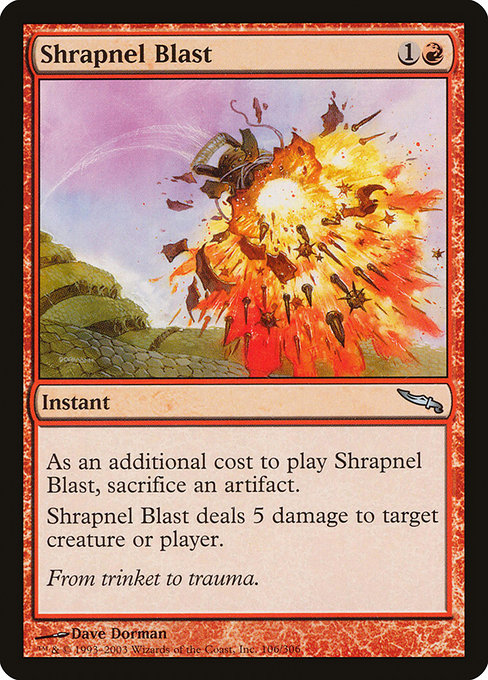
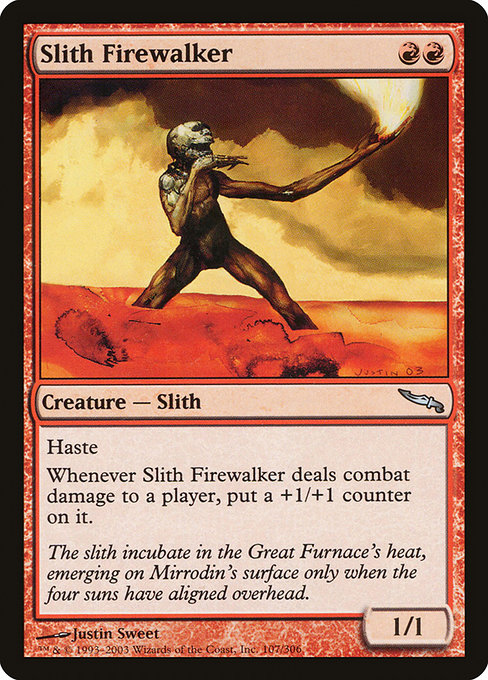
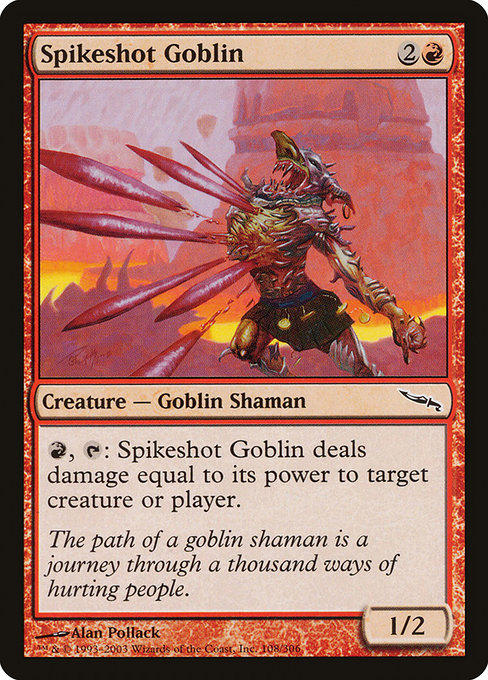
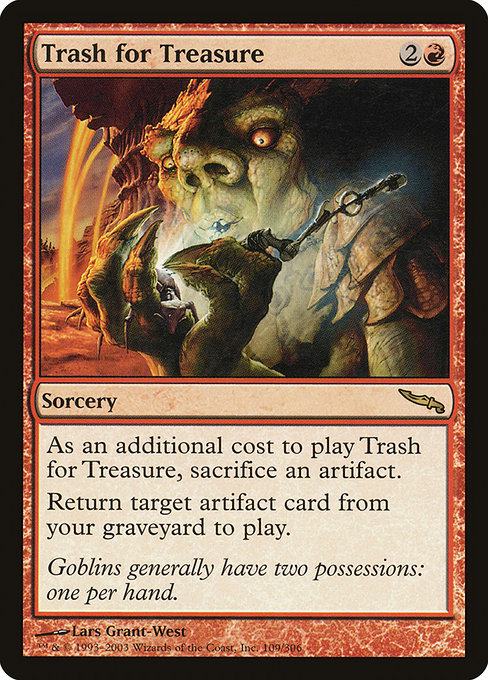
Released on October 2, 2003, Mirrodin is the first set of the Mirrodin block and the thirtieth Magic: The Gathering expansion. It's 306 black-bordered cards - 88 rares, 88 uncommons, 110 commons, and 20 basic lands - and it arrived with the kind of quiet confidence that only comes before something explodes.
And it did explode. Not in a good way for tournament organisers, but absolutely in a memorable way for Magic history.
Mirrodin was the first expansion to use the new card frame that had debuted in Eighth Edition (2003), and it came packaged in 15-card boosters, 75-card tournament decks, four preconstructed theme decks, and a fat pack. The set's expansion symbol is a small image of Sword of Kaldra, which also served as the foil prerelease promo - notably, the first prerelease promo card to feature alternate art, and the first that wasn't a creature.
Format check: Mirrodin's legacy lives primarily in older formats like Legacy and Vintage, though several of its cards were banned during their Standard and Extended lifetimes. More on that below.
Themes and mechanics
An artificial world, an artifact-heavy set
Mirrodin's design is built around a single obsession: artifacts. The plane is an artificial world, and that theme runs all the way down to the card construction. Almost every archetype, mechanic, and synergy in the set either cares about artifacts, produces artifacts, or is an artifact.
This wasn't just flavour. It was a deliberate mechanical identity that ended up being, in hindsight, dangerously powerful.
Equipment - the mechanic that stuck around forever
Mirrodin introduced a brand-new artifact subtype: Equipment, paired with the keyword equip. The idea is straightforward - Equipment cards represent swords, armour, and other gear that attach to a creature and boost it. But here's the key difference from the Aura enchantments that came before:
If the creature an Equipment is attached to dies, the Equipment stays on the battlefield.
You just equip it to your next creature and keep swinging. That resilience is enormous. Auras had always been risky because losing the creature meant losing the enchantment too - a two-for-one disaster waiting to happen. Equipment changed that calculus permanently, and the mechanic has been a staple of Magic design ever since.
Affinity - the mechanic that caused bans
The affinity keyword reduced the mana cost of a spell for each permanent of a given type you controlled. In Mirrodin's case, that meant affinity for artifacts - and the set also introduced a cycle of artifact lands, which were, as the name suggests, lands that also counted as artifacts.
You can probably see where this is going.
Artifact lands meant your mana base itself fuelled affinity. Spells that already cost very little became essentially free. The combination created a deck - quickly nicknamed Affinity - that could deploy an enormous board in the first few turns of the game with almost no resistance. It was one of the most oppressive Standard environments in the game's history.
Clockwork creatures and nostalgic callbacks
Mirrodin also made a point of nodding to famous artifacts and mechanics from earlier in Magic's history. Clockwork creatures - artifacts with counters that tracked their power - echoed designs from the very earliest sets. Chrome Mox, a direct descendant of the Black Lotus-adjacent Mox cycle, landed in the set and immediately became a Legacy staple.
Solemn Simulacrum also appears here - Jens Thorén's invitational card, designed by the player who won the 2002 Magic Invitational. It's become one of the most beloved utility creatures in Commander history. ✨
A note on the new card frame
Mirrodin was the first expansion to use the then-new card frame. It revealed an unintended problem almost immediately: with so many artifact cards on the table, it became genuinely difficult to tell artifacts apart from white cards at a glance. Both shared a similar light, off-white border colouring in the new frame. It's a small thing, but it's the kind of design lesson that quietly shapes future decisions.
Limited and Draft
Mirrodin draft was, like the set itself, dominated by artifacts. Because artifacts are colourless, they slot into any deck - which meant every drafter had access to the same powerful pool of tools regardless of what colours they were in.
This made the format feel somewhat flatter than typical Limited environments, where colour choices drive differentiation. Equipment was powerful and often picked highly, since a well-equipped creature could dominate a Limited game in ways that were difficult to answer. The set's speed varied significantly depending on how heavily affinity-synergy cards appeared at the table.
I think it's fair to say Mirrodin Limited was more interesting as a curiosity than as a deeply replayable draft format - the artifact density that made the set flavourful also compressed the decision space in ways that became repetitive over time.
Notable cards and tournament impact
Mirrodin is, bluntly, infamous for being one of the most ban-heavy sets in Magic's history.
The combination of affinity and artifact lands created a Standard environment so warped that Wizards of the Coast issued emergency bans. The artifact land cycle itself was banned in Standard in March 2004, just months after the set's release - an unusually fast response. Disciple of the Vault, a one-drop that pinged opponents whenever an artifact they controlled went to the graveyard, was also banned, as it turned any artifact removal into direct damage in mirror matches and made the deck even more resilient to interaction.
Thirst for Knowledge, a draw spell that rewarded artifact-heavy hands, was restricted in Vintage.
The problem Mirrodin exposed was structural: by making most of its powerful cards colourless artifacts rather than colour-specific spells, the set bypassed the fundamental balancing mechanism in Magic's design. Colours are supposed to check each other. Artifacts don't have that check built in - everyone can play them.
Chrome Mox went on to be banned in Modern when that format launched, and remains banned there today. It's legal in Legacy, where it sees play in fast combo decks.
Despite - or perhaps because of - the chaos it caused, Mirrodin produced an enormous number of cards that are still discussed, collected, and played across various formats.
Lore and setting
An artificial world with a missing colour
Mirrodin is a plane built entirely from metal, constructed by the planeswalker Karn and later named by Memnarch after the Mirari - a powerful artifact from the previous block. Its environments and inhabitants blend the organic and the metallic in ways that feel genuinely alien.
The plane is orbited by four satellites, described interchangeably as suns and moons, each corresponding to a colour of magic: red, black, white, and blue. Green is notably absent - a plot point that takes on greater significance as the story develops across the full Mirrodin Cycle.
Glissa Sunseeker's story begins
The set's central protagonist is Glissa Sunseeker, an elven hunter described as perhaps the finest warrior among the elves of Mirrodin. Her story begins when monstrous creatures called levelers - unstoppable, mechanical destroyers - start hunting her specifically. The question of why they want her dead, and what it reveals about the secrets buried within Mirrodin itself, drives the narrative of the block.
The story was told in the novel The Moons of Mirrodin by Will McDermott (September 2003), featuring Glissa alongside Memnarch, the goblin Slobad, and a wide cast of Mirrodin's inhabitants.
Lore aside: Memnarch himself is one of Magic's more tragic villains - a guardian construct left in charge of the plane by Karn, who gradually became corrupted by the Mirari's power. His obsession with collecting "souls" (planeswalkers) is the engine that drives much of what happens on the plane.
Set legacy
Mirrodin occupies a strange place in Magic history. It's remembered simultaneously as one of the most mechanically creative sets ever made and as one of the most catastrophic for tournament play.
Equipment is an unambiguous success story. It solved a real design problem with Auras, added a compelling new axis to creature combat, and has appeared in virtually every set since. Mirrodin gave us that.
Affinity is a more complicated legacy. As a keyword, it's elegant - costs scale with your board state, rewarding deck construction and in-game decisions. As implemented in Mirrodin, combined with artifact lands, it was simply too much. The lesson Wizards took from it - that colourless payoffs need tighter constraints - has shaped set design ever since.
The Mirrodin plane itself returned in the Scars of Mirrodin block (2010-2011), where the Phyrexian invasion Memnarch's machinations had set in motion finally arrived in full force. That block, and the plane's eventual transformation into New Phyrexia, is one of Magic's most beloved storylines. None of it exists without the 2003 set that first took us to a world made of metal.
Mirrodin is, in my view, one of the most important sets in Magic's history - not because it got everything right, but because the things it got wrong taught the game so much about how to get things right.