Affinity: MTG Mechanic Explained
There's a particular thrill in watching a seven-mana spell hit the table on turn two. That's the promise Affinity makes: the more you've built up on the battlefield, the less your spells cost to cast. It's one of the most elegant cost-reduction mechanics in Magic's history - and also one of the most infamous.
What is Affinity in MTG?
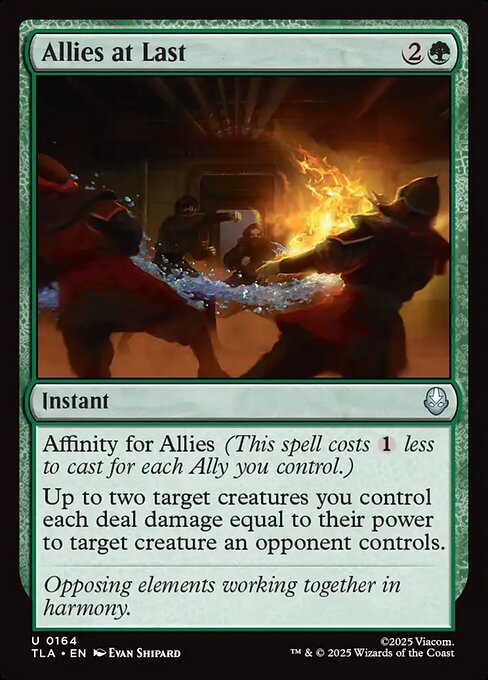
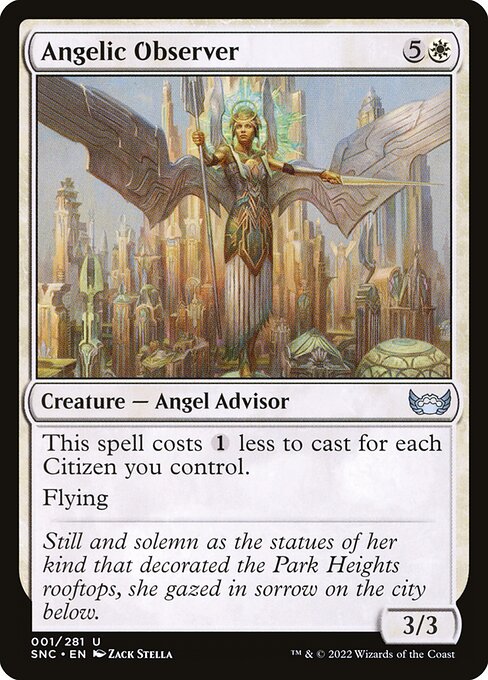
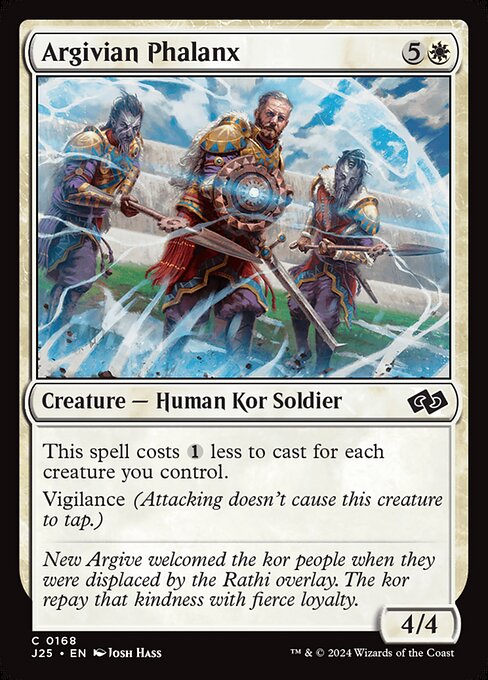
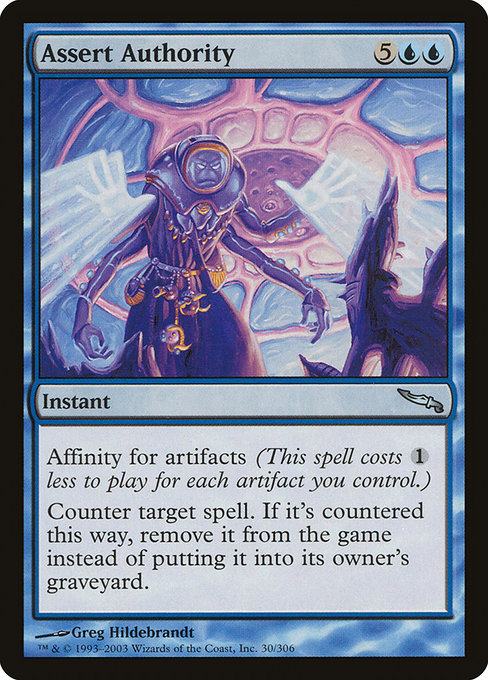
Affinity is a keyword ability that reduces the mana cost of a spell based on how many permanents of a specific type you control. Every instance of Affinity follows the same template: "Affinity for [something]" means that spell costs {1} less to cast for each [something] you control.
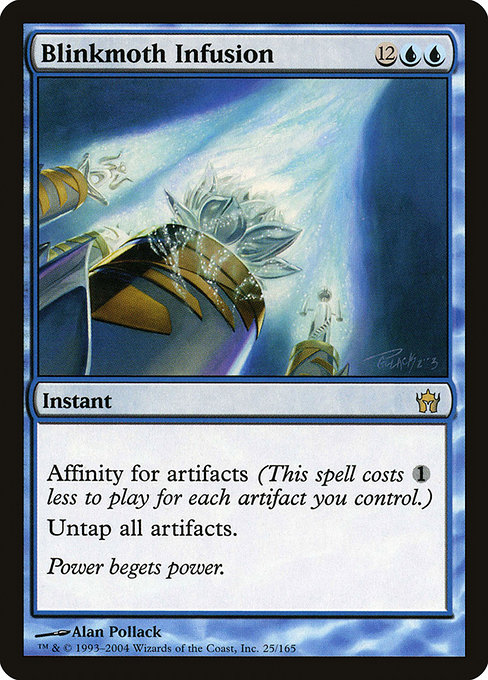
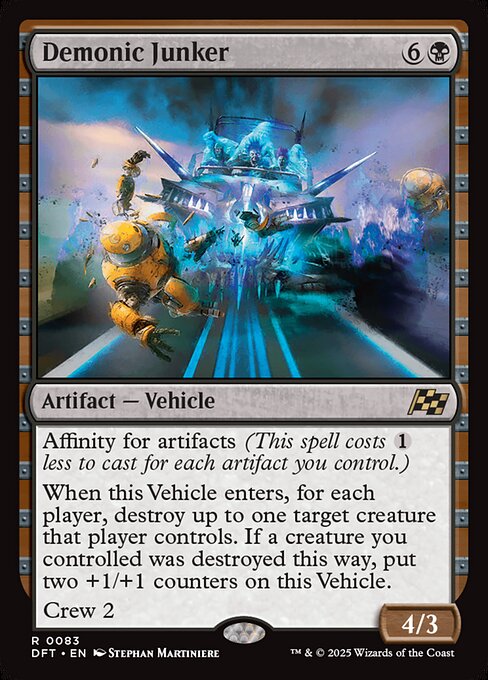
The most iconic version is "Affinity for artifacts" - the more artifacts you have on the battlefield, the cheaper your Affinity spell becomes. Cast Blinkmoth Infusion with fourteen or more artifacts in play and it's free. That's the ceiling, and it's a dramatic one.
Affinity first appeared in the Mirrodin block (2003-2004), where the artifact-heavy environment made it devastating. It's since grown into a deciduous mechanic - one that R&D can use in any set when the design calls for it, rather than being tied to a single block.
How Affinity works: the rules
Affinity is a static ability that functions while the spell is on the stack - meaning it applies as you're casting the spell, not before or after.
"Affinity for [text]" means "This spell costs {1} less to cast for each [text] you control."
- CR 702.41a
A few important rules details to keep in mind:
- The reduction applies per permanent you control, not per type of permanent. If you control five artifacts, an "Affinity for artifacts" spell costs {5} less.
- Multiple instances of Affinity stack. If a card somehow has Affinity for artifacts twice, each instance applies separately (CR 702.41b).
- Affinity can reduce a spell's cost to zero, but it can't create a mana refund. You can never pay less than {0}.
- Affinity only counts permanents you control, not permanents in other zones, unless the card specifically says otherwise.
Rules note: A few un-keyworded Affinity variants break from the standard rules text in ways that make using the official keyword impractical. For example, Gargantuan Leech counts Caves in the graveyard as well as on the battlefield - that's why it doesn't use the Affinity keyword directly.
Common misunderstandings
Affinity counts all permanents of the relevant type you control, including tokens. If you're running a token strategy and Affinity for tokens is in your deck (hello, Junk Winder), every Treasure, Food, and creature token counts toward the discount.
Affinity also doesn't change what mana you need - only how much. If a spell costs {3}{U}{U}, Affinity can reduce the {3} portion, but you'll still need {U}{U} of the right colour.
Affinity across Magic's history
Mirrodin block: the first (and most infamous) appearance
Affinity debuted in Mirrodin (2003), a set built around artifacts. That's relevant context, because the entire format was already artifact-dense before Affinity arrived. Spells like Frogmite - a 2/2 for {4} with Affinity for artifacts - could be cast for free on the right board. The resulting Standard and Extended decks were brutally consistent and fast.
The Second Combo Winter, as it became known, led to a wave of emergency bannings. The mechanic's reputation took a serious hit. When Scars of Mirrodin (2010) returned to the plane, R&D explicitly decided against bringing Affinity back, citing how destructive it had been the first time.
Lore aside: Mirrodin is a plane made almost entirely of metal, ruled at the time by the artificer Memnarch. The artifact-everything flavour made Affinity a perfect mechanical fit for the setting - which is part of why it was so hard to cost safely.
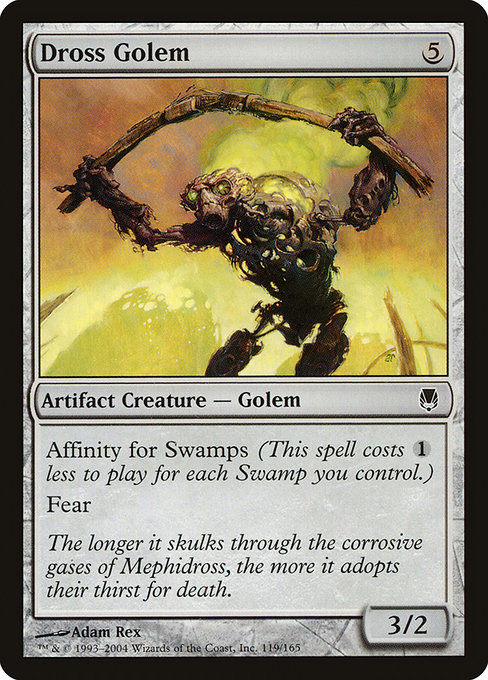
Darksteel, the second set in the block, introduced a cycle of Golems - Dross Golem, Oxidda Golem, Razor Golem, Spire Golem, and Tangle Golem - each with Affinity for a specific basic land type rather than artifacts. This showed early on that the template could stretch beyond artifacts, even if the keyword took two decades to fully embrace that potential.
The gap years: unkeyworded Affinity
Between Mirrodin and the mechanic's official return, R&D kept experimenting with cost-reduction based on permanents you control - they just didn't call it Affinity. Gearseeker Serpent from Kaladesh (2016), Emry, Lurker of the Loch from Throne of Eldraine (2019), and Saheeli, the Gifted from Commander 2018 all functionally have Affinity for artifacts, but their text boxes use longer templating instead.
When Gearseeker Serpent was reprinted in Aetherdrift (2025), it was updated to use the Affinity keyword. That reprint triggered a broader errata pass, bringing several older cards officially in line - including Gate Colossus (Affinity for Gates), The Circle of Loyalty (Affinity for Knights), and Millicent, Restless Revenant (Affinity for Spirits), among others.
War of the Spark and Modern Horizons 2: cautious returns
Tezzeret, Master of the Bridge brought Affinity for artifacts back as a one-off in War of the Spark (2019). Then Modern Horizons 2 (2021) reintroduced it more broadly, alongside a genuinely novel variant: Junk Winder's "Affinity for tokens."
Phyrexia: All Will Be One: going deciduous
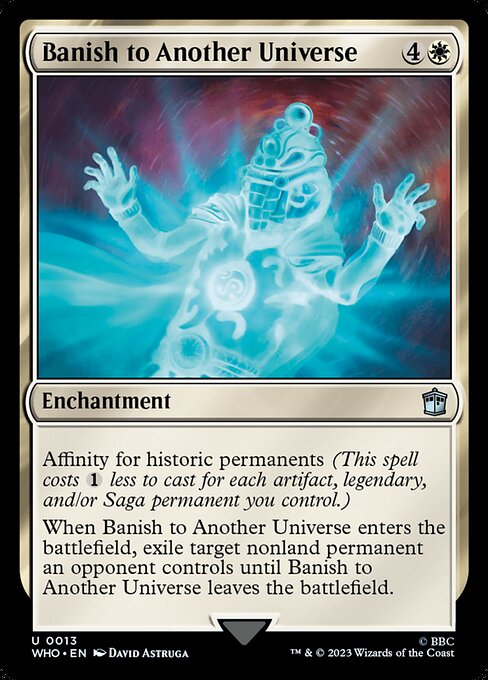
R&D officially made Affinity a deciduous mechanic with Phyrexia: All Will Be One (2023), meaning it's now available as a tool in any set rather than being locked to specific blocks. That set introduced Affinity for Equipment, with Affinity for artifacts returning in the Commander release. Since then, the variants have kept coming:
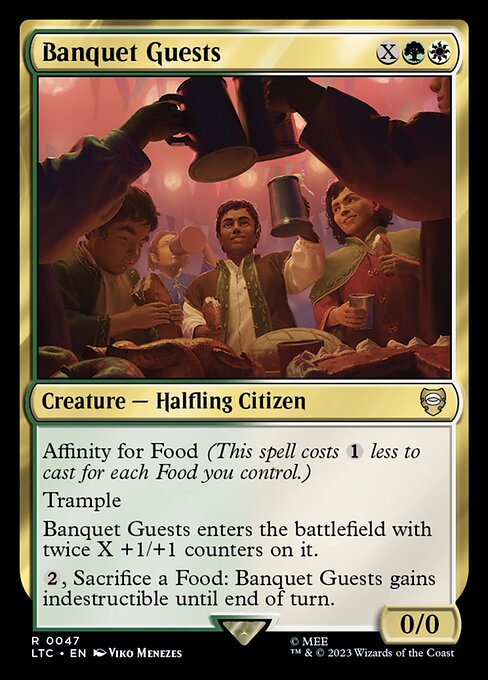
- Affinity for Food - The Lord of the Rings: Tales of Middle-earth (2023)
- Affinity for Planeswalkers - Tomik, Wielder of Law (notable for having only {1} in generic mana, deliberately demonstrating the discount at work in Commander)
- Affinity for Outlaws - Outlaws of Thunder Junction (2024)
Affinity variants that don't use the keyword
Some cards have Affinity-like effects that R&D has chosen not to keyword, either because the wording doesn't fit cleanly or because the design space is too narrow. A few interesting examples:
- Khalni Hydra reduces its cost by {G} per green creature you control - not {1}, which breaks the standard Affinity template.
- Ghalta, Primal Hunger and Volcanic Salvo have "Affinity for power" - discounting based on the total power of your creatures.
- Cards tied to Party, Domain, and Devotion all have functional Affinity, but those mechanics have their own phrasing that conflicts with the keyword.
- Magnus the Red grants something like Affinity for creature tokens to instants and sorceries you cast, which is complex enough to avoid keyworded templating.
Strategy: playing with and against Affinity
Building around Affinity
The core principle is board density. Affinity rewards you for having lots of the relevant permanent type in play before you cast your Affinity spells. That means your deck needs two things: a reliable way to flood the board with the right permanents, and spells with Affinity that are worth casting once you do.
In artifact-based builds, cheap artifacts that either replace themselves or stay on the battlefield are essential. Mana rocks, artifact creatures, and Equipment all count. The classic Affinity aggro deck leaned into zero- and one-mana artifacts to establish a board on turns one and two, then cast large Affinity threats for free or near-free.
In newer designs - Food, Equipment, Outlaw affinity - the principle is the same: build horizontally, then use Affinity spells as payoffs once your synergy pieces are in place.
Format check: The specific Affinity cards that are legal vary enormously by format. Classic Affinity for artifacts cards from Mirrodin are not legal in Standard or Pioneer. Modern has seen multiple Affinity-adjacent cards banned over the years. Always check your format's legality before building.
Playing against Affinity
The cleanest answer to Affinity is disrupting the permanents it counts. A sweeper that clears artifacts, or a spell that bounces a key permanent, doesn't just trade one-for-one - it also makes every Affinity spell in your opponent's hand dramatically more expensive.
In artifact Affinity specifically, mass artifact removal like Shatterstorm or Hurkyl's Recall has historically been a devastating hate card, because wiping eight artifacts doesn't just remove eight threats - it also turns your opponent's remaining hand into a pile of expensive spells.
The secondary line is counter the Affinity spell before it resolves. Because Affinity can make expensive spells nearly free, letting them resolve is often the wrong choice.
Notable Affinity cards
Frogmite
The poster child for Affinity for artifacts. A 2/2 for {4} that's almost always cast for {0} or {1} in a dedicated artifact deck. Simple, efficient, and the card most responsible for explaining why the mechanic got banned all around the metagame in 2004.
Blinkmoth Infusion
A hilarious proof of concept - technically a {14} spell with Affinity for artifacts. In an artifact-heavy deck, you can untap all your artifacts for free. It's not a tournament staple, but it perfectly illustrates the mechanic's ceiling.
Junk Winder
The first card with "Affinity for tokens," from Modern Horizons 2. It taps down your opponents' permanents whenever you cast a spell for free or near-free - and in a token deck, that's exactly what happens. A genuinely creative use of the Affinity template that doesn't touch artifacts at all.
Tezzeret, Master of the Bridge
The first Planeswalker with Affinity. His static ability gives other artifact creatures and Planeswalkers you control Affinity for artifacts as well, creating a cascade of discounts. A Commander and casual favourite.
Spire Golem
From the Darksteel Golem cycle - Affinity for Islands. A reasonable body at {6} that often costs {2} or less in blue control decks of its era. The cycle as a whole is underrated for demonstrating how flexible the mechanic was from the very beginning.
Tomik, Wielder of Law
Affinity for Planeswalkers on a legendary creature with only {1} generic mana in his cost. R&D designed him explicitly to demonstrate how Affinity interacts with its own cost - in a Planeswalker-heavy Commander deck, he's often free.
The Modern Affinity deck
One of the most recognisable archetypes in Modern history takes its name from this mechanic. The "Affinity" deck is an artifact-based aggro deck that grew out of the original Mirrodin Standard builds and was refined over years of Modern play.
I think it's worth flagging something interesting: by the time the Modern Affinity deck reached its peak dominance, most lists had moved away from cards that actually use the Affinity keyword. Thoughtcast was the occasional exception. The name stuck because the archetype's identity - cheap artifacts, explosive starts, fast clocks - was defined by the original mechanic, even after the specific cards evolved.
The deck was consistently considered one of Modern's best until the banning of Mox Opal in January 2020. That single banning removed the engine that enabled the deck's most broken starts, and for a few years the archetype never fully recovered its former dominance. What remained was a family of artifact-based aggro decks, sometimes called Affinity and sometimes not, that stayed competitive without being format-warping.
Then, on December 16, 2024, Wizards unbanned Mox Opal alongside Splinter Twin, Faithless Looting, and Green Sun's Zenith, explicitly to boost artifact-based strategies and shake up the Modern card pool. It's still early days for evaluating what that means in practice, but the engine that once made the deck so explosive is back on the table. Whether the current card pool breaks it the way the old one did, I honestly don't know yet. Worth watching closely.