Champion: MTG Keyword Mechanic Guide
There's something satisfying about a mechanic that tells a story in its rules text. Champion does exactly that: a powerful creature sweeps in, temporarily setting aside a weaker ally so it can take the fight to the enemy itself. If it falls, the original fighter returns. It's a substitution, a sacrifice, and a safety net all at once.
This guide covers everything you need to know about the Champion keyword - how it works, how to play with and against it, and which cards make it shine.
What is Champion?
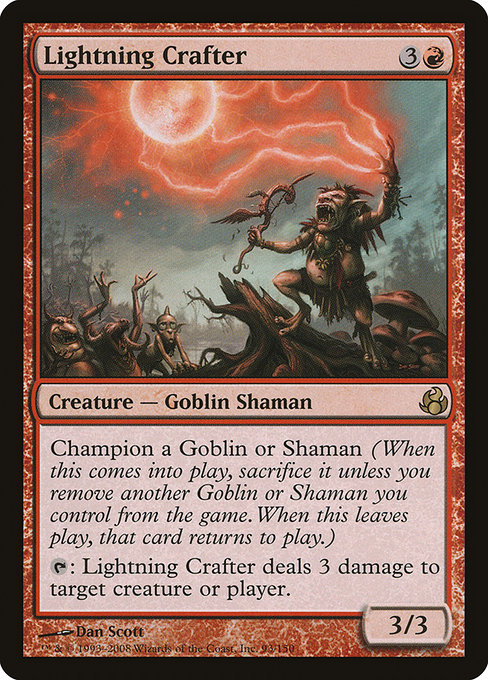
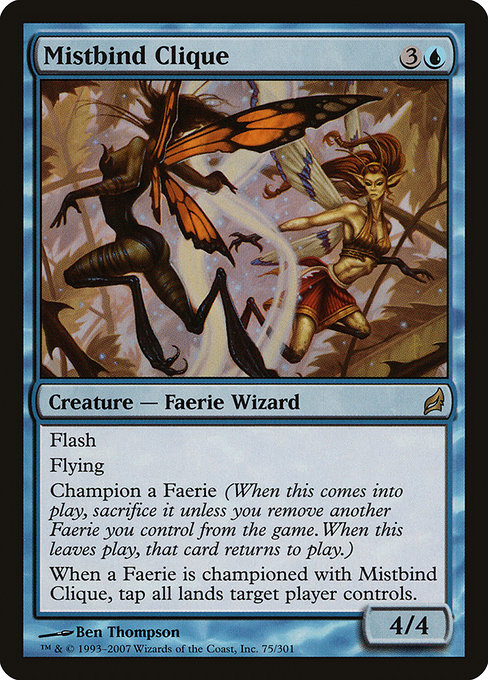
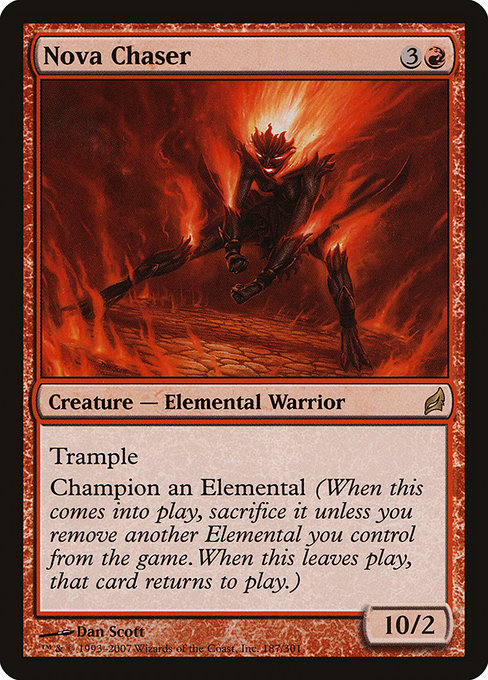
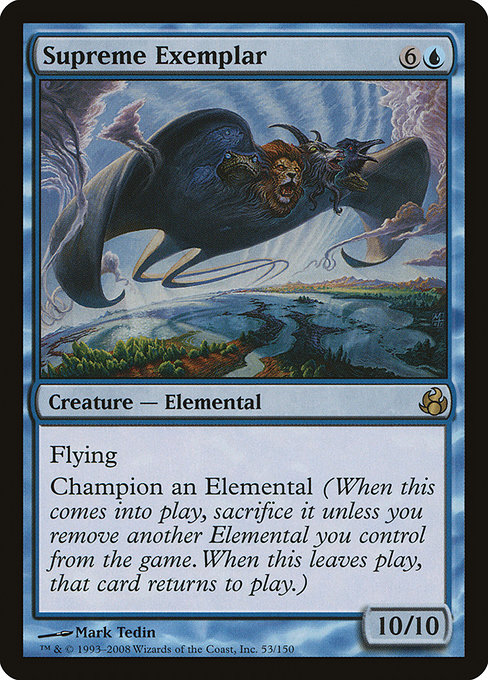
Champion is a keyword ability that lets one permanent temporarily replace another on the battlefield. When a permanent with Champion enters, it exiles another permanent you control of the specified type. If the championing permanent ever leaves the battlefield, the exiled permanent comes back.
Think of it like a relief pitcher replacing a starter in baseball: the starter steps aside, the ace takes the mound, and if the ace gets pulled, the starter is waiting in the bullpen.
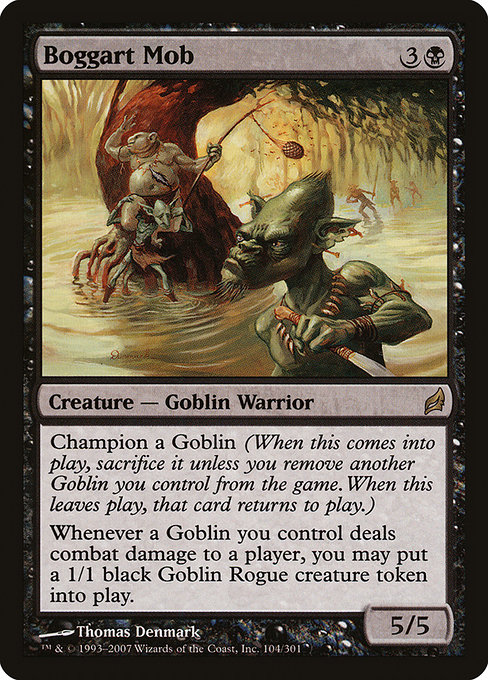
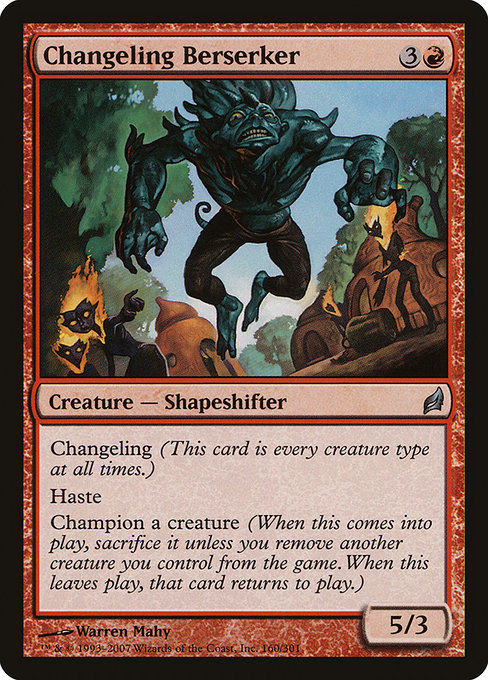
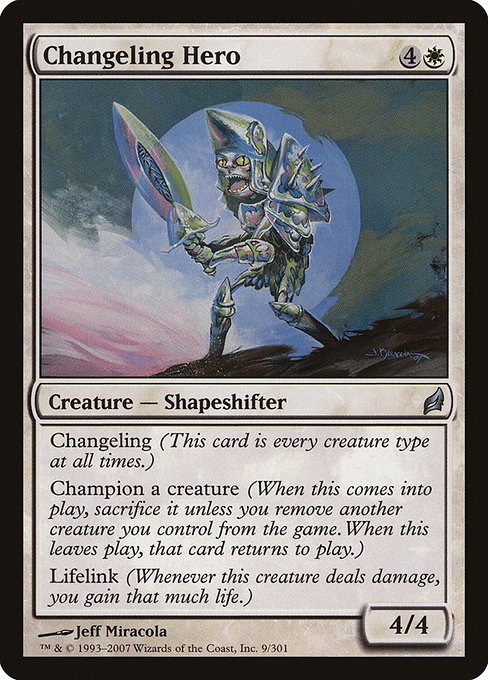
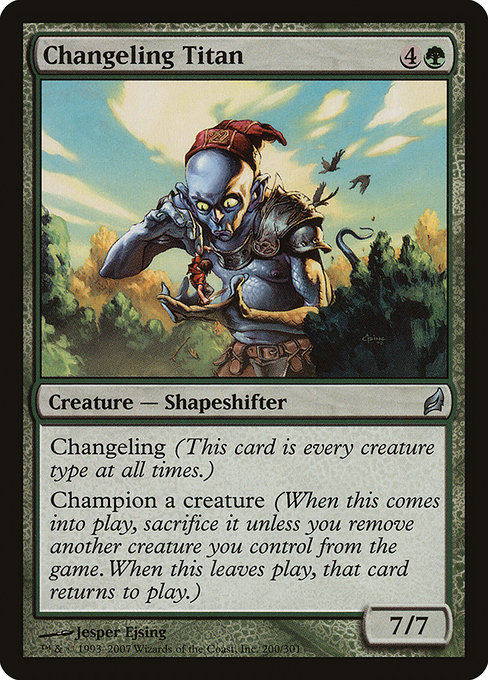
Champion appears on the text box like this: "Champion a [creature type or permanent type]." The bracketed term tells you what kind of permanent can be exiled to fuel the ability.
How Champion works: the rules
Under the hood, Champion represents two separate triggered abilities that are linked to each other (CR 702.72a).
The first ability triggers when the Champion permanent enters the battlefield:
"When this permanent enters, sacrifice it unless you exile another [object] you control."
The second ability triggers when the Champion permanent leaves the battlefield:
"When this permanent leaves the battlefield, return the exiled card to the battlefield under its owner's control."
Because these two abilities are linked (CR 702.72b), the second ability only returns a card that was exiled by that specific first ability - not just any card sitting in exile.
A few rules details worth knowing
You must exile a permanent you control. You can't exile an opponent's creature to pay the Champion cost, even if they happen to control a matching type.
Champion is a triggered ability, not a cost. This matters because your opponent can respond to the trigger before you exile anything. If the Champion permanent is removed in response - before the trigger resolves - no permanent gets exiled, and the second ability has nothing to return.
The championed permanent is exiled face up. It sits in exile linked to the Champion permanent. If a blink or bounce effect removes the Champion permanent and returns it, the originally exiled card comes back to the battlefield when the Champion leaves, and the returning Champion will want a new permanent to exile when it re-enters.
If the championed card can't return - for instance, if it's been moved out of exile by another effect - the ability simply does nothing. No error, no replacement.
Rules note: A permanent is officially "championed" by another permanent only when exiled as the direct result of a champion ability (CR 702.72c). This terminology matters for cards that reference "championed" permanents specifically.
Strategy: playing with Champion
Champion's built-in cost - exile a permanent you control - is a real downside, and how you approach it shapes how well the mechanic plays for you.
Turning the exile into a bonus
The most straightforward way to soften Champion's cost is to exile a permanent that wants to leave the battlefield. Creatures with enters-the-battlefield (ETB) triggers are ideal targets: exile one to pay the Champion cost, then get it back when your Champion dies. You effectively get the ETB trigger twice.
Using Champion as a protection tool
Here's a less obvious line: if one of your important creatures is about to die - it's been targeted by a removal spell, or you're about to be hit by a board wipe - you can champion it away in response (assuming you have a Champion permanent entering). The targeted creature goes to exile safely, and returns when your Champion eventually leaves. This turns Champion into a pseudo-protection ability when you have the right setup.
Building around creature types
Most Champion permanents specify a creature type. That means Champion rewards you for playing a focused tribal strategy. If your Champion says "Champion a Faerie," you need Faeries in play - which is exactly the kind of tribal synergy that supports a dedicated deck.
Strategy: playing against Champion
The key insight when playing against Champion is timing.
If you kill the Champion permanent after its enter trigger resolves and it has already exiled something, you lose a creature but your opponent gets their exiled permanent back. That can be a fine trade or a bad one depending on what returns.
If you kill the Champion permanent before its trigger resolves, your opponent loses the Champion for free - it sacrifices itself - and nothing gets exiled. This is the ideal window: instant-speed removal in response to the Champion trigger entering the stack.
The window is tight. Once the trigger resolves and a permanent is championed, you're no longer in that golden moment. Play your removal spells at the right point in the stack and you can strand a Champion with nothing to exile.
Notable cards with Champion
Champion of Wits
Champion of Wits ({2}{U}) is one of the most-played cards with "Champion" in its name, though it doesn't use the keyword - it's a Snake Wizard with a powerful ETB draw-and-discard ability and an Eternalize option. It's worth flagging because players sometimes conflate the name with the keyword. This card is notable in its own right as a graveyard enabler in midrange blue strategies.
Champion of the Perished
Champion of the Perished ({B}) is a one-mana Zombie that grows every time another Zombie enters the battlefield under your control. It doesn't use the Champion keyword either, but it's one of the stronger payoffs in Zombie tribal strategies - a potential threat that scales hard in dedicated lists.
Champion of the Flame
Champion of the Flame ({1}{R}) rewards you for going wide on Auras and Equipment. A two-mana 1/1 with trample sounds humble, but it gains +2/+2 for each attached Aura or Equipment - which in a voltron-style deck can make it enormous very quickly.
Crypt Champion
Crypt Champion ({3}{B}) is a quirky reanimation piece: it has double strike and brings a creature back from each player's graveyard when it enters, but it sacrifices itself unless {R} was spent to cast it. That conditional makes it a build-around in Rakdos ({B}{R}) graveyard strategies, and the symmetrical reanimation can be exploited when you have better targets in the bin than your opponent.
Expedition Champion
Expedition Champion ({2}{R}) is a clean tribal payoff: a 2/3 Warrior that becomes a 4/3 as long as you control another Warrior. Simple, reliable, and exactly what an aggressive Warrior deck wants at the two-drop slot.
Champion's Helm
Champion's Helm ({3}) is a Commander staple. It gives a +2/+2 boost and - critically - grants hexproof to any legendary creature it's equipped to. In Commander, where your commander is the card your opponents most want to remove, a one-mana equip cost for blanket hexproof is a genuinely strong deal.
Format check: Champion's Helm is legal in Commander, Legacy, and Vintage. It sees most of its play in Commander for obvious reasons.
Anthem of Champions
Anthem of Champions ({G}{W}) is a straightforward wide-board payoff: all your creatures get +1/+1. Selesnya token strategies appreciate a second or third anthem effect, and this one comes in at two mana.
The Champion keyword in context: a brief history
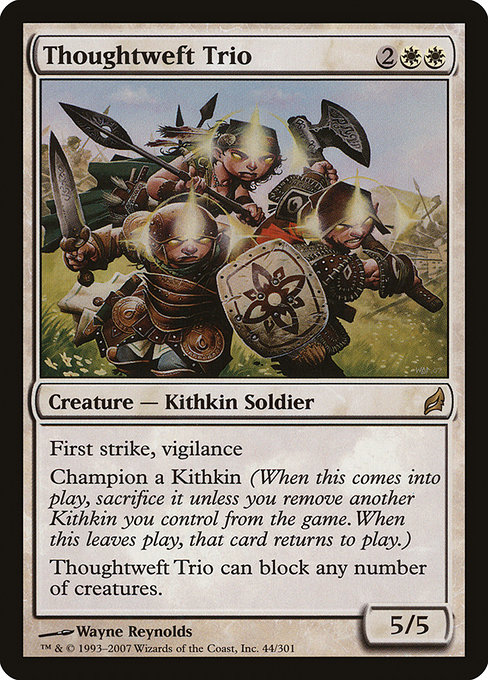
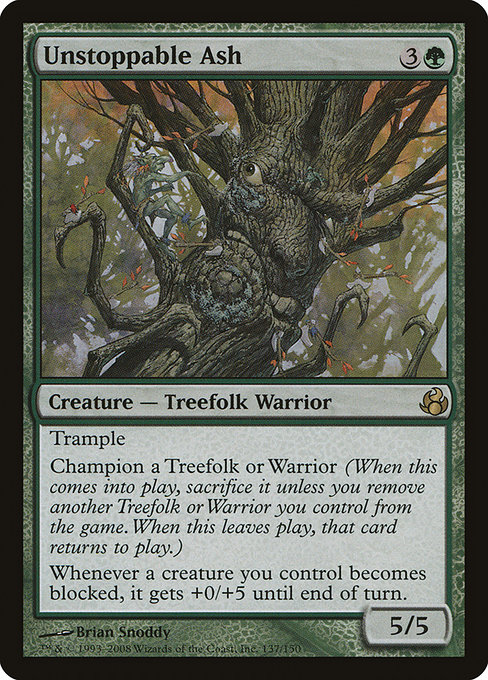
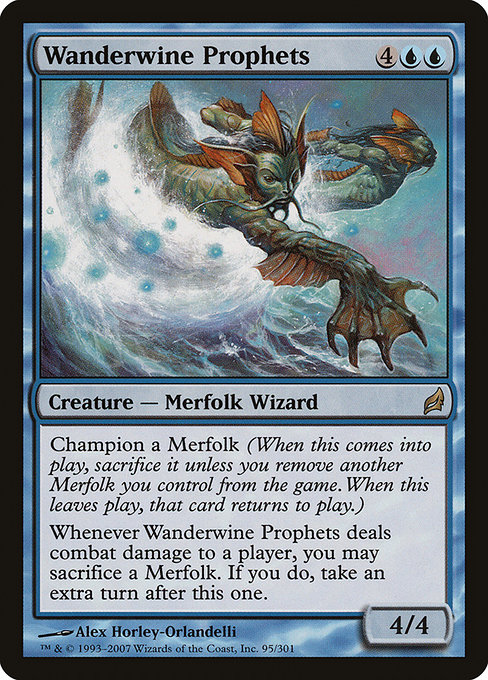
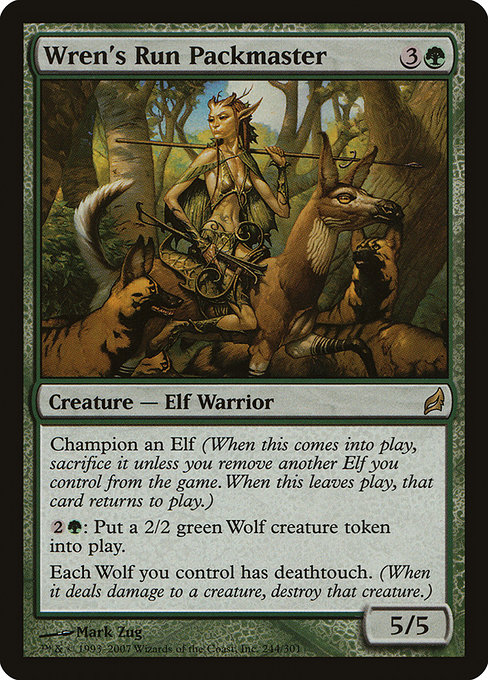
Champion as a keyword was introduced in Lorwyn (2007), the set that launched Magic's first fully tribal block. Lorwyn and its follow-up Morningtide were built around eight creature types - Elves, Goblins, Faeries, Merfolk, Kithkin, Giants, Elementals, and Treefolk - and Champion fit that world perfectly. A chieftain or legend stepping up to take another tribe member's place was pure tribal flavour.
The ability appeared on Elves, Faeries, Goblins, and Elementals throughout the block, often as a cost gate on powerful creatures: you had to have the tribe already present to unlock the payoff. This kept Champion tightly coupled to tribal construction, which is still the primary context where it appears today.
Champion hasn't been revisited frequently in newer sets, but its core design remains clean and mechanically interesting - a rare keyword that provides both a cost and a built-in recursion loop in the same text box.
The Champion creature type (a quick note)
Separate from the keyword, Champion is also a creature type - though it exists only on test cards and isn't found on black-bordered tournament-legal cards. Various legendary creatures carry "Champion" in their epithets (like Elspeth, Sun's Champion or Neheb, Dreadhorde Champion), but these are names, not rules-relevant creature types. Don't let the overlap in terminology cause confusion: the mechanic and the type are entirely separate things.