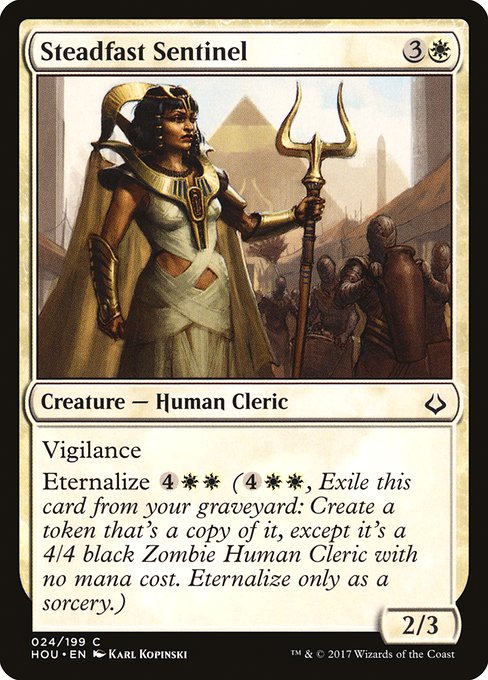
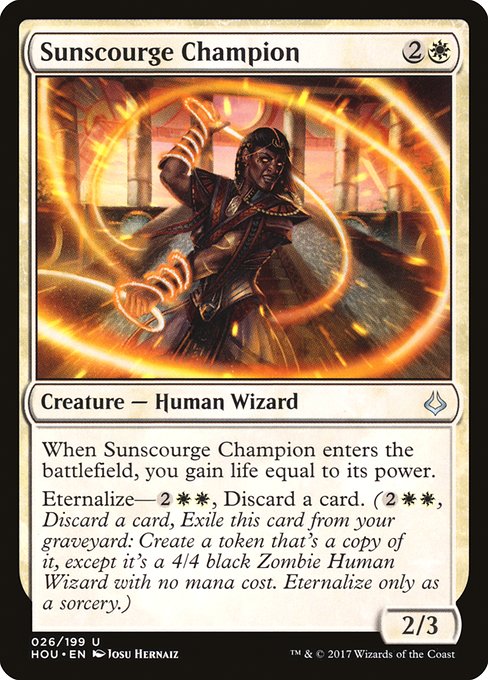
Eternalize: MTG Mechanic Explained
There's something deeply satisfying about a creature that refuses to stay dead. Eternalize captures that feeling perfectly: a champion falls in battle, gets exiled from the graveyard, and returns as a 4/4 black Zombie - bigger, darker, and ready to fight again. It's one of those mechanics where the flavour and the rules text are doing exactly the same thing.
What is Eternalize?
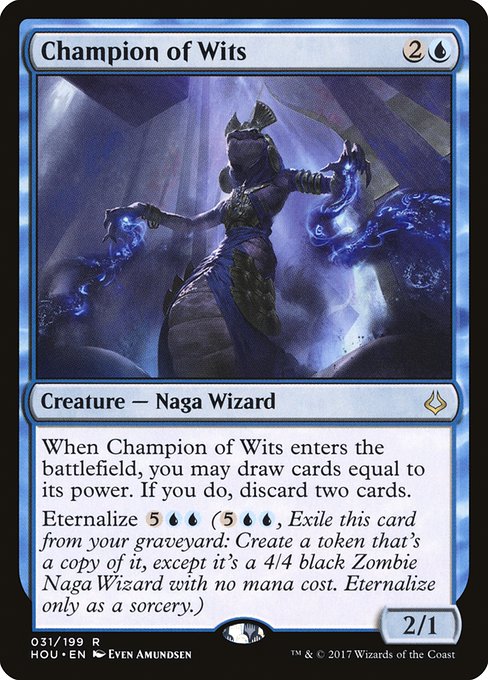
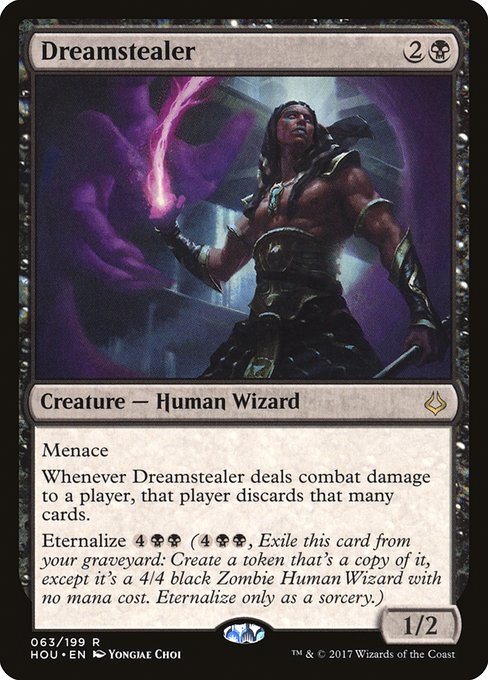
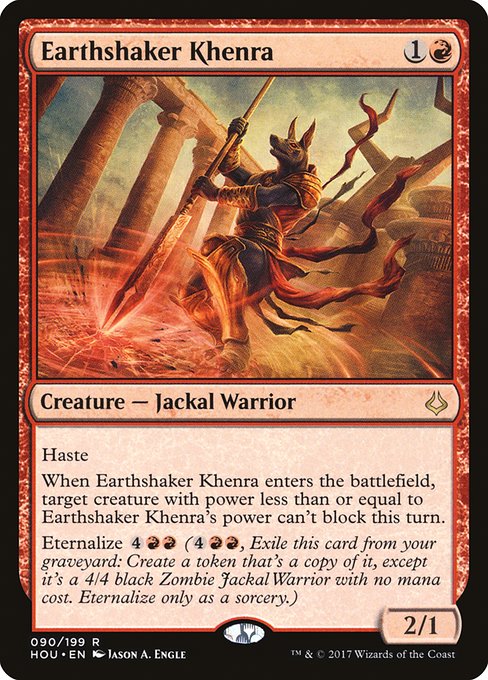
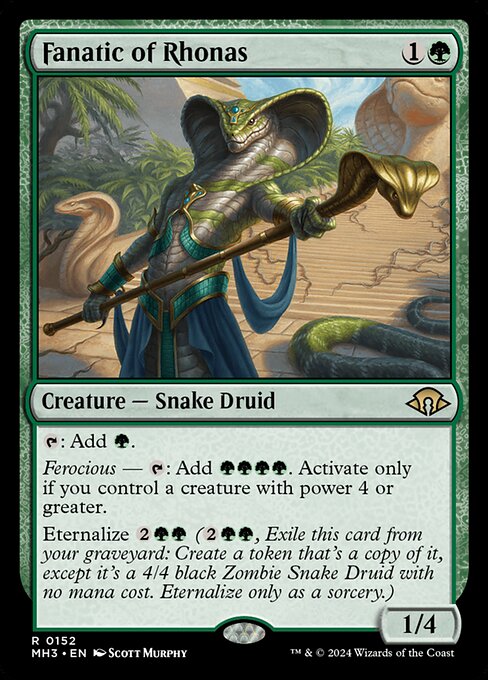
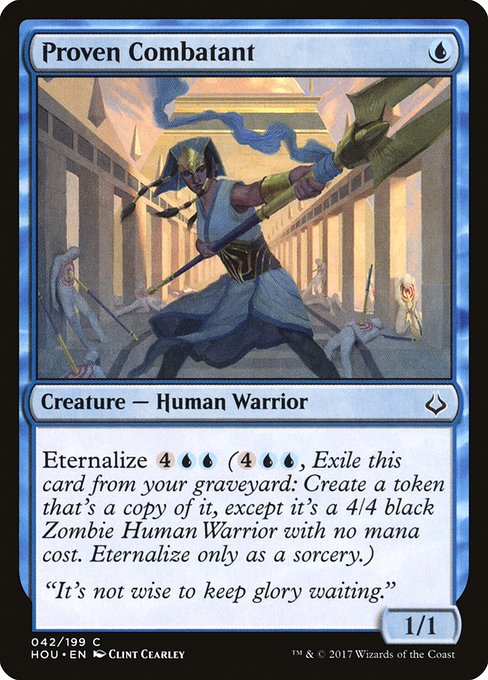
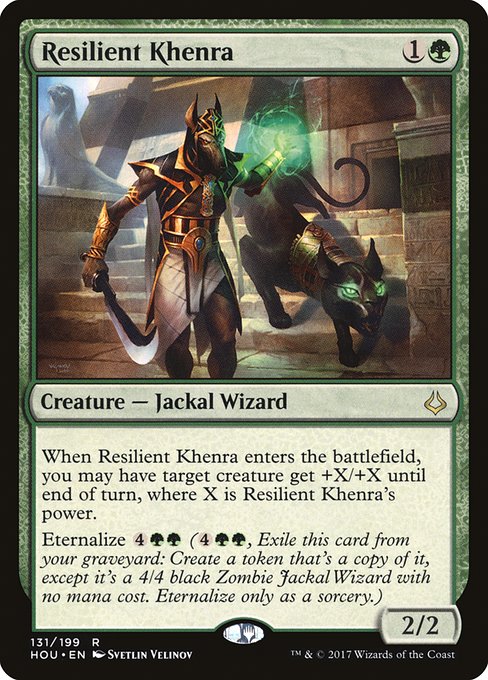
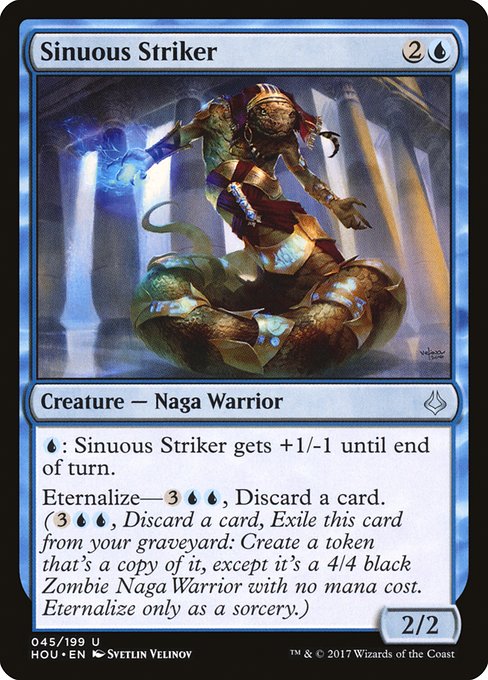
Eternalize is a keyword ability introduced in Hour of Devastation (HOU, 2017). It appears on creature cards and lets you exile them from your graveyard - paying an activation cost - to create a token copy of that creature. The token is always 4/4, always black, always has no mana cost, and is always a Zombie in addition to whatever creature types the original had.
You can only activate Eternalize as a sorcery, meaning on your own turn while the stack is empty.
Storywise, the mechanic is tied directly to Nicol Bolas's army of Eternals on Amonkhet - warriors mummified and preserved using a blue metallic substance called lazotep. While Embalm (the mechanic it evolved from) represents fallen combatants being brought back for general service, Eternalize specifically represents the winners of the Trials: the best of the best, infused with lazotep and made into something more than they were in life.
Eternalize rules
Here's the full rules text from the Comprehensive Rules (November 14, 2025 - Edge of Eternities):
CR 702.129a: Eternalize is an activated ability that functions while the card with eternalize is in a graveyard. "Eternalize [cost]" means "[Cost], Exile this card from your graveyard: Create a token that's a copy of this card, except it's black, it's 4/4, it has no mana cost, and it's a Zombie in addition to its other types. Activate only as a sorcery."
Let's break down the four things that always change on the token:
| Property | Original card | Eternalized token | |---|---|---| | Power / Toughness | As printed | Always 4/4 | | Colour | As printed | Always black (monocoloured) | | Mana cost | As printed | None | | Type line | As printed | Zombie added to creature types |
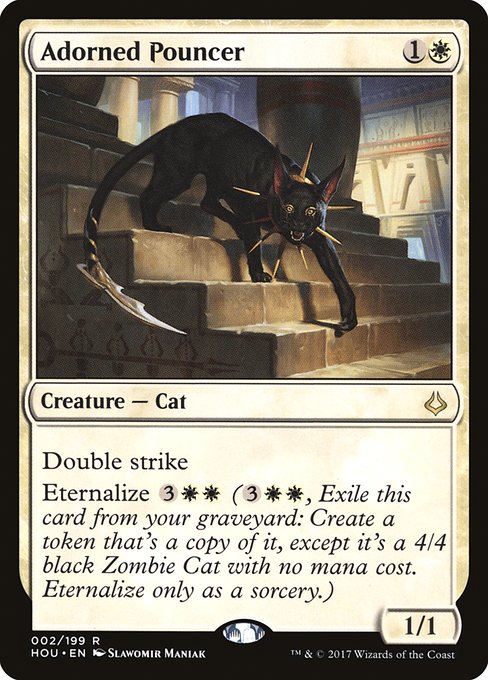
Everything else copies across. Abilities, name, other creature types - all preserved. A white 1/1 Cat with double strike becomes a 4/4 black Zombie Cat with double strike. That's the whole point: the skills they had in life carry over, and now they're stronger.
Common misunderstandings
The original card is exiled, not the token. Once you activate Eternalize, the card leaves your graveyard permanently - you don't get a second use. The token it creates isn't a card, so it can't be eternalized again.
Eternalize only works from the graveyard. You can't activate it from your hand or anywhere else. The card has to actually be in your graveyard first.
It's sorcery speed. You can't activate Eternalize at the end of your opponent's turn or in response to a spell. Main phase, stack empty, your turn only.
No mana cost means the token can't be cast. Since the token has no mana cost, effects that care about a card's mana cost (like convoke or delve calculations) may interact with it in unusual ways. If you're unsure how a specific interaction resolves, I'd recommend checking the comprehensive rules or asking a judge.
Strategy
Playing with Eternalize
The appeal of Eternalize is that it turns your graveyard into a second hand. A creature that costs two mana to cast in the early game can come back later as a 4/4 Zombie - often with a much higher Eternalize cost - once you have the mana to support it.
The best Eternalize creatures are ones whose abilities scale with power. A 1/1 with double strike is fine. A 4/4 with double strike is threatening. That gap is where Eternalize finds its best designs.
Since you exile the card to activate the ability, you're committing permanently. Think of Eternalize as a late-game investment rather than a reflex response - make sure the token is actually going to matter before you pull the trigger.
Eternalize also plays nicely with ways to fill your graveyard quickly (discard effects, self-mill, looter effects) since you need the card in the graveyard before you can do anything with it.
Playing against Eternalize
The most direct answer is exile. Because Eternalize only functions from the graveyard, exiling a creature before it gets there - or exiling the graveyard itself - shuts the mechanic down completely. Graveyard hate that hits individual cards, like Rest in Peace or targeted exile effects, is cleanly effective here.
If you can't exile the card, you can still answer the token. The Eternalized token is just a creature on the battlefield - it doesn't have any special protection, so your normal removal applies once it arrives.
Format check: Eternalize cards from Hour of Devastation are no longer legal in Standard. Most are found in Pioneer, Modern, and Commander at this point. The Modern Horizons 2 (MH2) and Modern Horizons 3 (MH3) appearances are legal in Modern.
Notable Eternalize cards
Adorned Pouncer
Adorned Pouncer is probably the cleanest example of why Eternalize works well as a mechanic. It's a 1/1 double strike Cat for {1}{W} - playable enough in the early game - and eternalized into a 4/4 double strike Zombie Cat. A 4/4 with double strike hits for effectively 8 power worth of combat damage. That's a card that wins games on its own if it resolves.
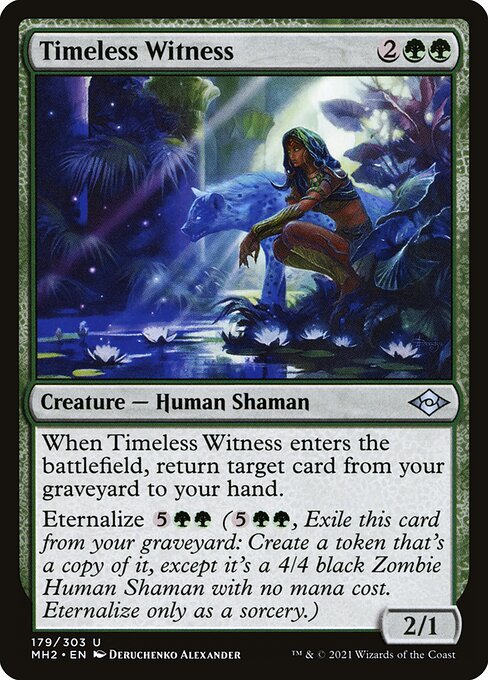
Timeless Witness
Timeless Witness from Modern Horizons 2 (MH2, 2021) is the Eternal Witness variant with Eternalize added. For {4}{G}{G}, you can exile it from your graveyard to create a 4/4 black Zombie Human Shaman token - which, like its original, enters and returns a card from your graveyard to your hand. The Eternalize trigger fires when the token enters the battlefield, so you get value immediately. It's a beloved card in Commander for exactly this reason.
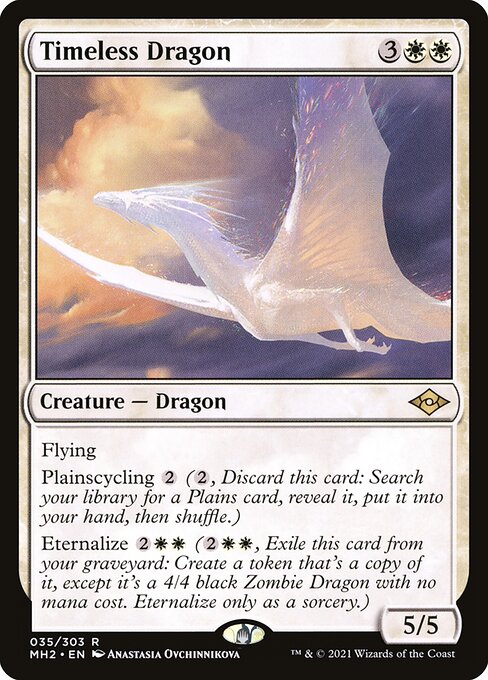
Timeless Dragon
Timeless Dragon from MH2 is notable for a quirky reason: it's the first creature to be eternalized into a token with smaller stats than the original. The Dragon itself has power and toughness greater than 4/4, so the Eternal token is technically a downgrade in size, though it still carries the Dragon's abilities. A fun corner case that the rules handle cleanly.
History of Eternalize
Eternalize debuted in Hour of Devastation (HOU, 2017) as a thematic successor to Embalm, which had appeared in Amonkhet (AKH, 2017) a few months earlier. Both mechanics create token copies from the graveyard, both make them Zombies, but Eternalize always creates 4/4 tokens and always turns them black - regardless of the original card's colour. Embalm, by contrast, creates white tokens.
The flavour distinction is deliberate: Embalm represents the ordinary dead being raised to serve, while Eternalize represents champions being elevated by Bolas's lazotep process into something genuinely powerful.
Hour of Devastation even included a token card for each creature with Eternalize in the set, emphasizing the Eternals as a distinct, named army. Extra "eternalized" markers were provided on punch cards for easy tracking at the table.
Despite all that care, the mechanic didn't land especially well. It was rated an 8 on the Storm Scale - the scale used by Wizards to indicate how unlikely a mechanic is to return to a Standard-legal set - due to narrow design space, weaker popularity compared to Embalm, and the significant infrastructure (tokens, markers) it required to run smoothly.
Eternalize did return in Modern Horizons 2 (2021) and Modern Horizons 3 (MH3), each time on cards with "Eternal" in their original names - a knowing nod to the mechanic's identity. These appearances kept the mechanic alive in non-rotating formats without requiring a full Standard-set commitment.
Lore aside: Cards like The Scarab God, Hour of Eternity, and **God-Pharaoh's Gift** all capture the flavour of the Eternalize process without carrying the keyword itself. Enter the God-Eternals and God-Eternal Oketra continue the mechanical motif of creating 4/4 Zombies, keeping the aesthetic of Bolas's army consistent across several sets.
Trivia: Hashaton, Scarab's Fist from the Aetherdrift Commander product essentially lets you Eternalize creature cards you discard for {2} - a nice callback to the mechanic without using the keyword directly.