Conspire: The MTG Mechanic Explained
Tapping two creatures to copy a spell sounds powerful on paper. In practice, Conspire turned out to be one of Magic's more quietly forgotten mechanics - and understanding why tells you a lot about what makes keyword design stick.
What is Conspire?
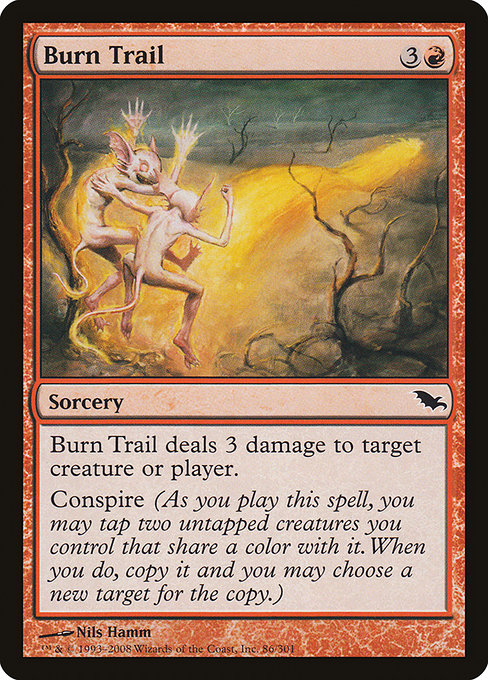
Conspire is a keyword ability that lets you copy a spell as you cast it, in exchange for tapping two untapped creatures that share a color with that spell. It was introduced in Shadowmoor (2008) and appears on instants and sorceries.
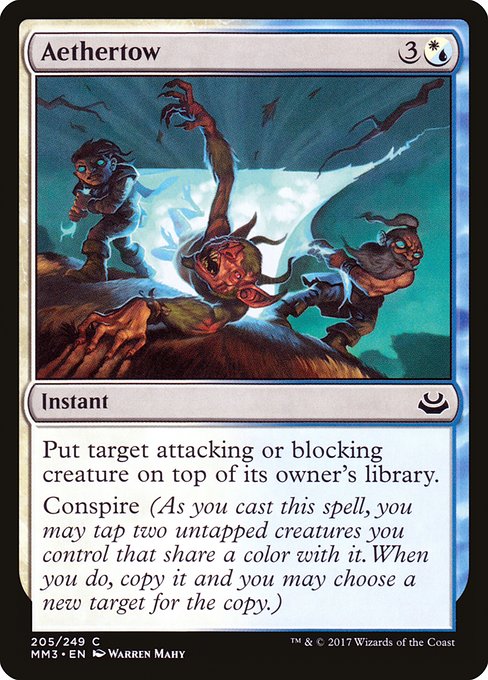
The reminder text on Aethertow spells it out neatly: "As you cast this spell, you may tap two untapped creatures you control that share a color with it. When you do, copy it and you may choose a new target for the copy."
In plain terms: pay an additional cost of two tapped creatures, get a free copy of the spell. If the spell has targets, the copy can hit something different.
How Conspire works - the rules
Conspire actually represents two abilities under the hood, not one.
The first is a static ability: it lets you pay the conspire cost as an additional cost while the spell is on the stack. The second is a triggered ability: once that cost is paid, it fires and creates the copy.
From the Comprehensive Rules (CR 702.78a):
"Conspire means 'As an additional cost to cast this spell, you may tap two untapped creatures you control that each share a color with it' and 'When you cast this spell, if its conspire cost was paid, copy it. If the spell has any targets, you may choose new targets for the copy.'"
A few things worth noting:
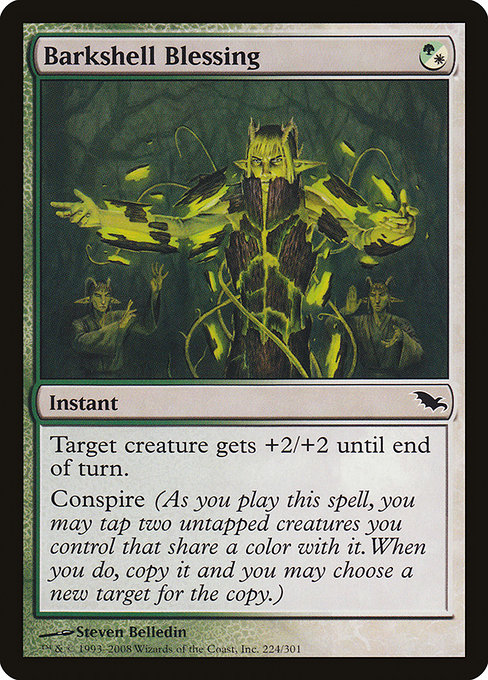
- Color matching matters. The two creatures you tap must each share a color with the spell - not with each other. A white/blue spell needs creatures that are white and/or blue. A green sorcery needs two green creatures (or multicolored creatures that include green).
- The creatures must be untapped when you pay the cost. This happens during the casting process, before the spell goes on the stack. You can't use creatures that are already tapped.
- Multiple instances stack separately. If a spell somehow had two instances of Conspire, you'd pay each one independently and get a copy for each payment (CR 702.78b).
- The copy isn't cast. This matters for effects that trigger on casting - the copy is simply created on the stack and doesn't trigger "when you cast" abilities again.
Rules note: Conspire cost payment follows the standard additional cost rules (CR 601.2b and 601.2f-h). That means you decide whether to pay conspire as you're announcing the spell, before you pay any mana.
Strategy - playing with and around Conspire
The core appeal of Conspire is getting two effects for the price of one spell. Copying a removal spell, a bounce effect, or a piece of disruption without spending extra mana sounds great. The catch is the hidden cost: those two tapped creatures can't block, and committing them to a spell copy leaves you exposed.
When Conspire is at its best:
- You have a wide board of creatures and aren't worried about an attack back
- The spell's effect is strong enough that two copies dramatically changes the game state
- You're going wide in a token or aggro strategy, where tapping two creatures feels cheap
- You're using a spell with no target (or a flexible target), so the copy isn't wasted
When Conspire underperforms:
- You're in a defensive position and need your creatures to block
- Your creatures don't share colors with your spells (a real deckbuilding constraint)
- The base spell effect isn't good enough to justify the setup
- Your opponent is holding removal and can punish you tapping out
Deckbuilding with Conspire means leaning into creature-heavy strategies, probably in two colors, where your creatures are cheap enough that tapping two of them as a bonus cost doesn't feel like a sacrifice. Token strategies - especially in green/red - are natural homes, since you're not short of bodies.
Wort, the Raidmother is the card that makes this most interesting. She automatically gives every red and/or green instant or sorcery you cast the Conspire ability, meaning your whole spell suite suddenly gets doubling potential as long as you have the creatures to back it up.
Notable cards with Conspire
Aethertow ({3}{W/U}) is the cleanest example of the mechanic in action. Putting an attacking or blocking creature on top of its owner's library is already useful tempo. Two copies of that effect in one turn can undo an opponent's entire attack.
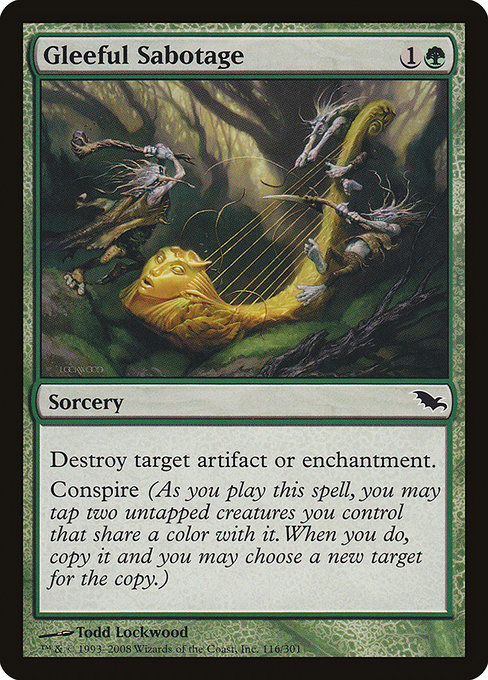
Gleeful Sabotage ({1}{G}) - destroying two artifacts or enchantments for {1}{G} and two tapped green creatures is where Conspire genuinely shines. If the board has two relevant permanents to hit, this is efficient removal that scales well.
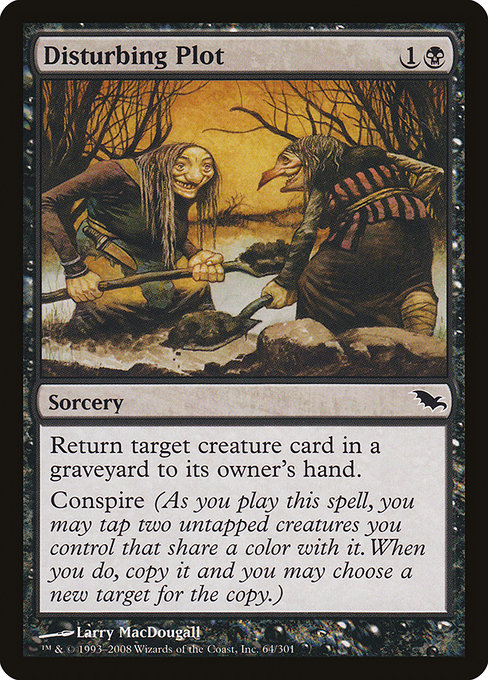
Disturbing Ploy ({1}{B}) - returning two creatures from graveyards with one spell is reasonable value, especially in reanimator-adjacent strategies.
Wort, the Raidmother deserves special mention even though she's a Legendary Creature, not a Conspire spell herself. She grants Conspire to all your red and/or green instants and sorceries, turning the mechanic from a niche keyword into the engine of a whole archetype. In Commander, she's the card that kept Conspire alive as a theme worth building around.
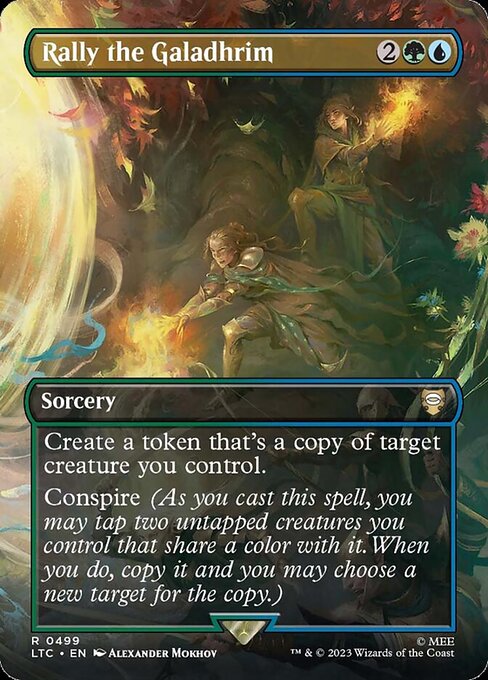
Rally the Galadhrim (from the 2023 Lord of the Rings Holiday Release) and Rassilon, the War President (from the 2023 Doctor Who Commander set) both carry Conspire as one-off appearances - a sign the design team still finds the mechanic useful in the right context, even if it never became a returning keyword.
Rassilon, the War President also grants Conspire to noncreature spells cast from exile, which is a more unusual spin on the mechanic and worth noting if you're building around him.
History - Conspire's introduction and legacy
Conspire debuted in Shadowmoor (2008), a dark-toned set built around hybrid mana and a world drained of color. The mechanic fit the flavor: gathering your allies together to amplify a spell felt thematically on-point for a set about community and survival in a hostile world.
The mechanical reality didn't quite match the flavor ambition, though. By 2010, Conspire was being discussed internally at Wizards as a design miss. The core issue is the hidden complexity-to-payoff ratio: Conspire requires you to have the right creatures, in the right colors, untapped, at the right moment, and the spell you're copying needs to be worth copying twice. That's a lot of conditions to line up for an effect that isn't always spectacular.
Perhaps the clearest verdict on the mechanic is a practical one: most players simply don't remember what it does. That's a rough measure of a keyword's success - if players can't recall the mechanic years later, it hasn't left the impression that design teams aim for.
That said, Conspire has resurfaced in small doses. Its appearances in the 2023 Lord of the Rings Holiday Release and the Doctor Who Commander set suggest it has a place as a flavorful, occasional mechanic even if it's never coming back as a marquee keyword. Format check: Cards with Conspire are spread across sets and formats; check individual card legality on Scryfall since Shadowmoor cards rotate out of Standard long ago, but many are Commander-legal.