Impending: The MTG Mechanic Explained
There's a particular kind of dread that builds when you know something is coming but can't see it yet. That creeping inevitability is exactly what the Impending mechanic captures - and it's one of the most flavourful designs to come out of Duskmourn: House of Horror (DSK).
What is Impending?
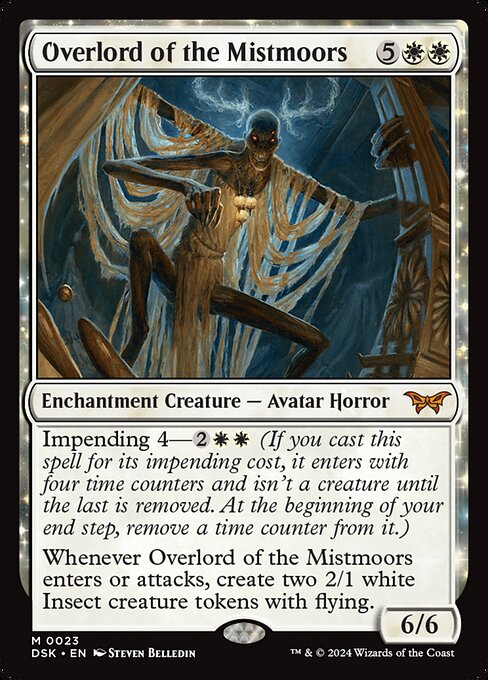
Impending is a keyword ability introduced in Duskmourn: House of Horror that lets you cast a creature spell early for a reduced alternative cost - but the creature doesn't arrive fully formed. Instead, it enters the battlefield as a non-creature enchantment loaded with time counters. At the beginning of each of your end steps, one counter ticks away. When the last counter is removed, the creature finally manifests.
Think of it like a creature emerging slowly from the dark. You can feel its presence - it's on the battlefield, affecting the game - but it isn't there yet in a way you can block, equip, or crew. Then, turn by turn, it becomes real.
The core promise of Impending: pay less mana now, wait a few turns, get a powerful creature later.
How Impending works - the rules
Each Impending card reads: "Impending N - [cost]". That single line actually represents four separate abilities bundled together:
- Alternative cost: You may pay
[cost]instead of the card's normal mana cost. - Entry with counters: If you paid the impending cost, the permanent enters with N time counters on it.
- Suppressed creature type: As long as the permanent was cast for its impending cost and still has at least one time counter on it, it isn't a creature.
- Counter removal trigger: At the beginning of your end step, if it was cast for its impending cost and still has a time counter, remove one time counter from it.
When that last time counter finally comes off, the permanent loses its non-creature status - and the Avatar Horror that's been lurking on your battlefield is now a creature, ready to attack.
Rules note: Casting a spell for its impending cost is still casting a spell. It goes on the stack, can be countered, and follows all normal timing rules. For most Impending cards, that means your main phase when the stack is empty - because they're still creature spells at heart.
Things that might catch you off guard
- It's a creature spell on the stack, even when cast for its impending cost. The non-creature clause only applies once it's on the battlefield with counters.
- Copies don't inherit the counters. If something enters as a copy of a permanent that was cast with its impending cost, the copy enters without time counters - and is immediately a creature.
- You can still pay the full mana cost. Impending is an alternative cost, not mandatory. If you'd rather just cast it normally and have a creature right away, you can.
"As long as this permanent's impending cost was paid and it has a time counter on it, it's not a creature."
- CR 702.176a
Strategy - playing with and against Impending
Playing with Impending
The appeal is straightforward: you get a significant threat on the battlefield for a reduced upfront cost. During the turns it's counting down, the permanent is still there - it can have triggered abilities that fire, it contributes to board presence, and it threatens your opponent with what's coming.
The key question is always: can you survive long enough for the creature to arrive? Impending cards reward patient, controlling strategies that can protect a slow-developing threat. If you're playing a tempo or aggro deck, you might prefer to pay the full cost and get the creature immediately.
Impending also rewards thinking about your opponent's answers. A permanent that isn't a creature dodges sorcery-speed removal that targets creatures. Your opponent can't use Doom Blade on a ticking-down Overlord - though they can still destroy it as an enchantment or counter the spell when you first cast it.
Playing against Impending
The window to deal with an Impending permanent cheaply is right when it's cast - counter it then, before it ever enters. Once it's on the battlefield with counters, you need enchantment removal to stop it from eventually becoming a creature.
If you can't answer it early, consider whether you can end the game before the counters run out. An Impending permanent with four time counters is four full end steps away from being a creature - that's a meaningful runway.
Deck-building considerations
- Impending pairs naturally with enchantment synergies. The permanent is an enchantment while it counts down, so cards that care about enchantments entering or being on the battlefield can trigger off it.
- In slower formats, the reduced mana cost lets you develop your board or hold up interaction on the same turn you deploy a future threat.
- Watch out for formats with heavy enchantment hate - Impending creatures are vulnerable to it in a way that normal creatures aren't.
Notable Impending cards
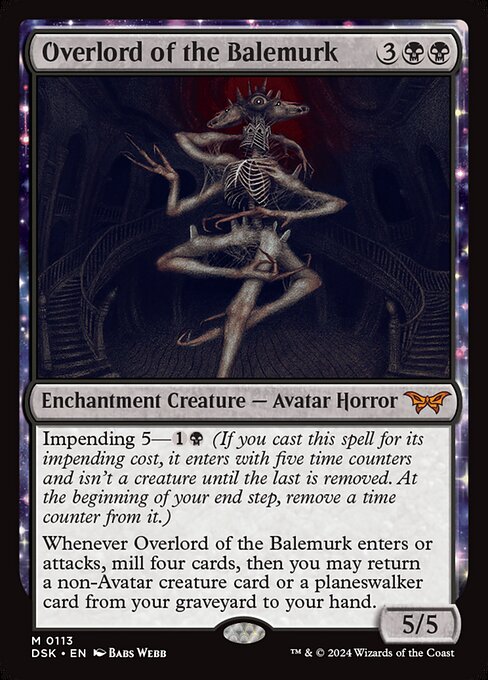
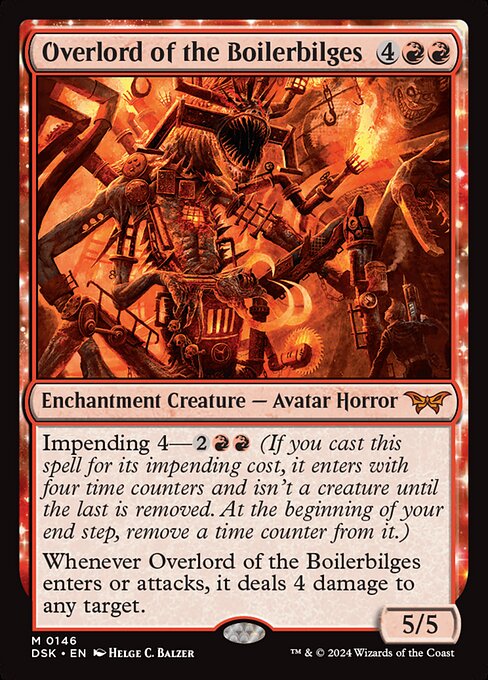
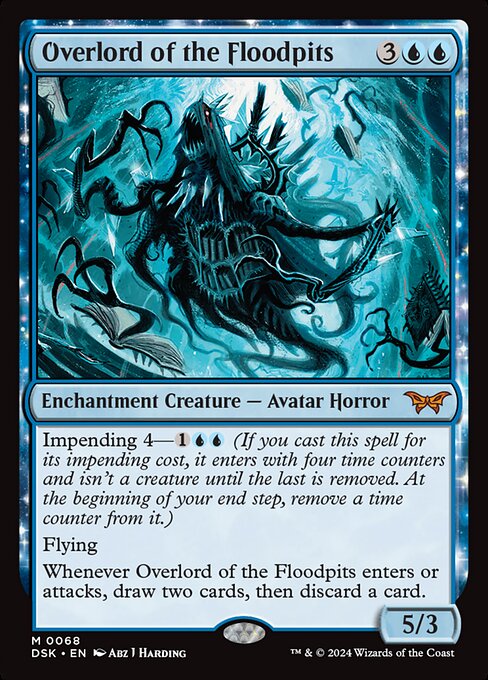
In Duskmourn: House of Horror, Impending appears exclusively on the Overlord cycle - five Avatar Horror creatures, each overseeing a major zone of the Duskmourn under Valgavoth's will. They're among the most powerful cards in the set.
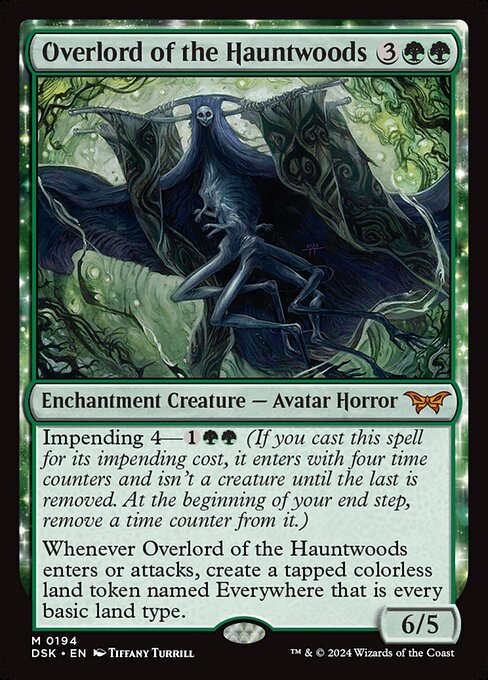
Overlord of the Hauntwoods
Impending 4 - {3}{G} (normal cost is higher). A 6/5 that creates tapped, colourless land tokens named "Everywhere" that are every basic land type whenever it enters or attacks. During its countdown, every end step ticks toward a massive beater that also ramps your mana the moment it arrives and swings. Even as a non-creature enchantment, simply having it enter triggers that land creation.
This card illustrates why the cycle is impactful: even before it becomes a creature, it's already doing meaningful work.
The history and flavour of Impending
Impending was designed for Duskmourn: House of Horror, a horror-themed set released in 2024. The mechanic functions similarly to suspend - an older mechanic where spells are exiled with time counters and cast for free when the counters run out - but Impending has its own distinct identity. The permanent is immediately on the battlefield, present and threatening, rather than waiting in exile.
The flavour is deliberate and clever. In horror fiction, there's a recurring trope of characters sensing something is wrong - a shadow at the edge of vision, a sound that stops too quickly - before the monster actually appears. Impending captures exactly that. The Overlords are out there, their presence felt, but they don't yet have physical form. Turn by turn, they coalesce.
The cycle was originally five cards - right at the threshold where the set lead, Jules Robins, chose to give the mechanic a formal name. That decision was driven partly by mechanical significance and partly by flavour: naming it "Impending" gave the cycle extra thematic weight. Five named cards with a named mechanic lands differently than five cards with an unnamed rules box.
The mechanic represents a new design space sitting between suspend and normal casting - creatures that announce themselves early and give both players time to prepare. That dramatic tension, the countdown, the inevitability, is very much by design.