Saddle: MTG Mechanic Guide (Mount Keyword)
What is Saddle in MTG?
Imagine a cowboy tapping their horse on the shoulder and saying "let's ride" - that's basically what the Saddle mechanic does, except your horse might be a porcupine, and the cowboy is whatever creature you're willing to commit to the cause.
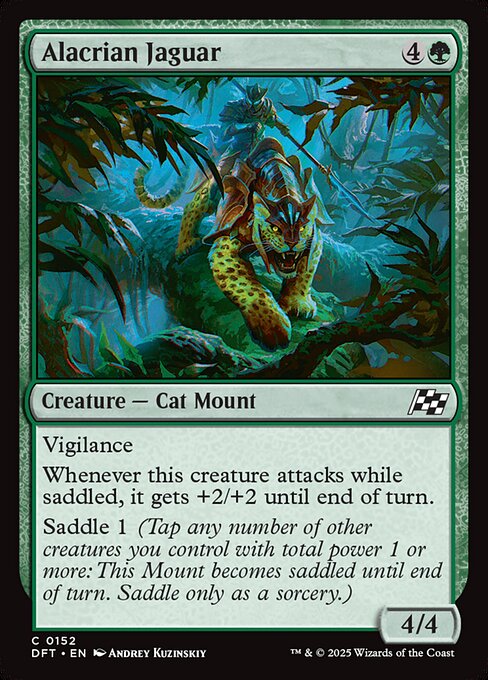
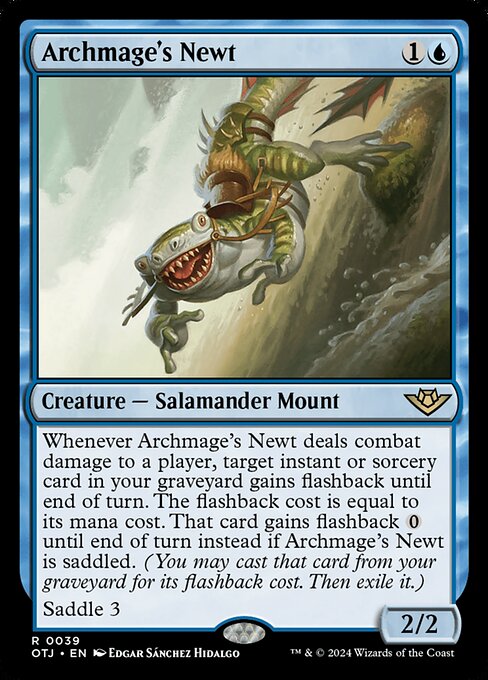
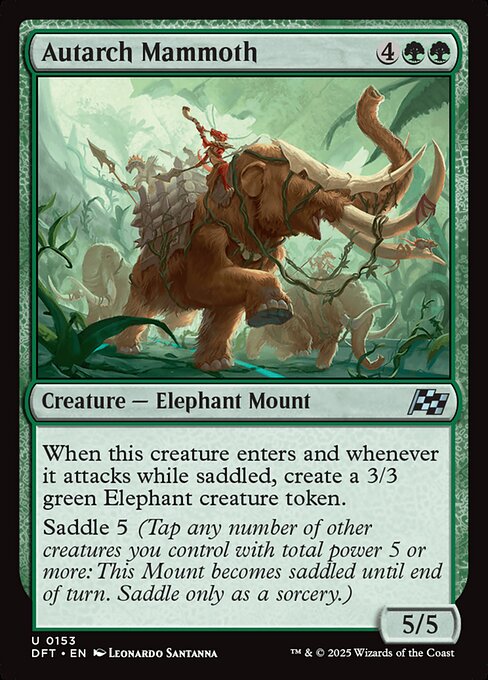
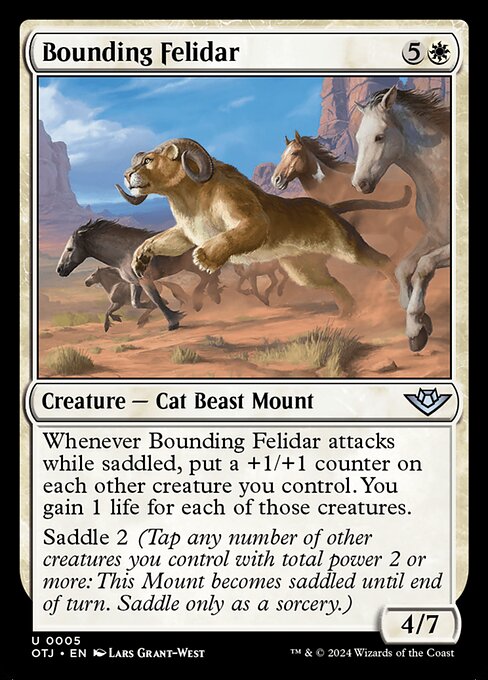
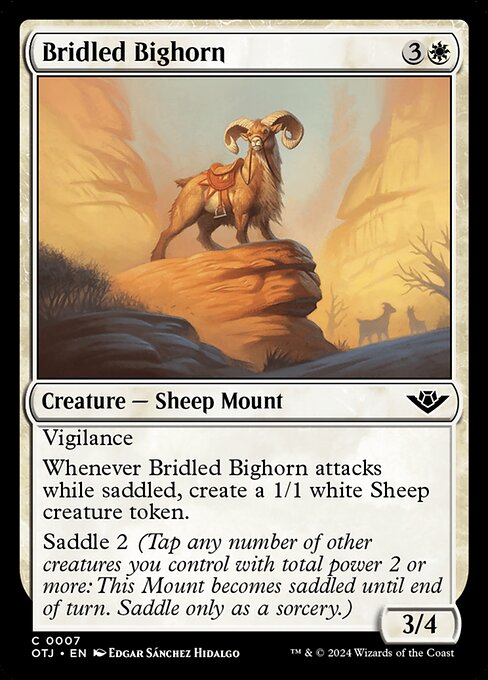
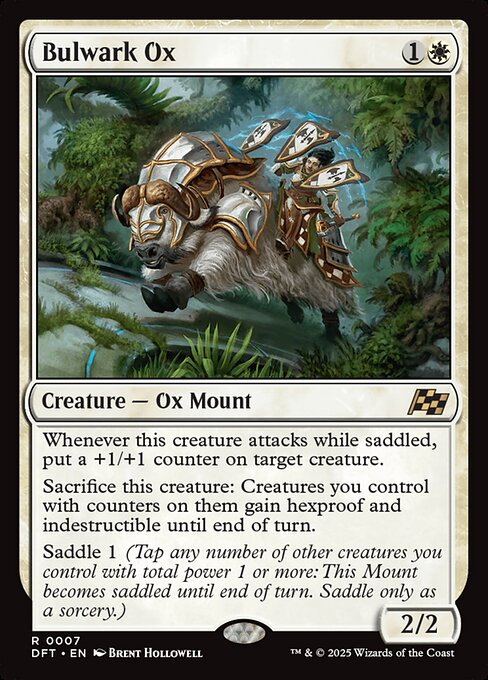
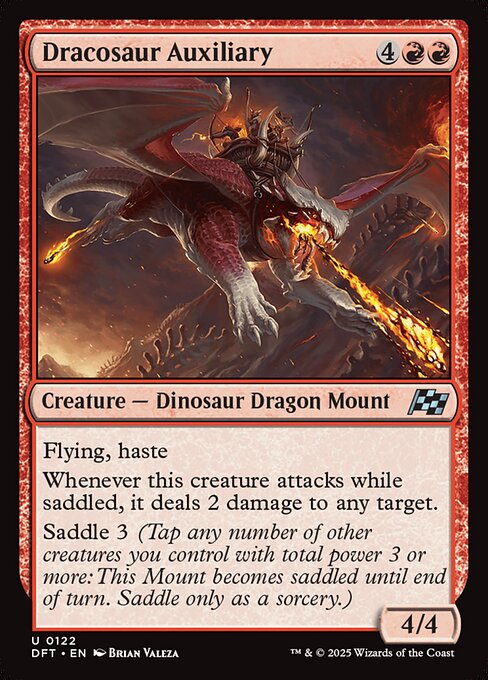
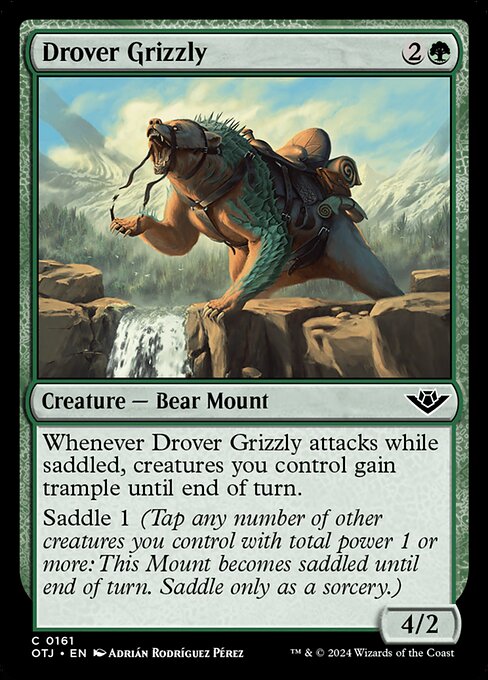
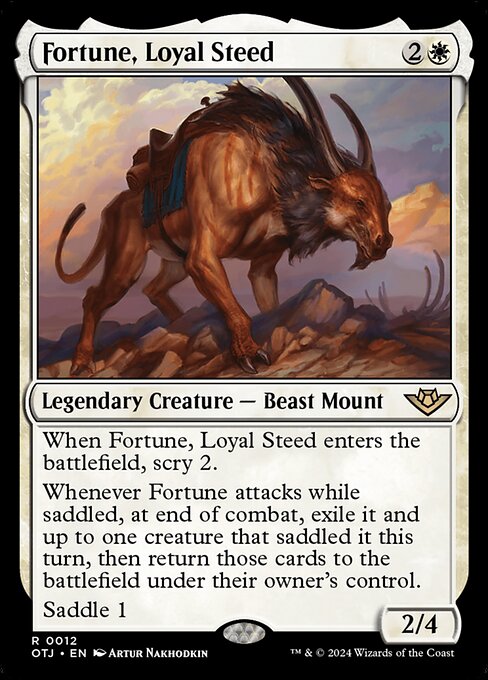
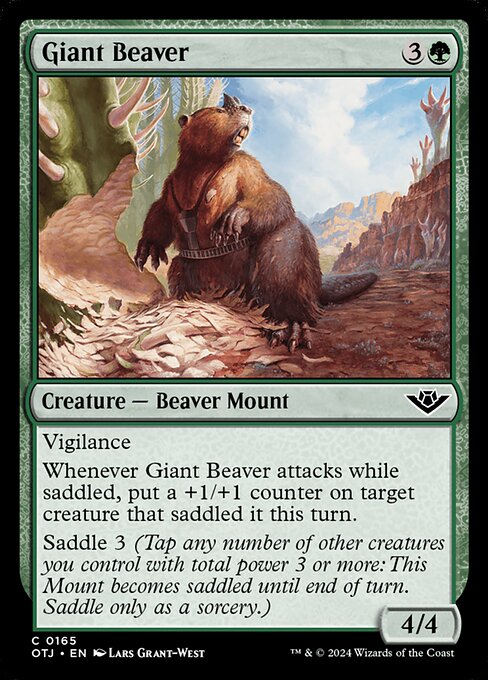
Saddle is a keyword ability introduced in Outlaws of Thunder Junction (OTJ, 2024). It appears exclusively on creatures with the Mount creature type, and it lets you tap other creatures you control to "saddle" that Mount until end of turn - unlocking bonus abilities that trigger when the Mount attacks while saddled.
The flavour is exactly what it sounds like: a rider climbs aboard the Mount, and the combination of rider and beast becomes something greater than either alone.
Rules: How Saddle works
Saddle N means: "Tap any number of other untapped creatures you control with total power N or greater: This Mount becomes saddled until end of turn. Activate only as a sorcery."
That's the full rules text. Let's unpack the pieces that matter most.
It's activated at sorcery speed
Because Saddle can only be activated as a sorcery, you need to use it during your main phase while the stack is empty. That means you're committing to saddling before you attack - you can't saddle in response to something or at instant speed.
In practice, this means your turn flows like this:
- Main phase - saddle your Mount by tapping creatures
- Move to combat - attack with the now-saddled Mount
- Saddled trigger fires (if the Mount has one)
Power, not number of creatures
The N in Saddle N refers to the total power of the creatures you tap, not how many creatures you tap. Saddle 4 doesn't require four creatures - it requires creatures whose power adds up to 4 or more. A single 5/5 saddling a Mount with Saddle 4 is perfectly legal.
CR 702.171a: "Saddle N means 'Tap any number of other untapped creatures you control with total power N or greater: This permanent becomes saddled until end of turn. Activate only as a sorcery.'"
What "saddled" actually means
"Saddled" is a designation - a marker the rules use to track state. It has no inherent rules meaning on its own; it just tells other abilities "yes, this Mount is currently saddled."
CR 702.171b: "Saddled is a designation that has no rules meaning other than to act as a marker that spells and abilities can identify. Only permanents can be or become saddled. Once a permanent has become saddled, it stays saddled until the end of the turn or it leaves the battlefield. Being saddled is not a part of the permanent's copiable values."
That last clause is worth noting: if a saddled Mount is copied, the copy does not enter the battlefield as saddled.
Mounts can attack and block without being saddled
This is the key difference from the Crew mechanic on Vehicles. An unsaddled Mount is still a regular creature - it can attack, block, and do everything a creature normally does. Saddling just adds something on top. You're not turning a non-creature into a creature the way Crew does.
Losing the Mount type doesn't remove Saddle
If a Mount loses its creature types somehow, it retains its Saddle ability. There's no mechanical dependency between the Mount type and the Saddle keyword - they just happen to always appear together by design.
Key rules interactions and edge cases
| Situation | How it resolves | |---|---| | Copying a saddled Mount | The copy is not saddled - saddled isn't part of copiable values | | Mount leaves the battlefield while saddled | It loses the saddled designation when it leaves | | Activating Saddle multiple times | You can, though the Mount is already saddled - tapping more creatures achieves nothing additional | | Using a creature with summoning sickness to saddle | A creature with summoning sickness can't be tapped to saddle, since tapping it is a cost | | Saddling in the second main phase | Technically legal - Saddle is sorcery speed, not "attack phase only" - though only Stubborn Burrowfiend has an ability that functions post-combat |
Strategy: Playing with and against Saddle
Building a Saddle deck
The first thing to accept is that Saddle is an inherently tempo-negative mechanic if you're not careful. You're tapping creatures during your main phase to power up your Mount - creatures that could otherwise be attacking or blocking. You want to mitigate that cost.
Prioritise low Saddle values when you can. Saddle 1 is almost free - any creature with 1 or more power can saddle your Mount without much commitment. Saddle 4 is a real investment, so those Mounts better have payoffs worth building around.
Pair Mounts with creatures that are worse in combat. If you're running small utility creatures or tokens that aren't threatening attacks on their own, converting their tap into a Saddle activation gets value you'd otherwise miss.
Watch your power curve, not just your mana curve. Because Saddle cares about power totals, a deck with lots of 1/1 tokens might struggle to hit Saddle 3 or 4 without committing several creatures. Think about whether your creatures can realistically meet the Saddle number you need.
What most Mounts want to do
Almost all Mounts have attack triggers that only fire while saddled. This means the game plan is almost always: saddle in your main phase, attack, collect the bonus. Most of these triggers push towards a wide go-wide or value strategy - tokens, counters, ramp, and lifegain are the most common payoffs.
Playing against Saddle
The sorcery-speed restriction is your friend. If your opponent has to commit their saddle creatures during their main phase, they're announcing their plan before the combat step. Removal that fires before combat - or instant-speed removal that can take out the Mount in response to the saddle activation - leaves them with tapped, stranded creatures and no payoff.
Killing the Mount after it's been saddled but before combat still wastes your opponent's resources. The creatures tapped to saddle don't untap, even if the Mount dies.
Notable Saddle cards
Seraphic Steed ({G}{W})
First strike, lifelink, and when it attacks while saddled, you create a **3/3 white Angel token with flying**. Saddle 4 is a real ask, but creating a 3/3 flier every attack is an enormous amount of pressure. In Limited, this card frequently closes games single-handedly.
Gilded Ghoda ({1}{R})
One of the more efficient Mounts at Saddle 1 - easy to trigger - and the payoff is a Treasure token every time it attacks while saddled. That's free mana acceleration on top of your combat step, which keeps your resources flowing throughout the game.
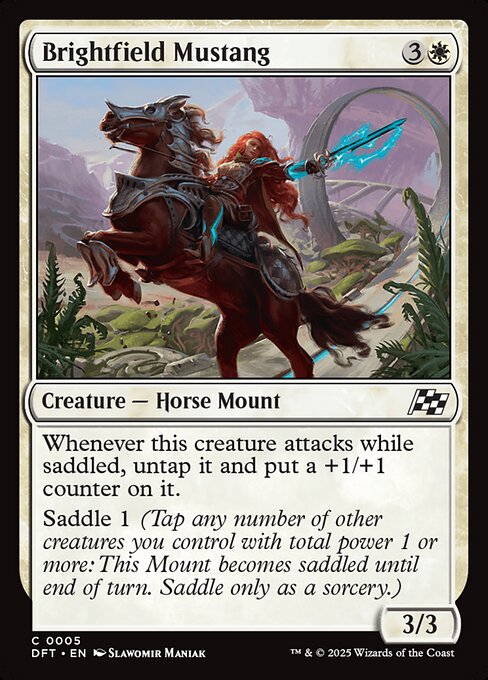
Brightfield Mustang ({3}{W})
A Mount that untaps itself and grows with a +1/+1 counter whenever it attacks while saddled. The untap effectively means you can still block the turn you attack, which is a nice safety valve - and the counter stacking means this horse gets genuinely threatening over multiple turns.
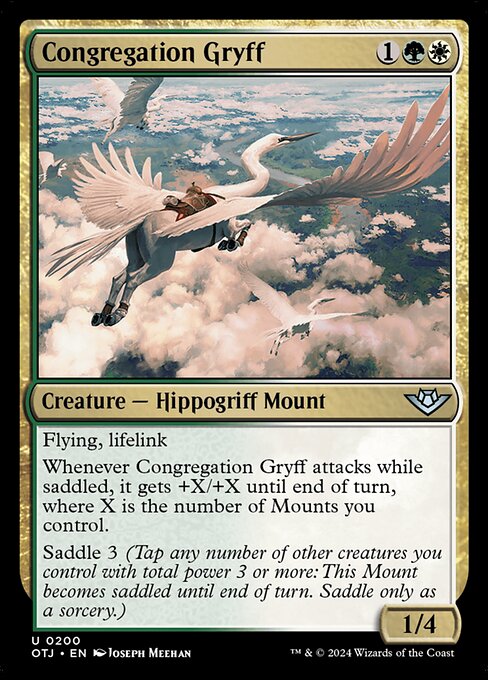
Congregation Gryff ({1}{G}{W})
A flying, lifelink hippogriff that gets +X/+X when it attacks while saddled, where X is the number of Mounts you control. In a dedicated Mount tribal shell, this can swing in as a massive evasive threat. Saddle 3 is manageable, and the ceiling here is high.
Unswerving Sloth ({3}{W}{W})
The strangest Mount on the list - a sloth - but one of the most powerful. When it attacks while saddled, it gains indestructible until end of turn and untaps all your creatures. Saddle 4 is the cost, but untapping your whole board after attacking is a massive swing, letting you both go wide in combat and leave blockers up.
Rambling Possum ({2}{G})
A unique piece of design: when it attacks while saddled, it gets a power/toughness bonus and you may return the creatures that saddled it to their owner's hand. That's a built-in way to protect your creatures from the tapping cost, bounce valuable ETB creatures, or just keep your saddle crew safe from a sweeper.
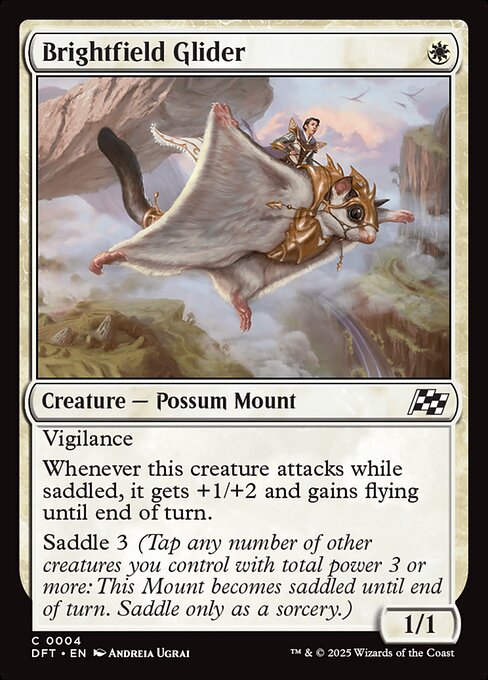
Brightfield Glider ({W})
A one-mana 1/1 Mount with vigilance and Saddle 3. Unsaddled, it's an unassuming blocker. Saddled, it becomes a 2/3 flier with vigilance - real stats for a one-drop. Saddle 3 is steep for an early drop, but in the right deck, the cost is worth the efficiency.
History: Where Saddle came from
Here's a slightly surprising design fact: Saddle was actually designed for Aetherdrift first, not for Outlaws of Thunder Junction.
The mechanic started life as a variant of Crew called "crew steed," created to represent racing teams in Aetherdrift using non-vehicle mounts. Meanwhile, Outlaws of Thunder Junction had its own separate riding mechanic in development - a more complex version intended to capture the cowboy-on-horseback fantasy of that setting.
During development, R&D noticed the problem: two different mechanics hitting the same flavour space, releasing relatively close together, was awkward. Saddle was the simpler and more intuitive of the two, so it replaced the OTJ mechanic entirely and shipped in Outlaws of Thunder Junction (2024) first - then returned in Aetherdrift for its originally intended home. In Aetherdrift, Pilots are specifically compatible with Saddling and Mounts, tying the mechanic into that set's racing theme.
As of now, R&D has said that Mount and Saddle are not being pushed straight to evergreen status, but they're actively exploring how often they want to return to the mechanic.
Lore aside: Horsemanship and Saddle are mechanically unrelated despite sharing obvious flavour territory - riding an animal. Horsemanship is a Legacy-era evasion ability from Portal Three Kingdoms; Saddle is a completely separate activated ability with no rules connection to it.
Design note: On Thunder Junction specifically, the "animals" you can saddle range far beyond horses - unicorns, hippogriffs, bears, salamanders, and yes, a porcupine. The setting deliberately leans into a wild-west-fantasy mashup where almost anything can be ridden if you're determined enough. 😄