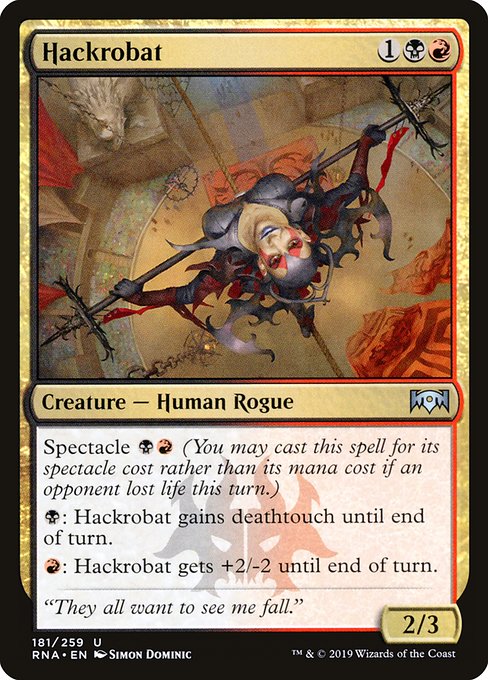
Spectacle: MTG Mechanic Guide
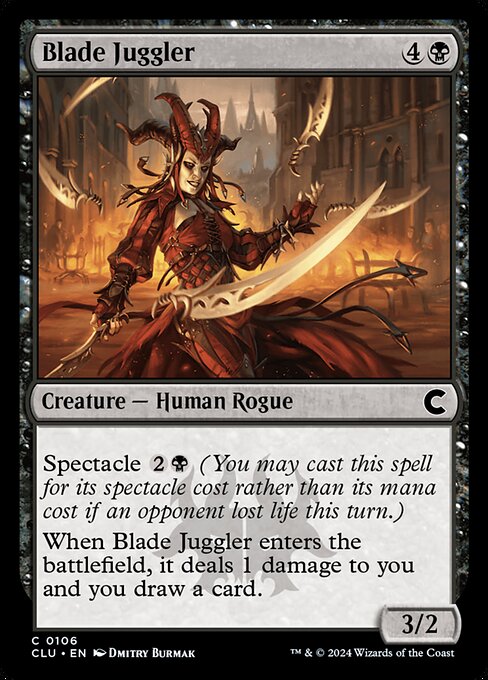
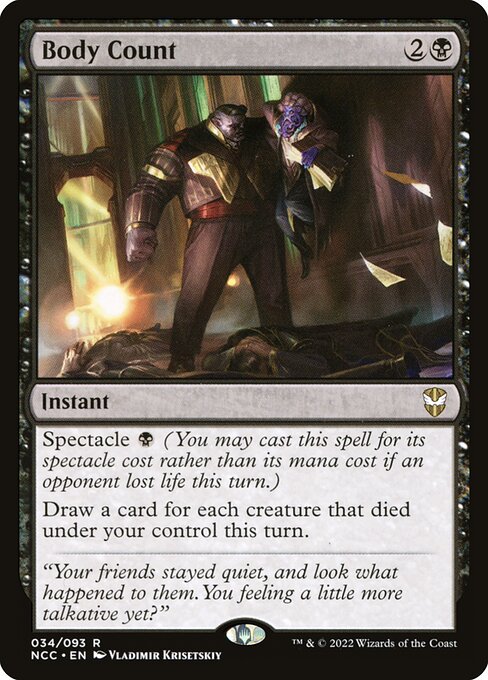
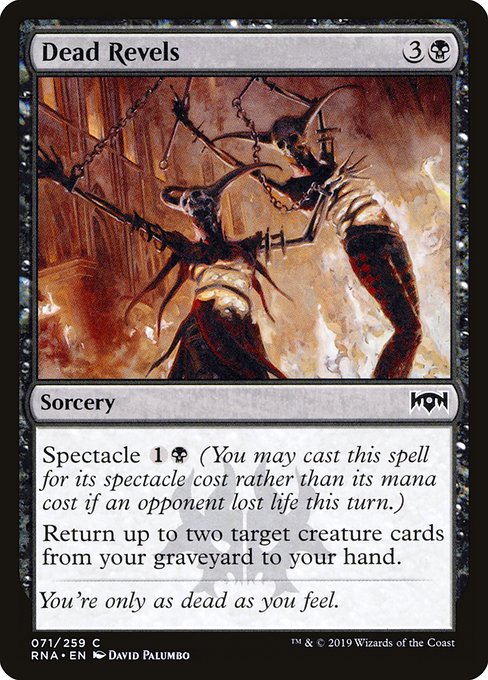
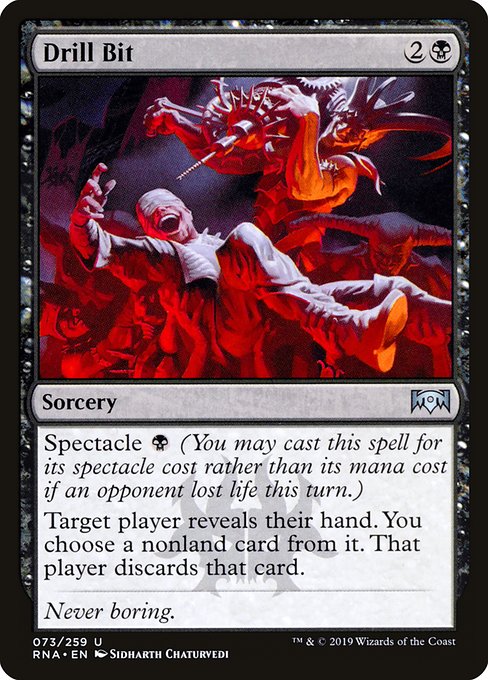
There's a reason the Cult of Rakdos puts on such extravagant performances: blood on the stage means discounts in your hand. Spectacle is one of those mechanics that rewards aggression in a deeply satisfying way - the more pressure you put on your opponents, the cheaper (or more powerful) your spells become.
What is Spectacle?
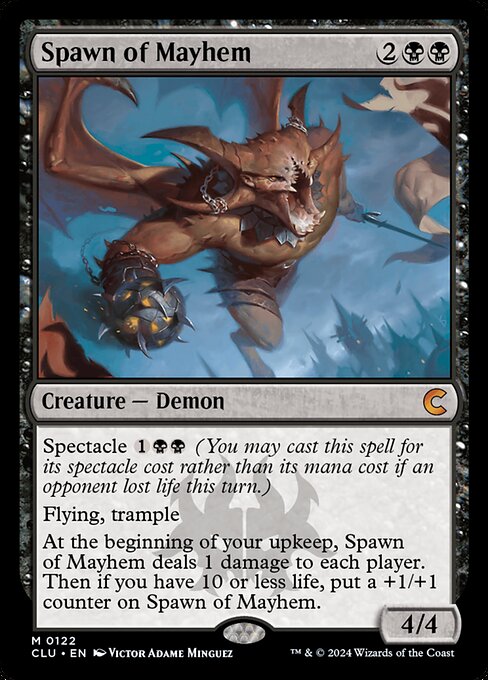
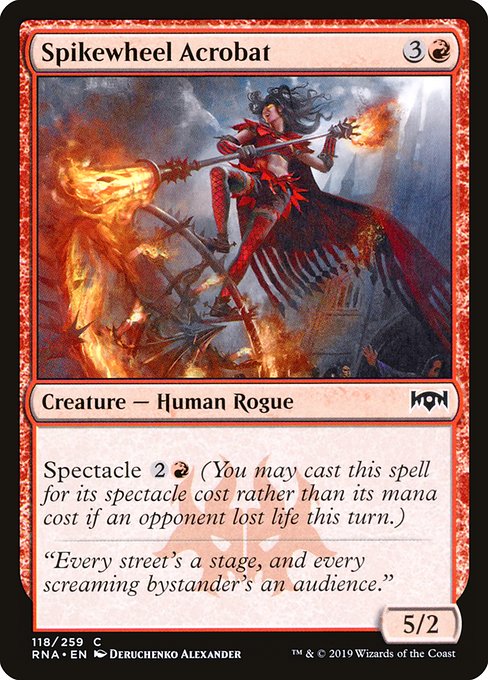
Spectacle is a keyword ability that gives certain spells an alternative cost. If an opponent has lost life this turn - from any source, not just your attacks - you may cast a spell with Spectacle by paying its spectacle cost instead of its normal mana cost.
The keyword appears on the card like this:
Spectacle [cost] - You may pay [cost] rather than pay this spell's mana cost if an opponent lost life this turn.
The mechanic was introduced in Ravnica Allegiance (RNA, 2019) as the signature ability of the Cult of Rakdos, the demonic circus guild of Ravnica. The flavour is impeccable: the crowd has already seen blood, so the performer delivers something spectacular.
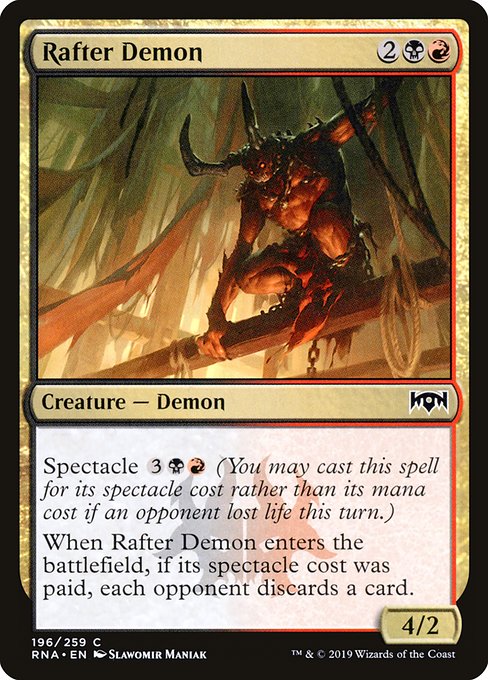
On some cards, the spectacle cost is cheaper than the normal mana cost - a pure discount for drawing first blood. On others, the spectacle cost is higher, but unlocks a bigger payoff. Either way, paying it is always optional, even when you've met the condition.
How Spectacle works - the rules
Spectacle is a static ability that functions on the stack. The official wording from the Comprehensive Rules (November 14, 2025 - Edge of Eternities) is:
"Spectacle is a static ability that functions on the stack. 'Spectacle [cost]' means 'You may pay [cost] rather than pay this spell's mana cost if an opponent lost life this turn.' Casting a spell for its spectacle cost follows the rules for paying alternative costs in rules 601.2b and 601.2f-h." - CR 702.137a
A few things worth unpacking there.
What counts as losing life?
Any damage dealt to an opponent causes them to lose that much life - combat damage, a burn spell, a shock land they tapped, a Skewer the Critics that connected last turn. You don't have to be the source. If your opponent lost life for any reason this turn, Spectacle is live.
The mana value never changes
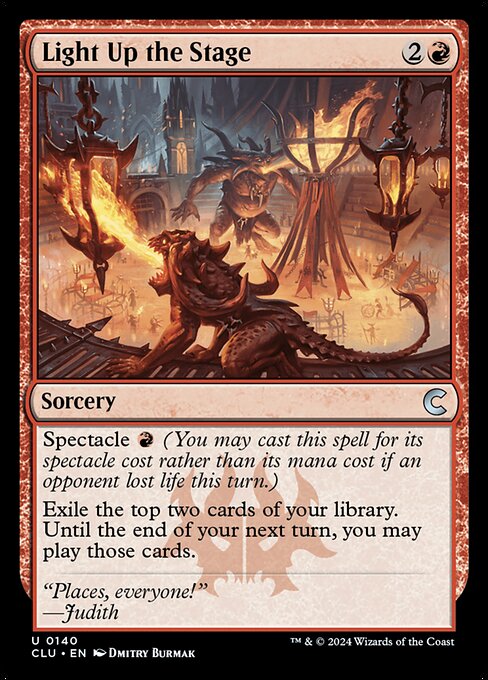
Even if you cast a spell for its spectacle cost, the spell's mana cost and mana value remain exactly what's printed on the card. So Light Up the Stage is always a three-mana card for the purposes of effects that care about mana value, even when you cast it for {R}.
Rules note: The total cost you pay can still be modified by cost increases and reductions on top of the spectacle cost - you apply those after choosing which cost you're paying, following the usual rules for determining total cost.
Spectacle doesn't change timing rules
This one trips people up. If a card with Spectacle is a Sorcery, it's still a Sorcery - you can't suddenly cast it at instant speed just because an opponent lost life. The condition for Spectacle is separate from when you're allowed to cast the spell.
A few multiplayer notes
- The cost is the same regardless of how much life an opponent lost or how many opponents lost life. Any loss of life by any opponent is the binary trigger.
- In Commander or other multiplayer formats, if an opponent loses life and then leaves the game later that turn, Spectacle is still unlocked for the rest of that turn.
Strategy - playing with and against Spectacle
Turn on Spectacle as early as possible
The whole engine depends on one thing: getting an opponent to lose life before you need to cast your key spell. In a dedicated Spectacle deck, you want cheap ways to deal damage - creatures with aggressive stats, direct damage spells, or even shock lands your opponent fetches (their own life total works against them). Once one point of damage lands, every Spectacle card in your hand becomes available at its discounted cost.
Light Up the Stage is the clearest example of why this matters. At its normal cost of {2}{R}, it's fine but unremarkable. At its spectacle cost of {R}, it's one of the most efficient card-advantage spells red has ever had access to. The difference between those two versions is enormous, and the whole deck is built around making sure Spectacle is consistently active by turn two.
Build around the payoff, not just the discount
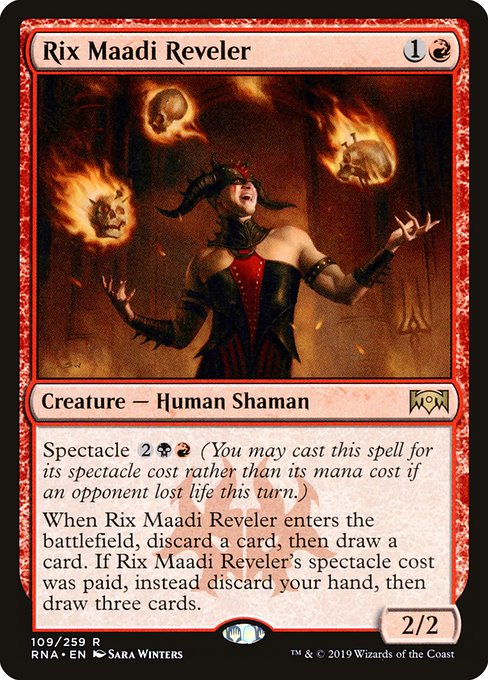
Spectacle cards where the cost is higher than normal - but unlocks extra text - reward a different kind of construction. Rix Maadi Reveler normally draws one card and discards one. If you paid its spectacle cost, you discard your whole hand and draw three. That's a completely different card. Whether the spectacle version is what you want depends on your deck's plan: are you the empty-hand aggressive deck that wants to flood the board, or the value deck that wants steady card flow?
Playing against Spectacle decks
The simplest counter-strategy is to avoid giving them free damage triggers early. Shock lands, fetchlands, and any effect that costs life all feed the Spectacle condition - if you know you're against a Spectacle-heavy deck, it's worth considering whether you need to pay those life costs in the early turns. Sometimes a land that enters tapped is actually the correct choice when it denies your opponent's turn-two Light Up the Stage.
That said, aggressive Spectacle decks are usually fast enough that they'll find another way to enable it. Efficient blockers that trade early, or life gain that cushions the early game, are more reliable answers.
Deck-building considerations
Spectacle slots most naturally into red and black aggressive shells - the Rakdos colours where it originated. The ideal Spectacle deck wants:
- One-drop creatures or burn spells that deal damage before the key Spectacle turns
- Multiple Spectacle payoffs at different mana costs, so you can chain discounts across turns
- Cards that deal damage incidentally (pingers, enter-the-battlefield effects, hasty attackers)
In formats where Light Up the Stage is legal, it's become a staple of Burn and Red Aggro decks precisely because it's so easy to turn on. One Lightning Bolt, one Goblin attack, one shock - and suddenly you're drawing two cards for one mana.
Notable Spectacle cards
Light Up the Stage
The most format-impactful Spectacle card by a significant margin. At its spectacle cost of {R}, you exile the top two cards of your library and can play them until the end of your next turn. Red Aggro and Burn decks across Modern and Pioneer have used this as a key draw engine. The one-mana cost is so efficient that even playing it for {2}{R} is sometimes correct when you're light on cards.
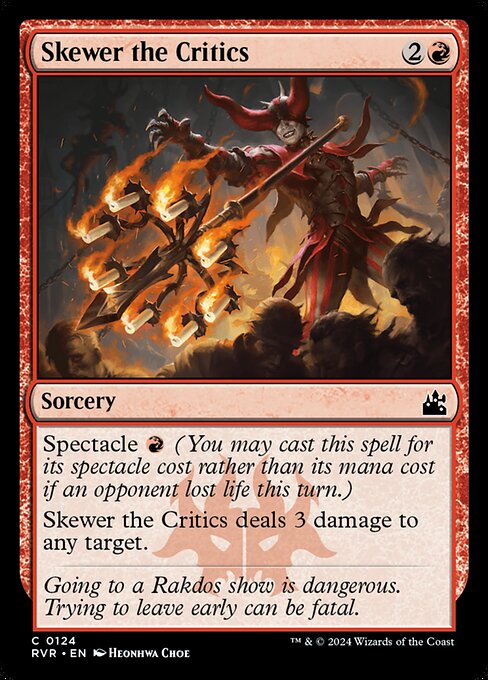
Skewer the Critics
Skewer the Critics is, in effect, a one-mana Lightning Bolt when Spectacle is active - Sorcery speed, but the same three damage to any target for {R}. In Burn decks where you're casting damage spells almost every turn, the Spectacle condition is almost always met by the time you want this. The card slots in alongside actual Lightning Bolts as redundancy for that effect.
Rix Maadi Reveler
A 2/2 for {1}{R} that draws a card and discards a card at its base rate - serviceable, not exciting. The spectacle version is a different animal: discard your hand, draw three. In aggressive decks that empty their hand quickly, this is a meaningful refuel. Worth noting that the spectacle cost here is higher than the normal cost, which means you're making a deliberate choice about which mode you want.
History of Spectacle
Spectacle was introduced in Ravnica Allegiance (January 2019) as the mechanical identity of the Cult of Rakdos guild. Thematically, it captures the guild's philosophy perfectly: they perform to a bloodthirsty crowd, and the worse things get for their audience, the better the show.
The mechanic appeared primarily in red and black in RNA, with the guild's identity sitting squarely in that colour pair.
Spectacle didn't return as a named mechanic in its home block, but it did reappear as a one-off in the Streets of New Capenna Commander decks - a brief cameo rather than a full return. As of the most recent sets, it remains a Ravnica-specific mechanic tied to the Rakdos aesthetic.
Lore aside: The Cult of Rakdos is literally a demonic circus run by the elder demon Rakdos himself. Their magic tends to get flashier and more dangerous the more the crowd is already suffering - which is exactly what Spectacle represents on the card level. The mechanic and the lore are unusually well-aligned.