Transmute: MTG Mechanic Explained
There's a particular kind of power in knowing exactly which card you need - and then just going to get it. That's the fantasy Transmute sells. On the surface it looks like a discard cost with upside, but in practice it's a flexible tutoring engine stapled to an otherwise useful card. The mechanic never returned after its debut block, yet it quietly shows up in competitive formats to this day.
What is Transmute?
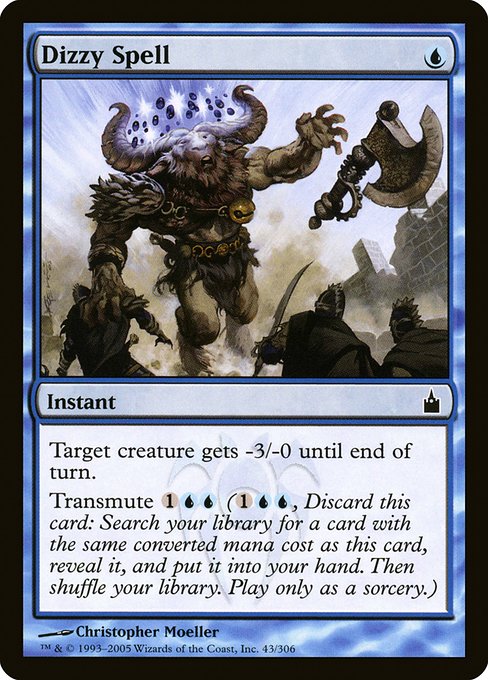
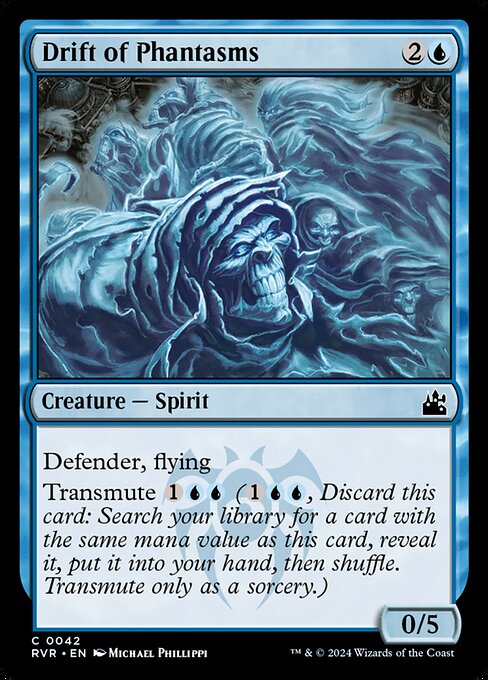
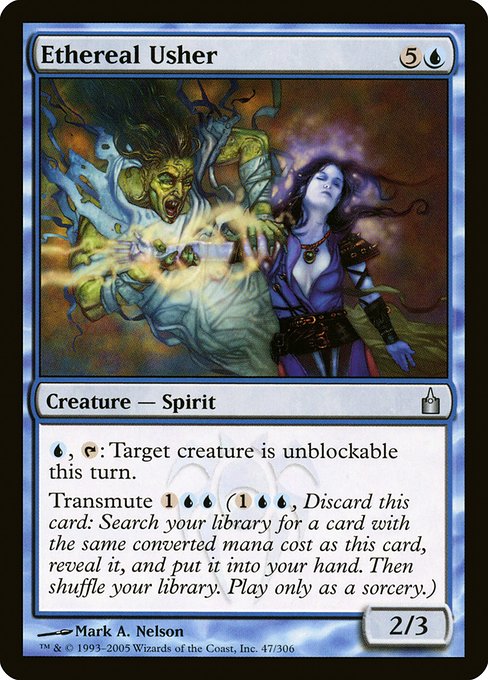
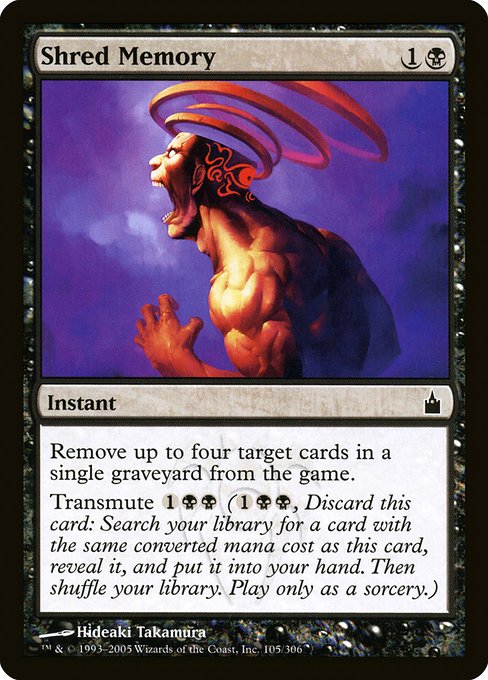
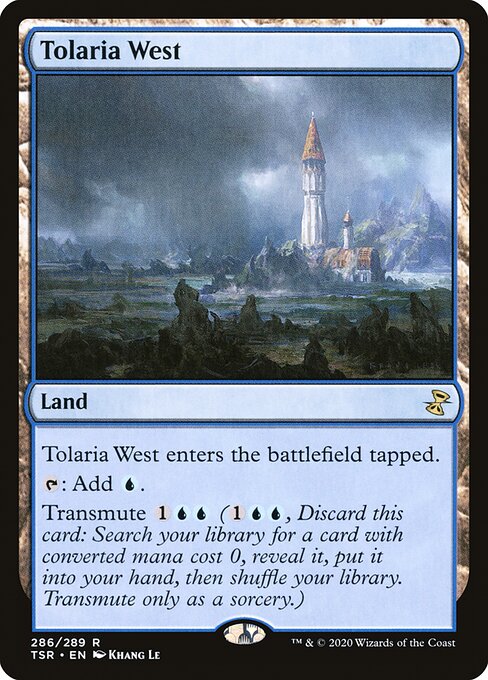
Transmute is an activated keyword ability that turns a card in your hand into a tutor. You pay the Transmute cost, discard the card, and search your library for any card that shares the same mana value - then reveal it, put it into your hand, and shuffle.
The mechanic is the signature ability of the Dimir guild from the original Ravnica: City of Guilds block. Dimir is the blue-black guild of secrets, manipulation, and hidden information, so a mechanic that quietly fetches the exact tool you need fits the flavour beautifully. You're not casting your spell - you're discarding it as a resource to find something better suited for the moment.
Critically, Transmute can only be activated from your hand, and only as a sorcery. That means you can't use it to search at instant speed on your opponent's turn.
How the Transmute rules work
Here's the precise rules text as it appears in the Comprehensive Rules (November 14, 2025 - Edge of Eternities):
"Transmute [cost]" means "[Cost], Discard this card: Search your library for a card with the same mana value as the discarded card, reveal that card, and put it into your hand. Then shuffle your library. Activate only as a sorcery."
- CR 702.53a
A few things worth unpacking:
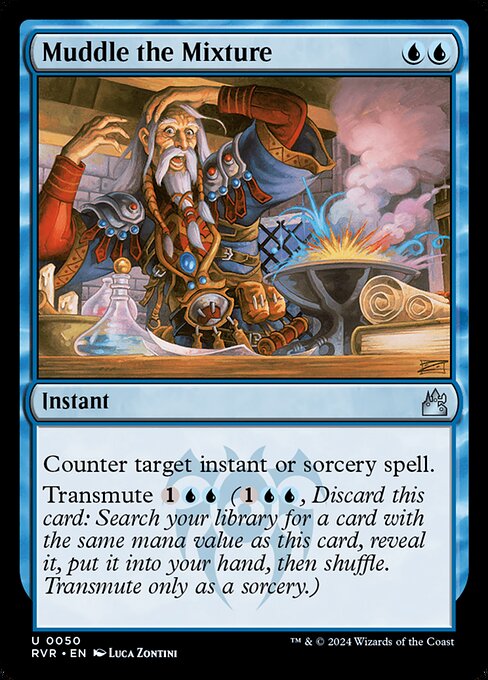
The cost to Transmute is not the card's casting cost. Each Transmute card has its own listed Transmute cost, which is usually different from what you'd pay to cast the spell. Muddle the Mixture, for example, costs '{U}{U}' to cast but '{1}{U}{U}' to Transmute.
Mana value, not mana cost. The search looks for cards with the same mana value (formerly called converted mana cost) as the discarded card. So if you Transmute a card with mana value 2, you're searching for any card that costs 2 total mana.
Sorcery speed only. You can only activate Transmute on your own turn, during your main phase, when the stack is empty. No sneaking a tutor in response to something.
The ability persists in other zones. This is an edge case most players will never run into, but CR 702.53b notes that the Transmute ability technically continues to exist even while the card is on the battlefield or in other zones. This means effects that care about whether a permanent has activated abilities will still "see" the Transmute ability.
Common misunderstandings
- You cannot Transmute at instant speed. The "only as a sorcery" clause is explicit.
- You don't have to cast what you find. You search, reveal, and put the card into your hand. What you do with it after that is up to you.
- Transmute is not a spell. It's an activated ability. This means it can't be countered by spells that counter only spells - though abilities can be countered by cards like Stifle.
Strategy: how to use Transmute
The core of Transmute's appeal is that you're essentially paying to turn one card into another. That's only worth doing when finding the right card matters more than the card you're giving up.
The classic use case is combo decks. If you need a specific two-drop to assemble your win condition, a Transmute card with mana value 2 becomes a fourth copy of that piece - or a fifth, or sixth, depending on how many Transmute cards share that mana value. Legacy and older formats have used this to build extremely consistent combo lines.
Flexibility is the hidden value. Most Transmute cards do something useful on their own - they're not blank cards that only exist to tutor. Muddle the Mixture counters instants and sorceries. Dimir Machinations lets you look at the top three cards of any player's library. If you don't need to tutor in a given game, you can simply cast the card for its primary effect. That two-mode structure is what makes Transmute cards so resilient.
The mana value constraint cuts both ways. Transmuting a two-drop finds any two-mana card in your deck, which is powerful. But it also means you can't use a Transmute card to fetch something at a different point on your curve. Plan your Transmute cards around the specific mana values you most want to access.
Against Transmute, remember that the activation happens at sorcery speed. If your opponent is spending mana and discarding a card during their main phase without casting anything, they're probably Transmuting. Knowing this can help you plan your response - you'll know roughly what they're fetching based on the mana value of the card they just pitched.
Building around Transmute
Decks that want Transmute typically share a few properties:
- A narrow combo or toolbox plan where having the exact card matters more than having a card
- The ability to use the Transmute card's printed effect as a fallback when tutoring isn't necessary
- A mana curve concentrated around one or two specific values that the Transmute cards can search up
Transmute is a sorcery-speed discard effect that costs mana. In fair game plans, that's a high opportunity cost. Transmute shines when the card it fetches is worth multiple cards in value, or when the difference between finding it and not finding it is the difference between winning and losing.
Notable Transmute cards
Muddle the Mixture
Muddle the Mixture ({U}{U}) is the most widely played Transmute card in competitive Magic - and it's not particularly close. As a counterspell, it's narrow (instants and sorceries only), but completely free to include if the Transmute mode is what you actually want. The Transmute cost is '{1}{U}{U}', which means it searches for any card with mana value 3.
In combo decks, mana value 3 is an extremely useful place to be - many key pieces across Legacy and Commander land right there. Muddle has been a quiet fixture in older formats for years precisely because it asks so little of you to include.
Dimir Machinations
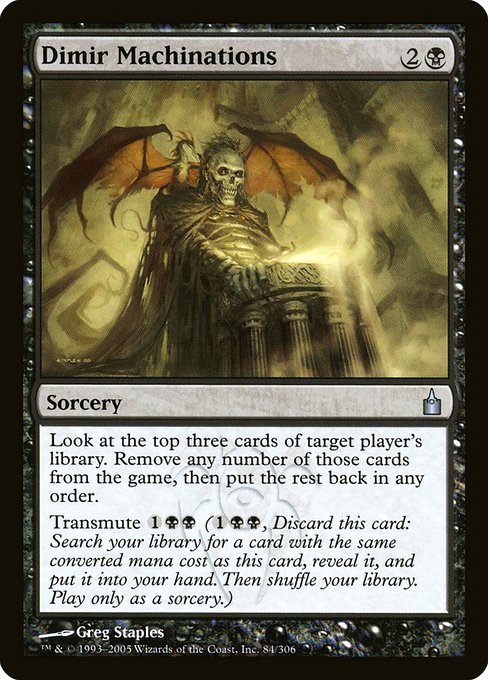
Dimir Machinations ({2}{B}) is the Dimir Transmute card at mana value 3. Its printed effect - looking at the top three cards of any player's library and optionally exiling some of them - is awkward in most contexts, but the Transmute cost of '{1}{B}{B}' lets you search for any three-mana card. Like Muddle, this sees play primarily as a tutor with a spell stapled on as an afterthought.
History of Transmute
Transmute debuted in Ravnica: City of Guilds (2005) as the mechanical identity of the Dimir guild - Magic's secretive blue-black organisation built on espionage and hidden agendas. The block's ten guilds each had their own keyword, and Transmute captured Dimir's flavour of working quietly behind the scenes to get exactly what you need.
The mechanic appeared across Ravnica: City of Guilds and Dissension (2006), both part of the original Ravnica block.
When Ravnica returned in Return to Ravnica (2012) and again in Ravnica Allegiance (2019), Dimir received new mechanics rather than a Transmute revival. The ability has not been reprinted or revisited on new cards.
A related mechanic, transfigure, appeared on a single timeshifted card in Future Sight (2007): Fleshwrither. Transfigure works similarly to Transmute but activates from the battlefield and searches only for creatures. According to designer Mark Rosewater, transfigure is unlikely to appear again.
Despite its narrow origin, Transmute has had a longer competitive shelf life than most block mechanics, carried entirely by the power of flexible tutoring in older formats where deck consistency is paramount.