Amonkhet (AKH): Set Guide, Mechanics & Lore
Amonkhet drops us into one of Magic's most striking settings: an Ancient Egypt-inspired plane ruled in the shadow of Nicol Bolas. Released in 2017, AKH is the first set in the Amonkhet block, followed by Hour of Devastation. It contains 287 cards and was designed around a civilisation built on ritual, death, and glory - which, as it turns out, suits Magic's mechanics remarkably well.
What is Amonkhet?
Amonkhet is a plane and a set. As a plane, it's a sun-scorched world centred on the city-state of Naktamun, surrounded by hostile desert wastes. As a set, it's a 287-card expansion released on April 28, 2017, forming the first half of the Amonkhet block alongside Hour of Devastation (HOU).
It was legal in Standard at release and introduced a suite of mechanics that leaned hard into the set's themes of preparing for death, earning glory, and serving a god-pharaoh who does not have your best interests at heart.
Themes and mechanics
The mechanical identity of Amonkhet is built around two big ideas: the graveyard as a resource, and trial as a path to power. Almost every mechanic in the set connects to one or both.
New mechanics
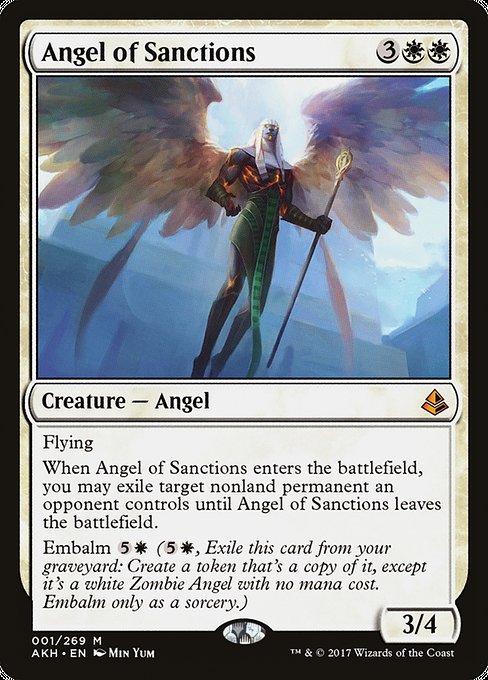
Embalm is the set's signature keyword. Creatures with embalm can be exiled from your graveyard by paying their embalm cost, returning as a token copy of themselves - but as a white Zombie in addition to their other types. Mechanically, it turns your graveyard into a second hand, giving you a second activation of any ETB (enters-the-battlefield) trigger the creature had. Thematically, it's the ritual preservation of worthy warriors for service in the afterlife.
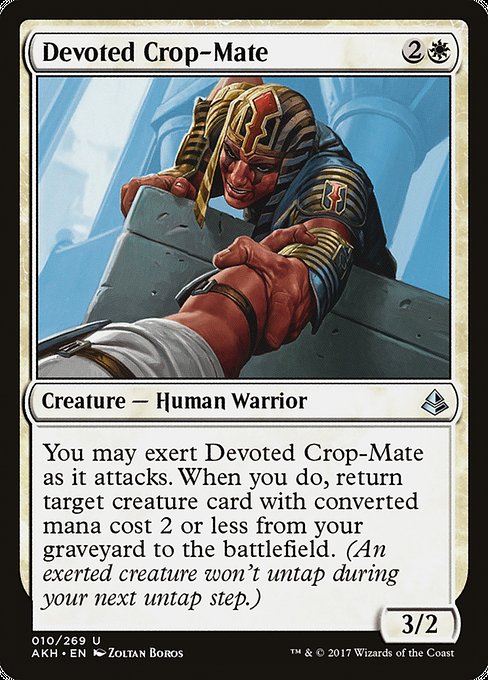
Exert lets you choose, when a creature attacks, to exert it - meaning it won't untap during your next untap step, but it gets a bonus for doing so. Think of it like overclocking: more power now, a cooldown later. It rewards aggressive decks that can make use of the bonus every other turn, or decks that find ways to untap their creatures anyway.
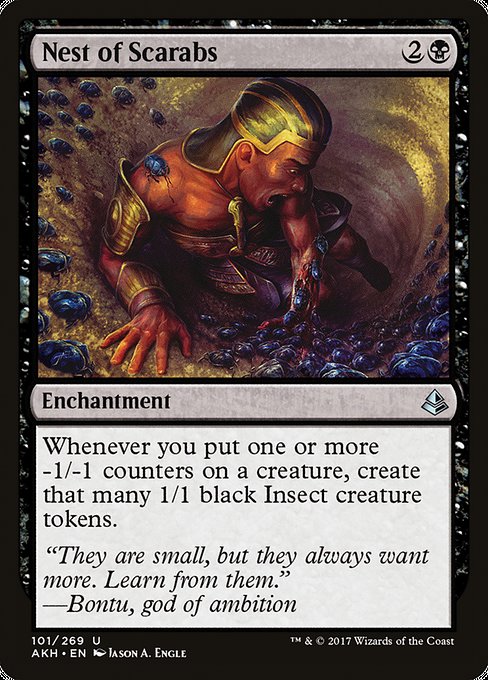
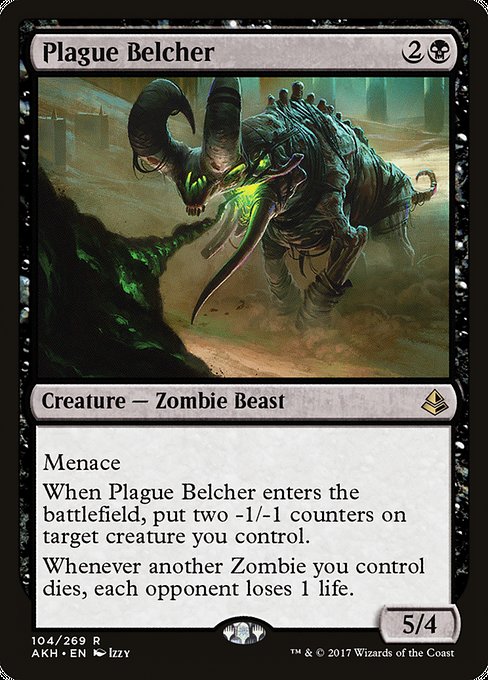
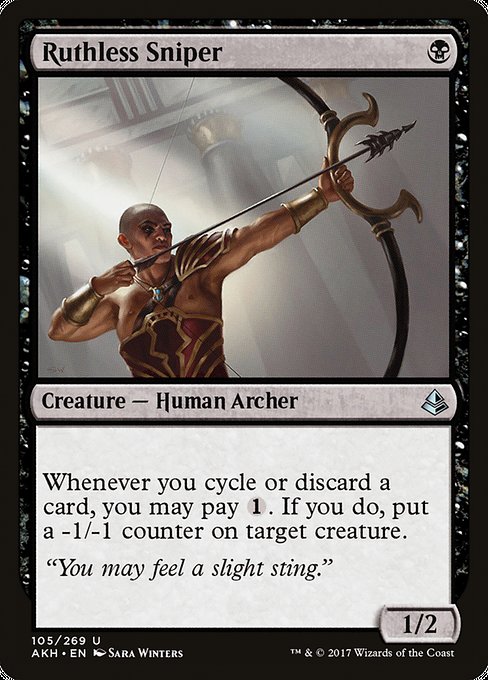
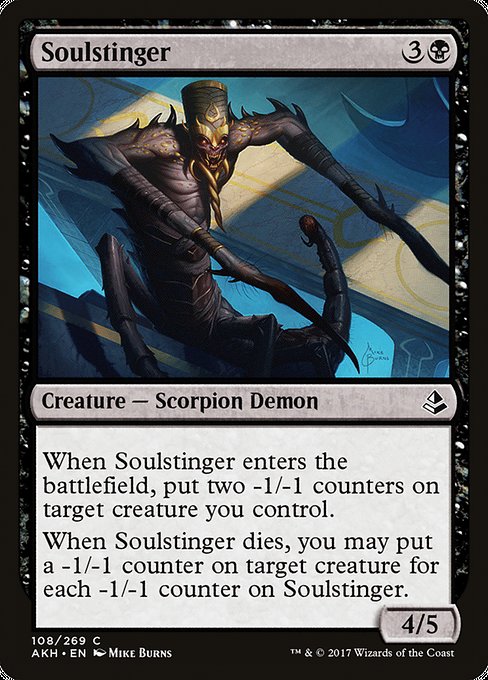
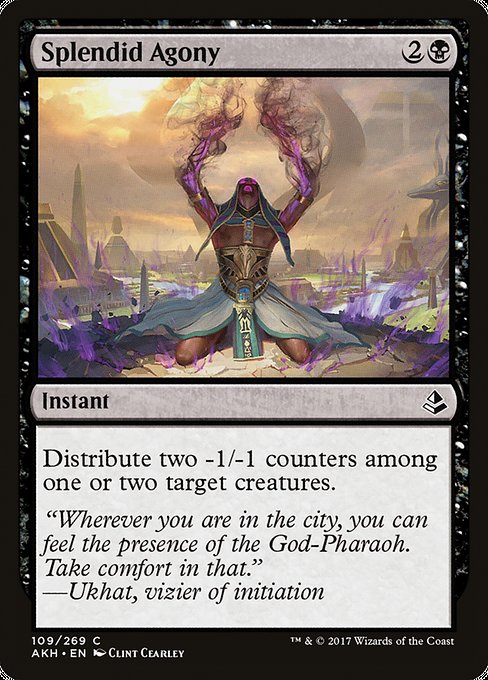
-1/-1 counters return as a set-wide theme rather than a keyword mechanic. Where most sets use +1/+1 counters for growth, Amonkhet leans into the draining, weakening side of the game. Several cards place -1/-1 counters on creatures or care about them being present.
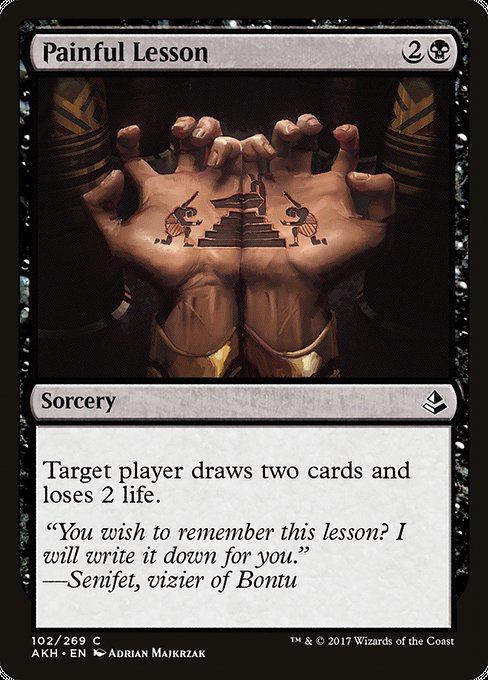
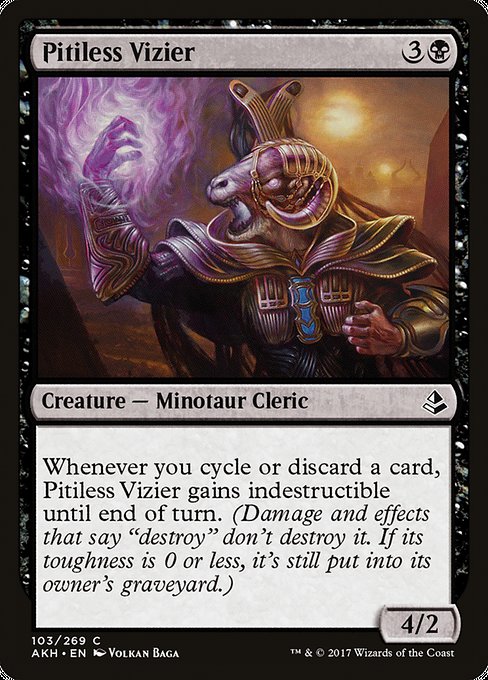
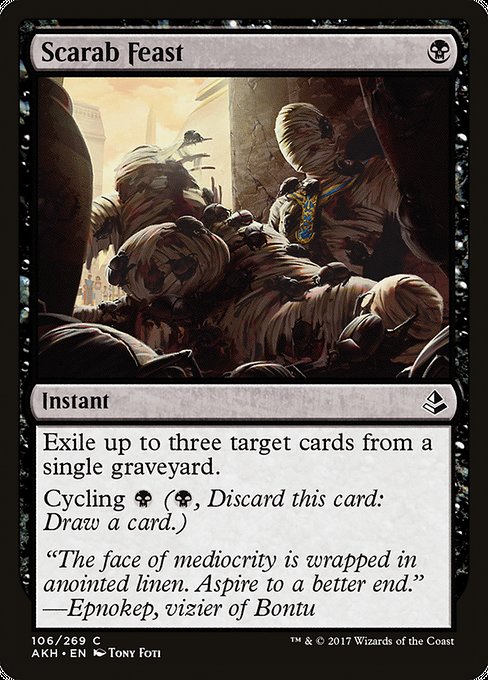
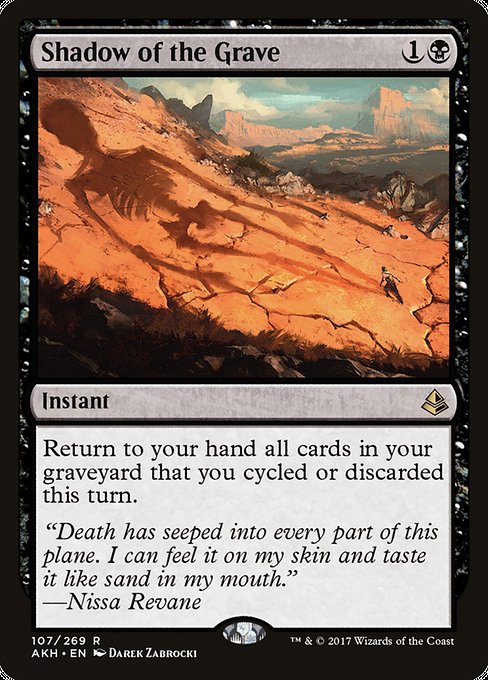
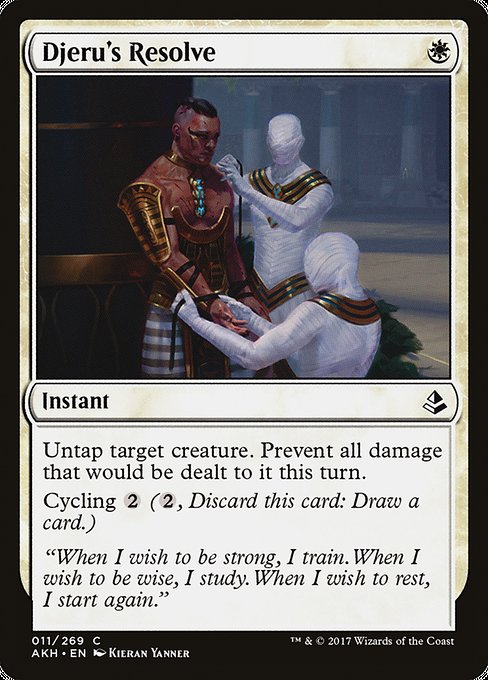
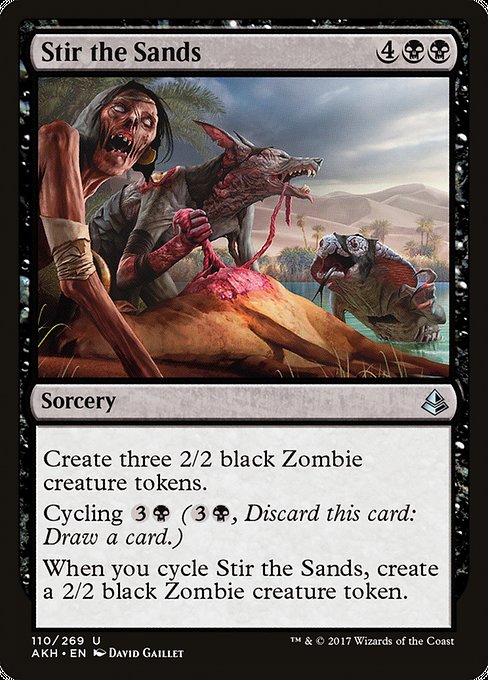
Cycling makes its return here as a major mechanical theme. Many cards across all colours can be discarded for their cycling cost to draw a new card. This smooths out draws in Limited, enables combo lines in Constructed, and fits the flavour of cards being trials you attempt and set aside.
Aftermath debuts in this set - a split card variant where the second half can only be cast from the graveyard, then exiles itself. It's a small cycle of cards, but a memorable one mechanically.
Returning mechanics
Cycling (mentioned above) is the biggest returning mechanic, and it runs deep through the set - there are individual cycle payoffs as well as cards that simply cycle cheaply to fix draws.
Trial and Cartouche enchantments form an interlocking pair of card cycles. Cartouches are auras that trigger an effect when they enter and give the enchanted creature a bonus. Trials are enchantments with powerful effects that return to your hand when you play a Cartouche - creating a loop of value if you keep replaying them.
Limited and Draft
Amonkhet Draft rewards patience and synergy more than raw power. The format is faster than it looks, but not without depth.
Exert is central to the aggressive white and red strategies. Exerting attackers for bonuses trades short-term speed for long-term tempo - the trick is either ending the game before the cooldown matters, or finding the cards that untap your exerted creatures for free.
Embalm gives slower, value-oriented decks a late game. Blue-white tends to gravitate here, using embalm creatures to grind out card advantage over multiple turns.
Cycling strategies form a third axis. There are payoff cards that trigger whenever you cycle, making a dedicated cycling deck possible in green-blue or red-black. These decks are lower to the ground on individual card power but generate consistent card selection.
-1/-1 counter synergies support a black-green archetype that uses the counters offensively and defensively - shrinking opponents' creatures, triggering death effects, and interacting with cards that care about having counters in play.
The format has a reputation for being grindy in the mid-to-late turns, with embalm providing so much card advantage that games rarely end quickly unless an exert-heavy aggro deck gets a clean start.
Notable cards and impact
Amonkhet produced several Constructed staples across its lifetime in Standard and beyond.
Cycling payoffs found homes in dedicated combo and synergy decks, particularly the cheap cycling spells that enabled turn-three or four kill conditions in the right shell.
The Trials and Cartouches cycles were popular in Standard and occasionally showed up in more aggressive Commander builds, particularly where reusable enchantment triggers matter.
Aftermath split cards offered unique flexibility - casting one half now, leaving the other in the graveyard for later - and some of these saw Constructed play for that two-in-one efficiency.
The embalm mechanic had competitive implications in Standard-era formats, since doubling up on ETB creatures without spending additional card slots is genuine value in slower midrange matchups.
Format check: AKH is not legal in Standard or Pioneer. It is legal in Legacy, Vintage, and Commander. Many individual cards appear in Commander staple lists, particularly creatures with strong ETB effects that benefit from the embalm second activation.
Lore and setting
Amonkhet the plane is Ancient Egypt rendered through a dark fantasy lens. The central civilisation occupies Naktamun, a single city-state surrounded by the Desert Lands - a vast wasteland littered with the ruins of lost civilisations, roamed by marauding mummies, sandwurms, demons, and worse.
The Luxa River runs through the plane, a lifeline for Naktamun. During later events (the Hour of Revelation, depicted in Hour of Devastation), it was turned to blood by the demon Razaketh before eventually running clear again.
Naktamun itself was built around the worship of five gods and the god-pharaoh - a figure the citizens believed would return to lead the worthy into a glorious afterlife. The truth, slowly revealed across the block, is considerably grimmer. Nicol Bolas had established this entire culture as a factory: the trials, the embalming, the death rites, all designed to produce an army of perfectly conditioned zombie warriors for his own purposes.
Lore aside: The five gods of Amonkhet - Oketra, Kefnet, Rhonas, Bontu, and Hazoret - each represent one of the set's five colours and preside over their own Trial. They are genuine divine beings on the plane, though their relationship to Bolas's machinations is complicated and revealed gradually across both sets in the block.
By the end of the Amonkhet story arc, Naktamun is largely destroyed during the Hour of Devastation - though the plane itself survives, and later references suggest it is under reconstruction.
Set legacy
Amonkhet is remembered fondly as one of the more thematically coherent sets of its era. The mechanics don't just work - they tell a story. Embalm is resurrection. Exert is sacrifice for glory. Cycling is the constant rhythm of trials attempted and discarded. The -1/-1 counter theme mirrors the draining, corrupting influence of Bolas beneath the surface of a culture that believes it is preparing for paradise.
The block was also significant for the Gatewatch storyline, marking the moment Nicol Bolas reasserted himself as Magic's central villain and inflicted a decisive defeat on the heroes. That narrative weight gave the set an emotional resonance that outlasted its Standard tenure.
In Limited, Amonkhet Draft is still fondly recalled as a format with real strategic depth - multiple viable archetypes, meaningful decisions around when to exert, and the satisfaction of embalm creatures generating value late into long games.
For Commander players, the set remains a useful source of creatures with strong enters-the-battlefield effects, cycling utility, and flavourful Egyptian mythology. If you've never cracked a pack of Amonkhet, the precon or bundle experiences still hold up as an introduction to one of the game's most distinctive planes. ✨