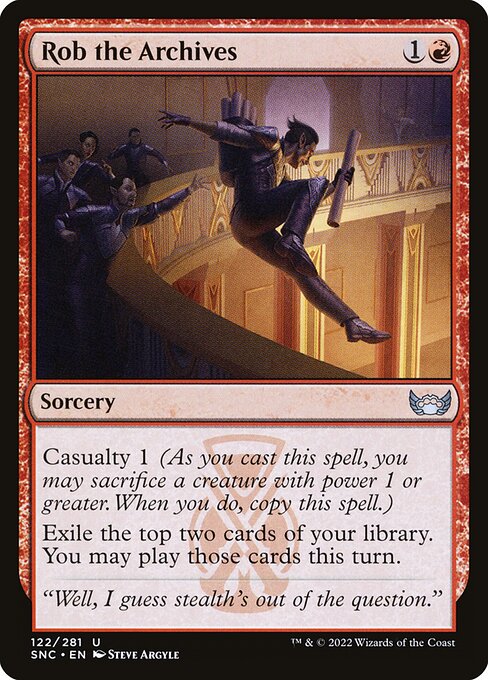
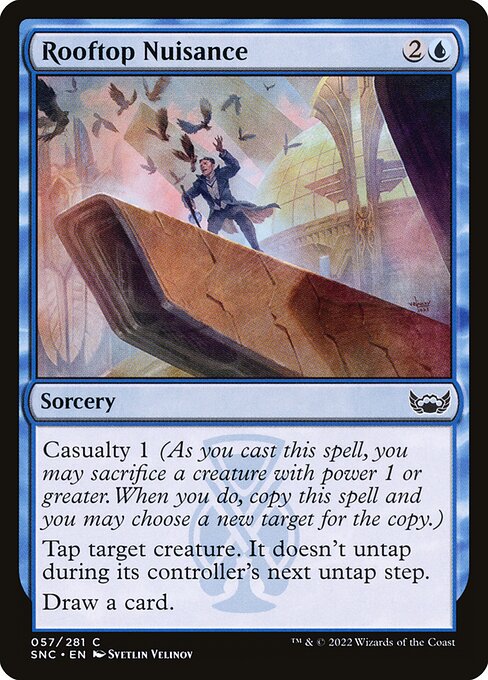
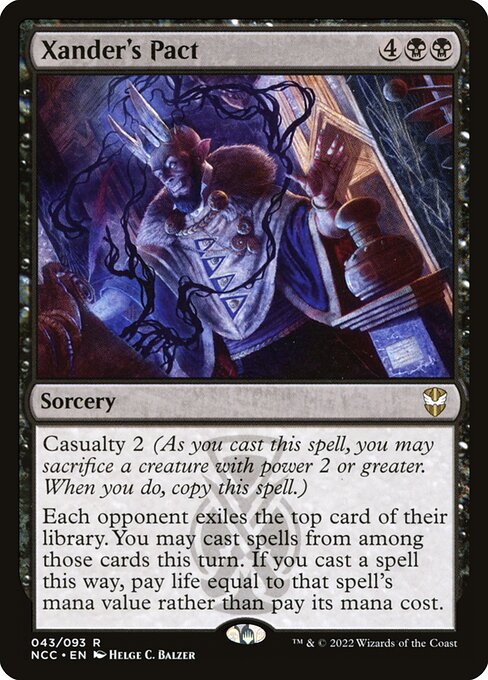
Casualty: The MTG Mechanic Explained
Sacrifice a creature, copy a spell, watch your opponent's face fall. That's Casualty in a nutshell - and it's one of the more satisfying mechanics Streets of New Capenna brought to the game.
Casualty is the signature mechanic of the Maestros, New Capenna's elite society of assassin-artists. Thematically, it fits perfectly: the Maestros view killing as fine art, so of course their spells get stronger when you pay in blood.
What is Casualty?
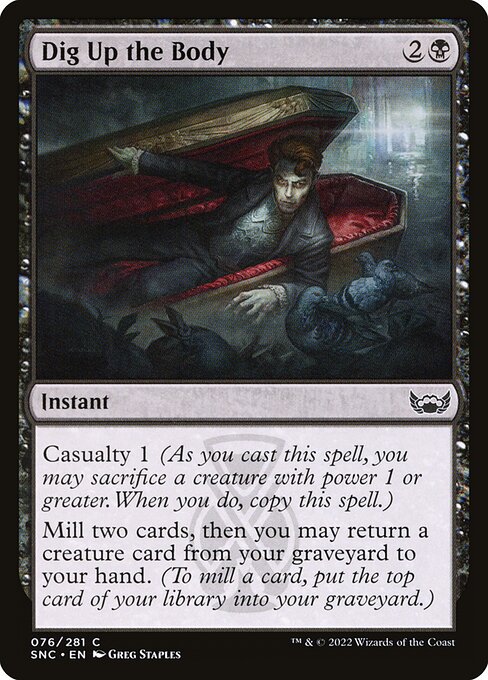
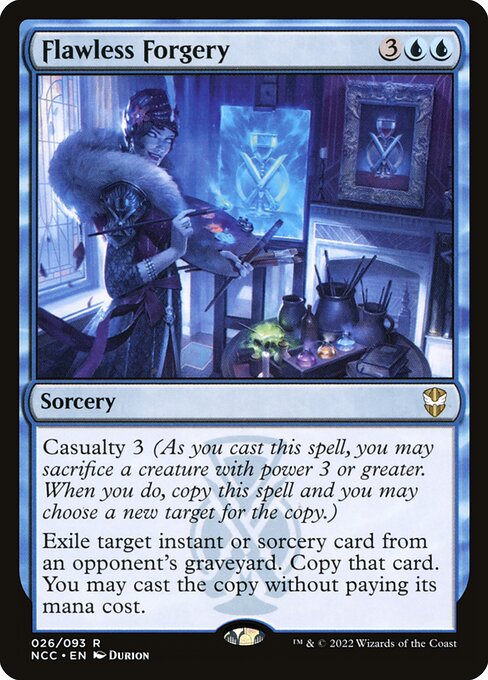
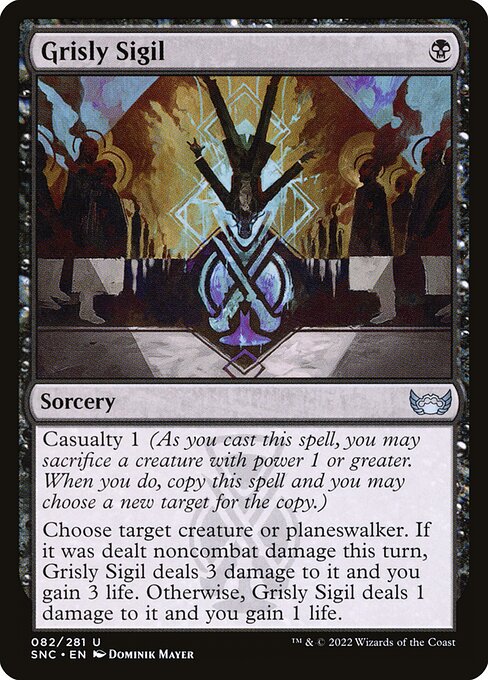
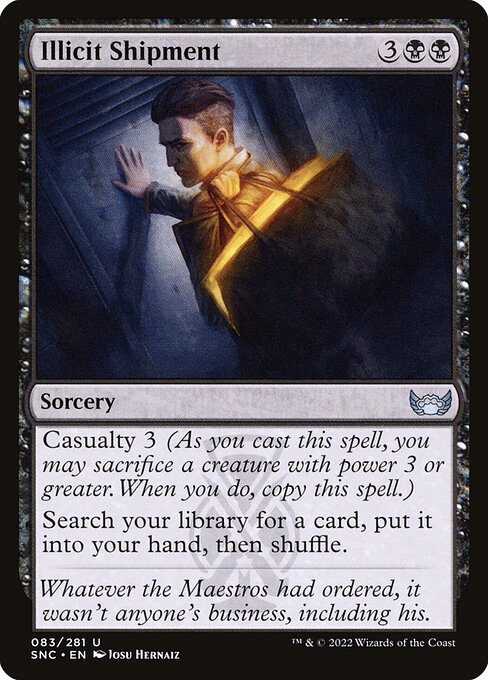
Casualty is a keyword ability that appears on instants and sorceries. It gives you the option to pay an additional cost when casting the spell - sacrificing a creature of a certain minimum power - in exchange for a free copy of that spell on the stack.
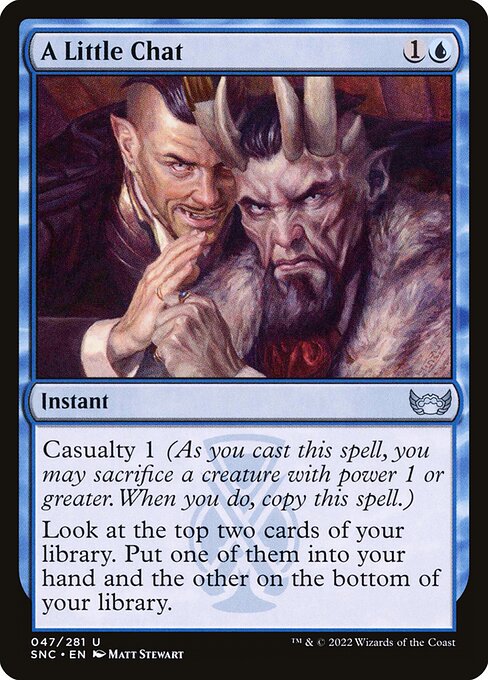
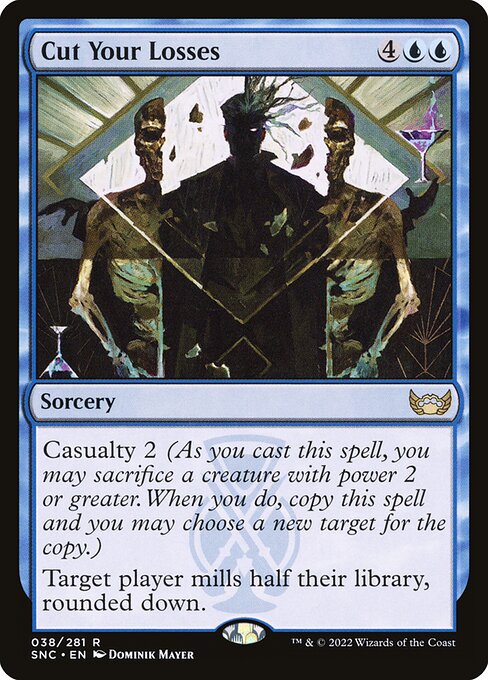
The number after the keyword tells you the minimum power the sacrificed creature needs. Cut Your Losses, for example, has Casualty 2, which means you can sacrifice any creature with power 2 or greater to trigger the copy. A Little Chat has Casualty 1, so almost any creature on your board qualifies.
The key word throughout is optional. You never have to pay the casualty cost. It's an additional cost you choose to pay, not a requirement.
How Casualty works - the rules
Casualty represents two abilities at once (CR 702.153a):
- A static ability that creates the additional cost while the spell is on the stack.
- A triggered ability that copies the spell when that cost is paid.
Here's the sequence when you cast a spell with Casualty:
- You announce the spell and choose whether to pay the casualty cost.
- If you sacrifice a qualifying creature, the triggered ability triggers.
- That trigger copies the spell onto the stack. If the original spell had targets, you choose new targets for the copy (you can also keep the same target).
- The copy resolves first, then the original resolves.
Rules note: The copy is created directly on the stack - it isn't cast. That means the copy's own casualty ability doesn't do anything, and you can't chain casualty triggers to copy the copy.
Rules note: If a spell has multiple instances of casualty, each one is independent. You pay for them separately, and each triggers its own copy (CR 702.153b). So a spell with Casualty 1 and Casualty 2 could produce two copies if you sacrifice a creature for each.
Does the copy count as a spell?
Yes - even though it isn't cast, the copy is still a spell on the stack. Opponents can respond to it and counter it normally. They just can't trigger any "when you cast" effects off it, since casting never happened.
What counts as a valid sacrifice target?
Power N or greater. A 1/4 creature has power 1, so it qualifies for Casualty 1. A 1/1 token doesn't qualify for Casualty 2 unless something is pumping its power. Toughness is irrelevant - only power matters.
Strategy
Getting value from the sacrifice
Casualty rewards you most when the creature you're sacrificing already wants to die. Creatures with death triggers are the obvious pairing: if a creature deals damage or creates a token when it dies, you're getting mileage out of the sacrifice in addition to copying your spell.
In a pinch, creatures that have already done their job - a blocker that's traded, a token you don't need - are fine targets too. You're not spending extra mana for the copy, just an expendable body.
Picking the right spell to copy
Not all casualty spells are created equal. The value of copying a spell scales directly with what that spell does. Copying something that targets a single creature or player means you either hit two different targets, or you hit the same one twice.
Cut Your Losses is the extreme example: mill half a library, then mill half of what's left. That's a lot of cards off one casualty trigger.
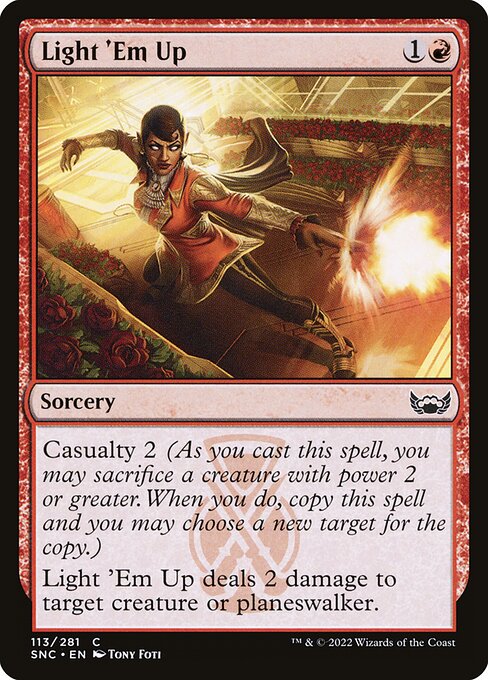
Light 'Em Up deals 2 damage to a creature or planeswalker per copy, so you're looking at 4 damage total across two targets - solid for a one-spell investment if you have a creature to spare.
Playing against Casualty
The most direct answer to casualty is countering the original spell before the casualty trigger resolves. Since the trigger goes on the stack after the spell is cast, you have a window to respond - but countering the original after the trigger has already been created only counters the original. The copy was already put on the stack separately and needs its own answer.
If you want to stop both, counter before the casualty trigger resolves, or be prepared to have two answers ready. Alternatively, removing the creature before the opponent casts their spell can take away their casualty target entirely - though they can still cast the spell without paying the casualty cost.
Deck-building considerations
Decks built around casualty generally want:
- A steady supply of small, expendable creatures (token producers work well here)
- Death-trigger creatures that reward being sacrificed
- Casualty spells that are already worth casting without the copy, so you're never forced into a bad sacrifice just to trigger the ability
The Maestros colours are black and blue with a red splash, so you're typically working in {U}{B}{R} territory.
Notable cards with Casualty
Cut Your Losses - {4}{U}{U}, Casualty 2
Mill half a library. Then, if you paid the casualty cost, mill half of what remains. The cumulative math gets brutal fast. This is one of the most compelling casualty spells because two separate half-library mills add up to a lot more than one full mill - the second mill works on a depleted library.
Light 'Em Up - {1}{R}, Casualty 2
Deals 2 damage to a creature or planeswalker. With casualty paid, that's two separate 2-damage hits, potentially targeting two different threats. Solid removal that doubles up when you have a creature to spare.
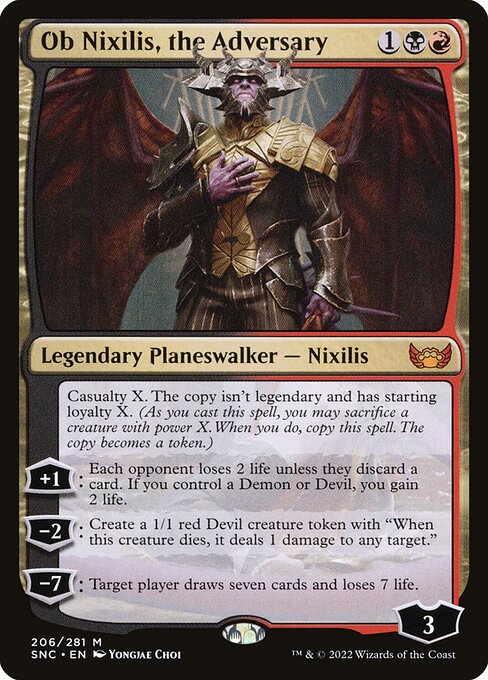
Ob Nixilis, the Adversary - the unique case
The only permanent with casualty, and the only card with a variable casualty cost. Ob Nixilis was added late in Streets of New Capenna's design, making him a deliberate outlier. He's notable both for breaking the "instants and sorceries only" pattern and for having a cost that scales dynamically.
Cards that grant Casualty
Three cards grant casualty to other spells rather than having it themselves:
- Anhelo, the Painter - the Maestros' legendary commander, who grants casualty to the first instant or sorcery you cast each turn
- Ashad, the Lone Cyberman - grants Casualty 2 to artifact spells
- Spelldrain Assassin - the third permanent to grant the ability
Lore aside: Anhelo is the thematic heart of casualty in Commander. Building around him means leaning into the Maestros fantasy: treat your creatures as resources, cast powerful spells, and copy them. He's a natural commander for spell-heavy {U}{B}{R} decks.
History
Casualty was introduced in Streets of New Capenna (2022) as the signature mechanic of the Maestros family.
During development, the mechanic went by the internal name "Splatter" - which, honestly, fits the sacrifice theme even better, though it's a little on the nose.
The designers explicitly positioned casualty as a successor to conspire, a mechanic from Shadowmoor (2008) that also copied spells using creatures. Conspire required you to tap two creatures sharing a colour with the spell rather than sacrifice one - it was considered clunky and unpopular, and casualty's cleaner execution is generally seen as a significant improvement.
Casualty was intentionally restricted to instants and sorceries from the start, with Ob Nixilis, the Adversary as the single deliberate exception.
A variation called land casualty has appeared on the Mystery Booster 2 test card Maestros' Totally Safe Hideout, which applies the same mechanic when a land is played rather than a spell being cast. As a test card, it sits outside the main game's rules space - but it's a fun indicator of where designers might take the concept.
Format check: Streets of New Capenna has rotated out of Standard, but casualty cards are legal in formats like Pioneer, Modern, and Commander. Anhelo, the Painter remains a popular Commander choice for {U}{B}{R} spellslinger builds.