Companion in MTG: Rules, Strategy & Notable Cards
There are very few mechanics in Magic's history that changed how players think about deckbuilding before the game even begins. Companion is one of them. Introduced in Ikoria: Lair of Behemoths (IKO) in 2020, it gives you the option to start the game with an extra card waiting in the wings - one that's guaranteed to be available, as long as your deck earns it.
That conditional "as long as" is the heart of the mechanic, and it's what makes companion so fascinating - and so contentious.
What is Companion?
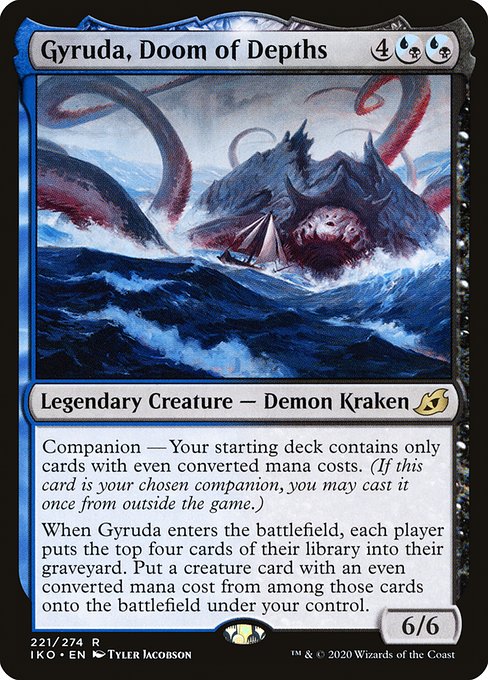
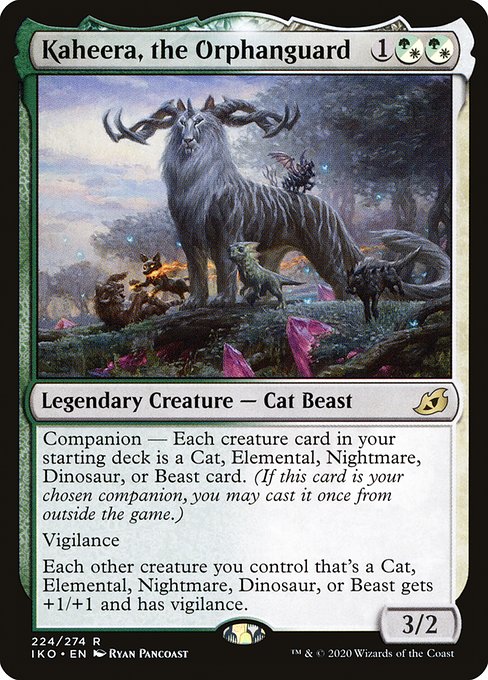
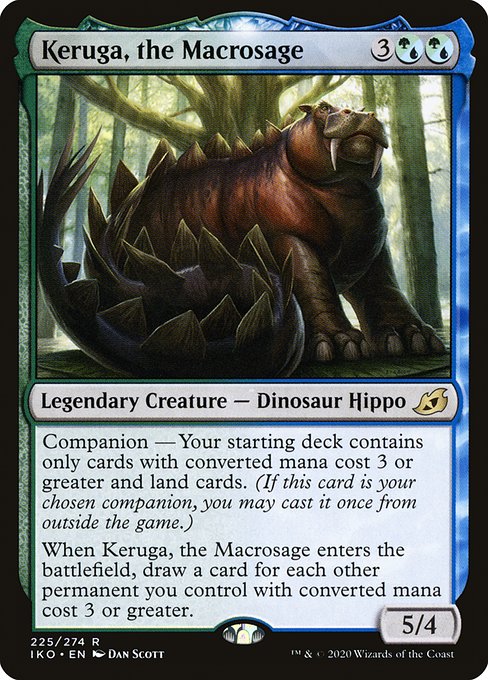
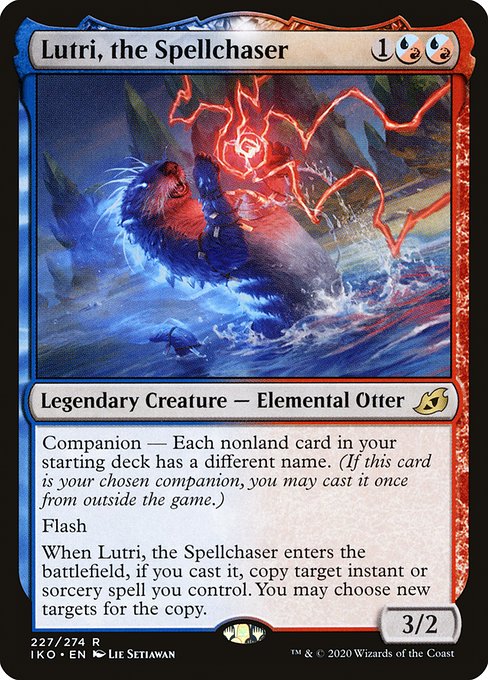
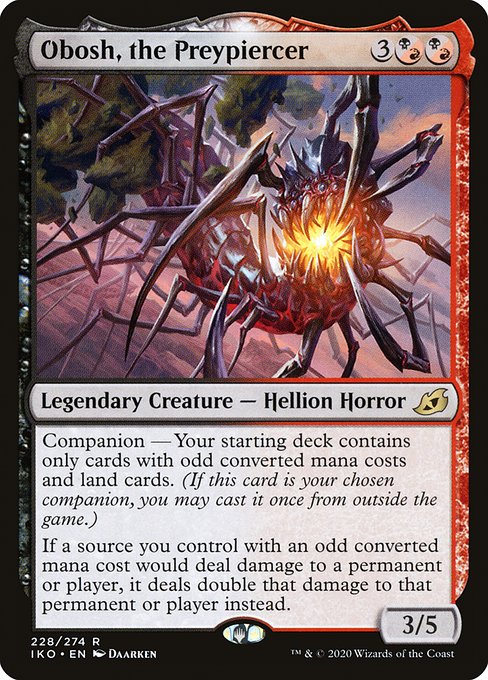
Companion is a keyword ability introduced in Ikoria: Lair of Behemoths. There are ten legendary creatures in IKO with the companion ability, and each one comes with a specific deckbuilding restriction. If your starting deck meets that restriction, you can reveal that creature before the game begins as your companion - a thirteenth card that lives outside the game, but is always accessible to you.
Think of it like a contract. The companion card sets the terms: build your deck this way, and I'll always be there when you need me. Break the terms, and you don't get to use the mechanic at all.
Once you've declared a companion and the game is underway, you can pay {3} during your main phase (when the stack is empty and you have priority) to put that card directly into your hand. From there, it functions like any other card - you still have to cast it normally.
Rules note: You may only reveal one companion per game, and the {3} activation can only happen once. It's a special action that doesn't use the stack, so it can't be countered in response.
Rules
The current rules for companion are found in CR 702.139. Here's what they establish, broken down clearly.
Before the game
Before the game begins, you may reveal one card you own from outside the game that has a companion ability - but only if your starting deck fulfills that companion's condition (CR 103.2b). The card stays outside the game after you reveal it; you're just declaring it as your companion.
Format check: In a Commander game, your "starting deck" for the purposes of companion is your deck after setting aside your sideboard, but before setting aside your commander (CR 702.139b). Companions can legally enter Commander games through the companion special action (CR 702.139d).
During the game
Once during the game, any time you have priority, the stack is empty, and it's your main phase, you may pay {3} to put your companion from outside the game into your hand (CR 116.2g). This is a special action - it doesn't go on the stack and can't be responded to.
Once the card enters your hand this way, it stays in the game for the rest of the game (CR 702.139c). It doesn't go back outside; it's now just a card in your hand (or wherever it ends up after being played).
Common misunderstandings
- You still have to cast your companion. The {3} activation puts it in your hand - you then need to pay its mana cost to cast it like any other spell.
- The deckbuilding condition applies to your starting deck, not to what's in your deck mid-game. Cards going to the graveyard or exile during play don't retroactively invalidate your companion.
- You can only reveal one companion, even if you own multiple cards with companion abilities that your deck qualifies for.
- The {3} activation cannot be countered because it doesn't use the stack. However, the companion card itself can be countered when you cast it.
The rules change (a brief but important note)
The current rules are explicitly flagged as "a change from previous rules" in CR 702.139a. When companion first released in 2020, the mechanic allowed you to cast the companion directly from outside the game without paying {3} first - no extra cost, just free guaranteed access to an extra card every game. That version of the rules proved to be extremely powerful, and Wizards of the Coast issued an emergency rules change in June 2020 adding the {3} tax. The current rules have been in place since then.
Strategy
Why you'd want a companion
The core appeal of companion is consistency. In a game where you draw seven random cards and hope for the best, knowing that one specific card is always available to you is an enormous advantage. You're effectively playing with a virtual 8th card in your opening hand - you just have to pay {3} and wait for your main phase to pick it up.
For decks that want a specific late-game threat, a particular effect, or a card that ties the whole strategy together, companion offers a form of reliability that normal deckbuilding can't match.
The cost of qualifying
Here's the honest trade-off: companion restrictions are real constraints. Each companion demands that your deck be built in a specific way - perhaps only cards with even mana costs, or only creatures, or only cards with specific characteristics. These restrictions narrow your card choices, sometimes significantly.
The question you have to ask is: does the consistency of always having access to this companion outweigh the opportunity cost of warping your deck around it? In some cases, the answer is a resounding yes - especially when a companion's restriction aligns naturally with what the deck already wants to do. In other cases, you're bending your deck into uncomfortable shapes for a payoff that isn't worth it.
Playing around your opponent's companion
One of the interesting strategic wrinkles companion adds is information. When your opponent reveals a companion before the game, you know one card that will almost certainly appear. You can play around it, save specific interaction for when it's cast, and adjust your threat assessment accordingly.
You generally can't stop the {3} activation (it doesn't use the stack), but you absolutely can counter the companion when it's cast, or remove it once it's on the battlefield.
Deckbuilding considerations
- Look for companions whose restrictions are synergistic with your deck's existing game plan, not companions that force you to rebuild around them.
- Factor the {3} activation cost into your mana planning. You want to be able to afford it without giving up a meaningful turn.
- Remember that the activation can only happen during your main phase when the stack is empty, so you can't use it as a response to anything.
Notable Cards
The ten Ikoria companions are the primary cards with this mechanic. While I won't speculate on current competitive tiers (metas shift fast), a few stand out for their design and the deckbuilding puzzles they create.
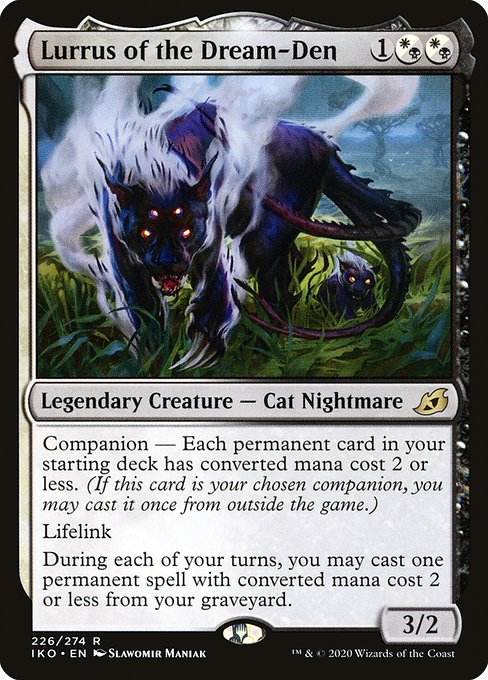
Lurrus of the Dream-Den is probably the most infamous companion in Magic's history. Its restriction (your starting deck can only contain permanents with mana value 2 or less) was so naturally compatible with lean, fast decks in older formats that it was banned across multiple formats in 2020 - Legacy, Vintage, and Modern - before the {3} tax was even introduced. Even after the tax, it remained banned in many formats for years. It's a case study in how a seemingly strict restriction can be exactly what certain decks already want.
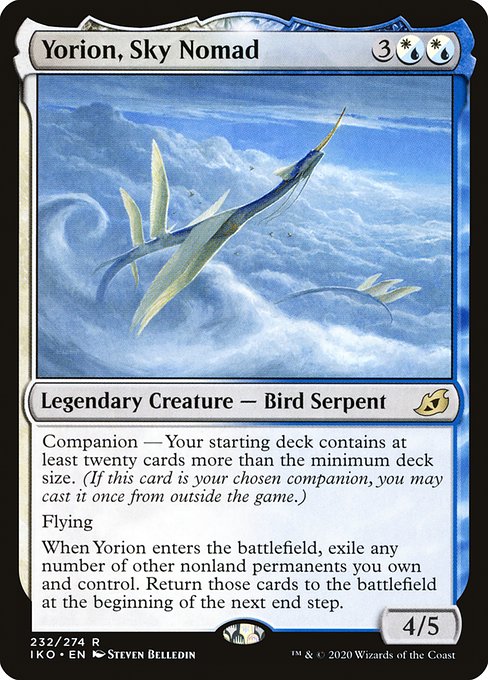
Yorion, Sky Nomad took a different approach - its restriction required an 80-card deck instead of the usual 60. Rather than limiting your card pool, it expanded your deck size. Some Control builds embraced this willingly, accepting the consistency hit from a larger deck in exchange for guaranteed access to a powerful blink effect.
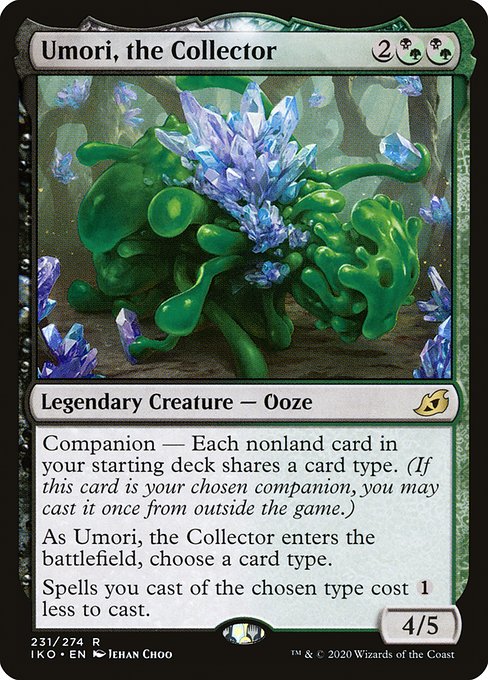
Umori, the Collector required all non-land cards in your deck to share a card type - all creatures, all instants, and so on. This pushed players toward interesting mono-type builds that wouldn't otherwise exist.
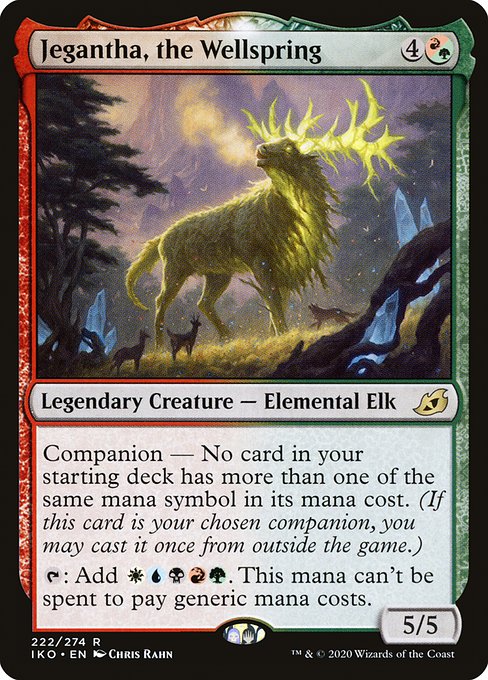
Jegantha, the Wellspring has arguably the least invasive restriction: no card in your deck can have the same mana symbol appear more than once in its mana cost. This ruled out relatively few cards in many strategies, making Jegantha something of a free roll - a companion that costs very little to qualify for.
History
Ikoria: Lair of Behemoths (2020)
Companion debuted in Ikoria: Lair of Behemoths, released in April 2020. The set's theme centred on the bonds between humans and monsters on a creature-dominated plane, and companion mechanically expressed that idea - a creature so tied to you that it's always by your side.
All ten companions in Ikoria are legendary creatures, each with a unique deckbuilding condition. They were clearly designed to enable specific archetypes and push players toward unusual deck constructions.
The emergency change (June 2020)
Within weeks of release, companion was causing serious problems in competitive play across every format. The original rules allowed you to cast your companion directly from outside the game - no {3} tax, just guaranteed access every single game. This proved too strong. Lurrus in particular was showing up in enormous percentages of competitive decks.
In June 2020, Wizards of the Coast took the unusual step of changing how a keyword mechanic works mid-format, introducing the {3} special action as a way to put the companion into your hand first, before casting it. This is the version of the rules that exists today, and the comprehensive rules explicitly note it as "a change from previous rules."
Doctor's Companion (2023)
The name "companion" appeared again in the Doctor Who Commander set (2023) as Doctor's Companion - a separate, distinct keyword that functions as a variant of the Partner mechanic in Commander. It's not related to the Ikoria companion mechanic mechanically; it simply allows certain cards to be paired with specific Doctor commanders. Worth knowing so you don't confuse the two.