Mutate: The Complete MTG Mechanic Guide
There's something deeply satisfying about the moment a creature stack clicks into place - one permanent wearing the stats of another while accumulating abilities like a living trophy wall. That's Mutate in a nutshell, and it's one of the most mechanically ambitious things Wizards of the Coast has attempted in the modern era of Magic.
What is Mutate?
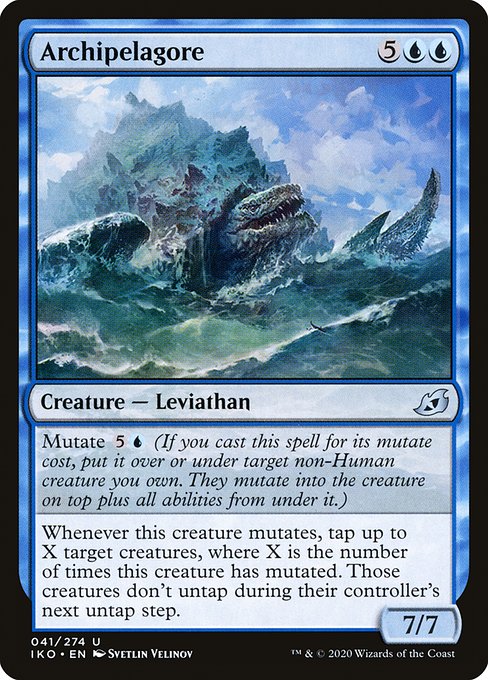
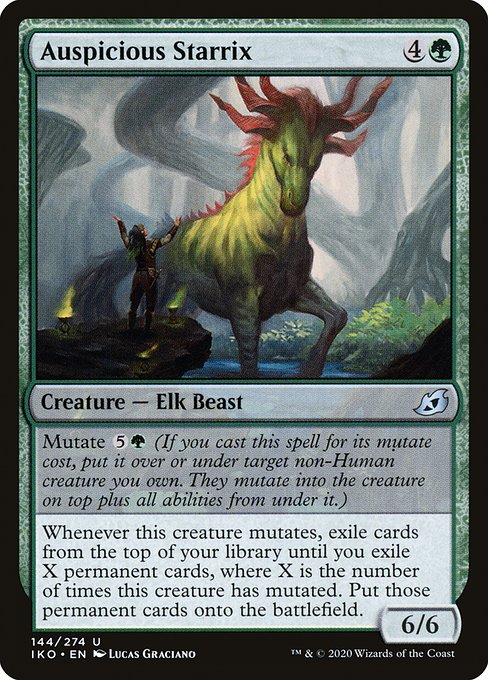
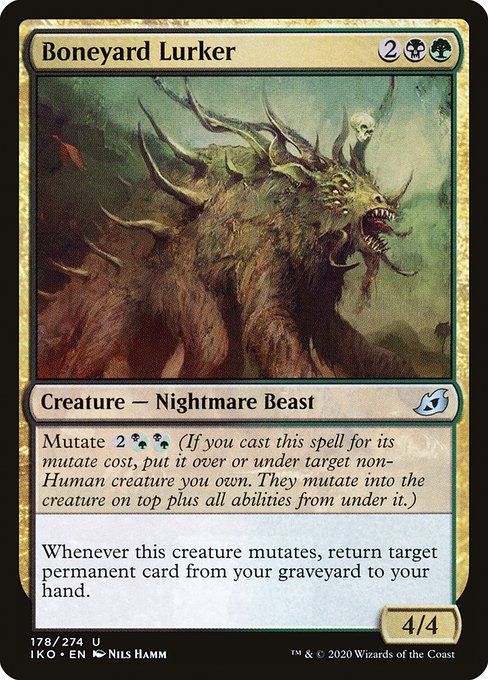
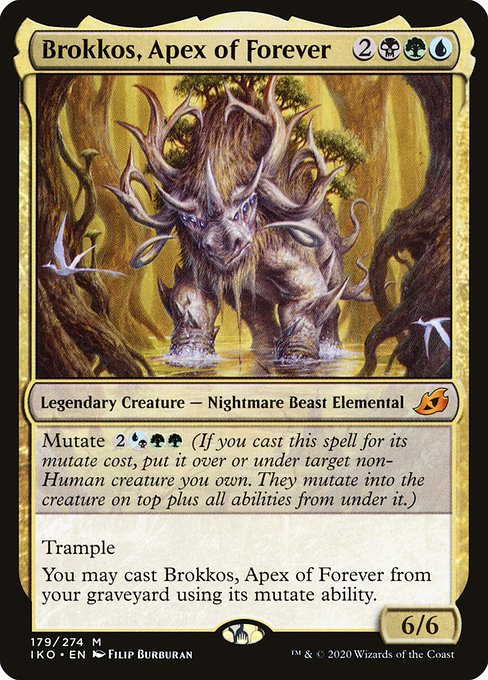
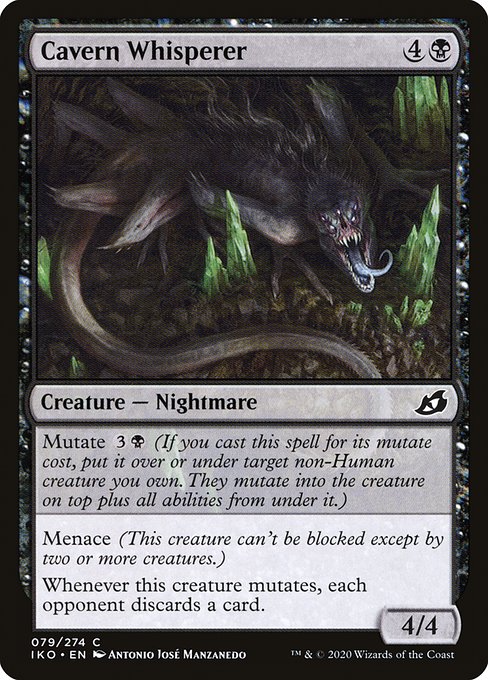
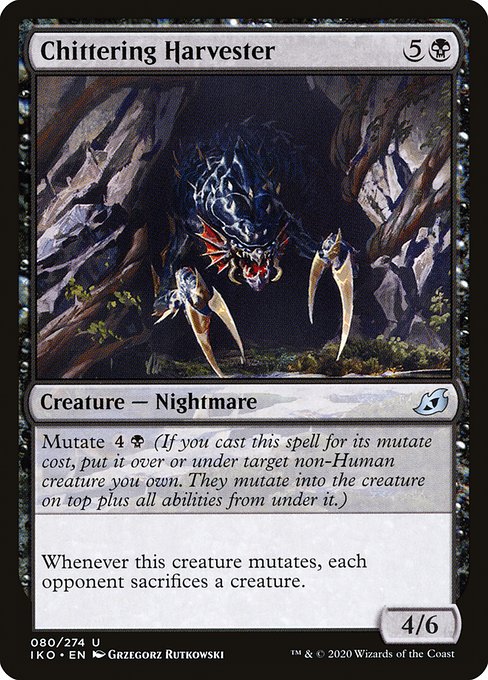
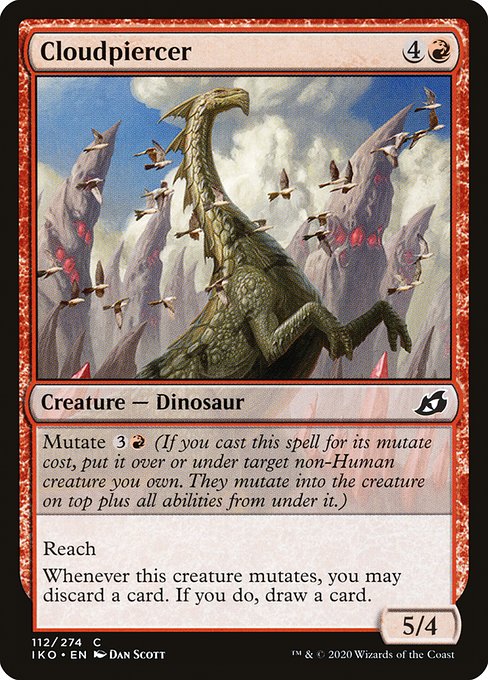
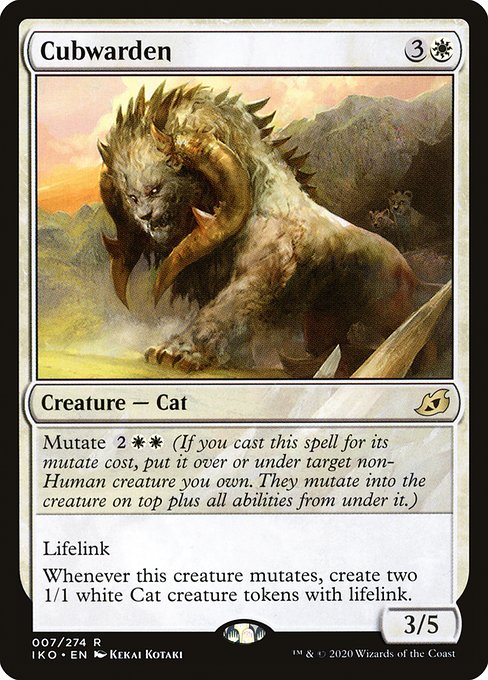
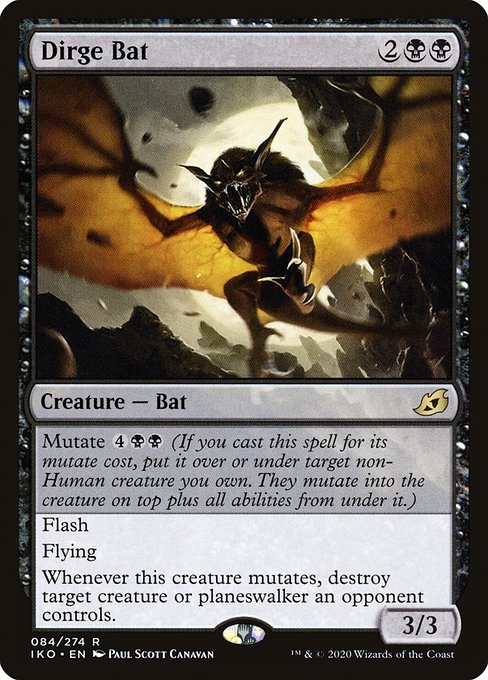
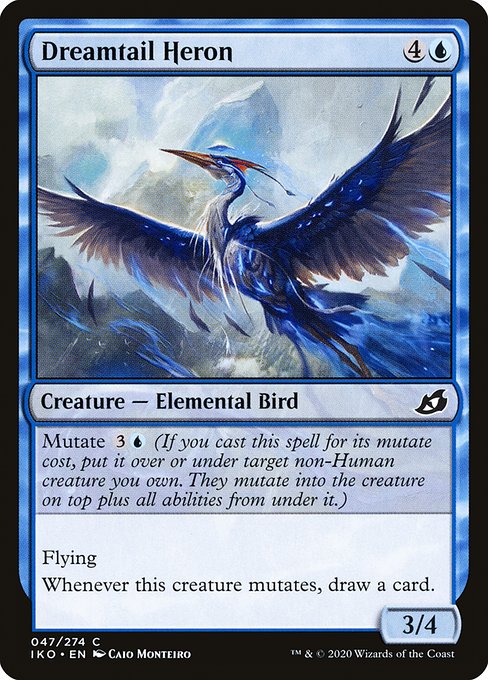
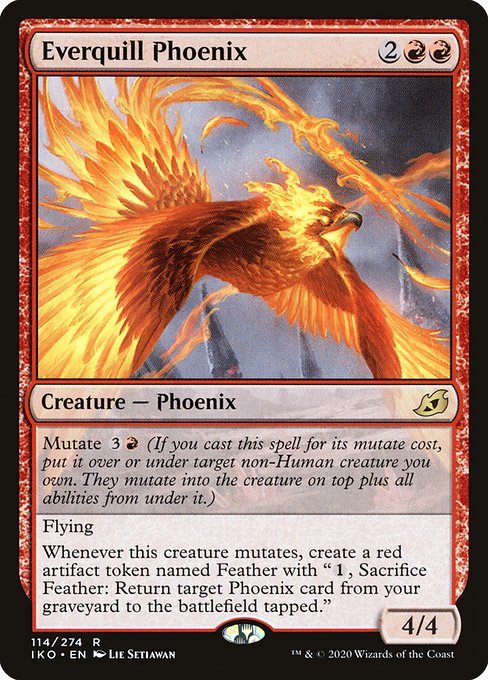
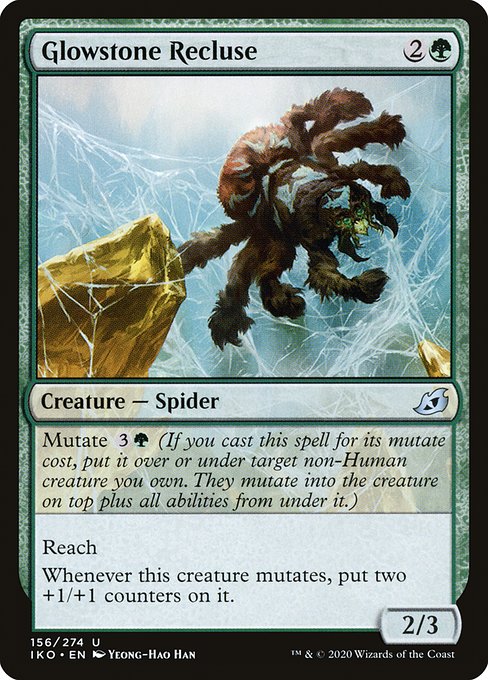
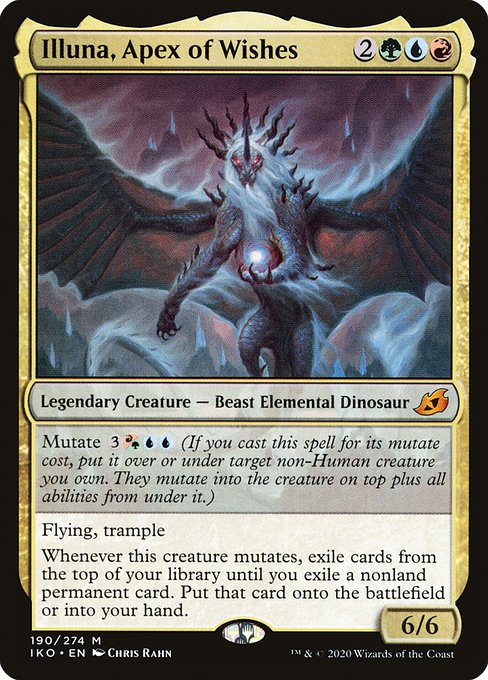
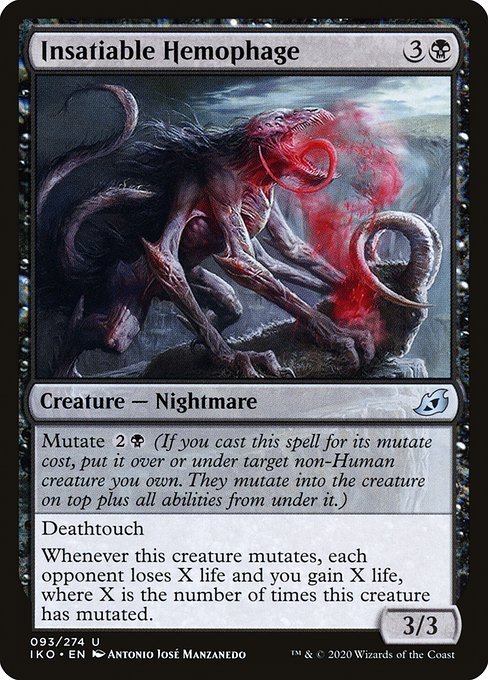
Mutate is a keyword ability introduced in Ikoria: Lair of Behemoths (IKO, 2020). It lets you cast a creature spell for an alternative cost and, instead of putting it onto the battlefield normally, merge it with a creature you already control. The result is a single permanent that combines the physical stats of whichever card ends up on top with all the abilities of every card in the pile beneath it.
Think of it like a layer cake of creatures. Each new mutate you stack adds another layer of abilities, and the whole thing triggers any "whenever this creature mutates" abilities every time you add to the stack.
The golden rule: you can only mutate onto a non-Human creature you own. The Human restriction is flavourful - Ikoria's monsters refuse to merge with people - but it's also a meaningful deckbuilding constraint.
How Mutate works - the rules
Casting a mutate spell
When you cast a spell using its mutate cost, it becomes a mutating creature spell and targets a non-Human creature you own. You choose at cast time whether the new card goes on top of or underneath the target creature. That choice is what determines the stats of the resulting permanent.
- On top: the mutated pile has the power, toughness, name, creature types, and mana cost of the card you just cast
- On the bottom: the pile keeps the stats of the creature that was already on the battlefield
Abilities from every card in the pile - top or bottom - are all active on the resulting permanent simultaneously.
Rules note: Casting a mutate spell follows the rules for paying alternative costs (CR 601.2b and 601.2f-h). You still target a creature, and that spell can be countered or have its target become illegal before it resolves, just like any other targeted spell.
When the target is gone
If the target creature becomes an invalid target before the mutate spell resolves - say, it's bounced back to hand or destroyed in response - the mutating creature doesn't fizzle entirely. It simply enters the battlefield as its own creature, the same way a Bestow creature would. You don't lose the card; it just shows up alone.
Moving zones together
Once cards are merged into a mutate pile, they move as a single unit. If the stack dies, everything goes to the graveyard together. If it gets exiled, the whole pile gets exiled. However, if any effect would return the permanent to the battlefield later, the individual component cards separate and each returns as its own creature. The merger only persists while they're on the battlefield.
"Whenever this creature mutates" triggers
Many Mutate cards have a trigger that fires every time the permanent mutates. Crucially, this trigger fires each time you add any card to the pile - so a three-card stack that was built up over three turns has triggered three times total. These stack up meaningfully, which is where a lot of the mechanic's power lives.
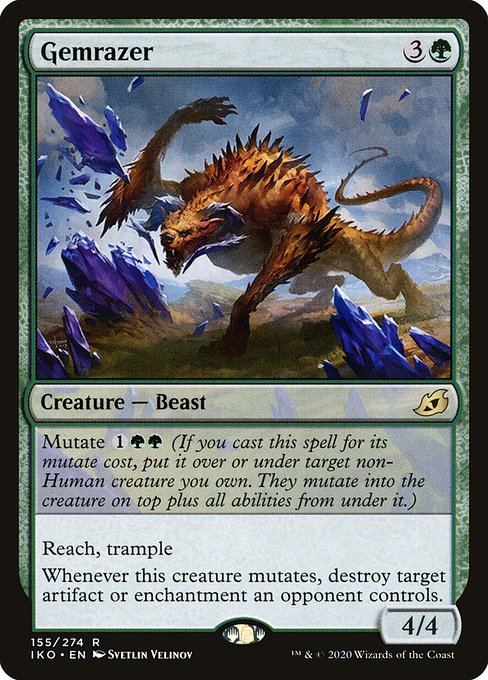
Example from the cards: Gemrazer has "whenever this creature mutates, destroy target artifact or enchantment an opponent controls." Each time you mutate onto a pile that includes Gemrazer - or mutate Gemrazer onto something new - that trigger fires again.
Common misunderstandings
| Situation | What actually happens | |---|---| | Target becomes illegal after you cast the mutate spell | The creature enters the battlefield as its own permanent (no merge) | | The merged permanent is bounced to hand | The pile separates; each card returns as an individual card in hand | | The merged permanent dies | All component cards go to the graveyard together | | You mutate onto a token | The token is part of the stack, but tokens that leave the battlefield cease to exist - the rules here can get complex, so check with a judge | | A permanent that isn't a creature (but becomes one) | It must be a non-Human creature at the time of targeting - type-changing effects matter here |
Strategy
Building around Mutate
The most important deckbuilding constraint is avoiding Humans. Because you need non-Human targets, Ikoria decks built around Mutate tend to lean on the set's dominant creature types - Cats, Beasts, Nightmares, Elementals, and Dinosaurs all feature heavily, which is no accident. Those type clusters are a direct design holdover from an early version of the mechanic that was restricted by creature type.
The core loop is simple: resolve one resilient non-Human creature early, then spend subsequent turns piling mutate triggers on top of it. Each new mutate adds abilities and fires any existing triggers in the stack. A pile with three or four cards can generate enormous value on every subsequent mutate, since every trigger in the pile fires.
Playing with Mutate
- Protect the pile early. A single removal spell can wipe out multiple cards' worth of investment. Prioritise mutate creatures that give the stack resilience - indestructible, hexproof, or regeneration go a long way.
- Choose what's on top deliberately. Putting a bigger creature on top gives you stats. Putting a utility creature on top might give you a more relevant type or ability. Think about what your deck needs in the moment.
- Chain triggers carefully. Every "whenever this creature mutates" ability fires when you add to an existing pile. If your stack already includes Gemrazer and you mutate something new on top, Gemrazer's trigger fires again. Build the pile with this compounding in mind.
- Use mutate as a pseudo-reload. Because a mutate creature doesn't need to enter the battlefield fresh - it merges into an existing permanent - you bypass summoning sickness on the new card if the base creature can already attack. (The base creature's summoning sickness status doesn't reset.)
Playing against Mutate
- Kill the creature before the pile grows. A single creature is just a creature. A five-card pile with three triggers in it is a problem. Prioritise removal early, when the investment is still small.
- Bounce spells are brutal. Unlike killing the pile, bouncing it separates every card and sends them back to hand individually. Your opponent must spend all that mana again. However, keep in mind that they now have all those cards in hand to redeploy.
- Counterspells are clean answers. Unlike a creature that dies and triggers death effects, a countered mutate spell just doesn't resolve. If the target was going to be the fifth card in a pile of compounding triggers, stopping it on the stack is often correct.
Notable cards
Gemrazer ({3}{G}, mutate cost {1}{G}{G}) is probably the cleanest example of Mutate at its best. Reach and trample make the pile genuinely threatening in combat, and the "destroy target artifact or enchantment" trigger on every mutation turns it into a recurring answer to problem permanents. In a format full of Sagas and Equipment, this repeated removal is significant.
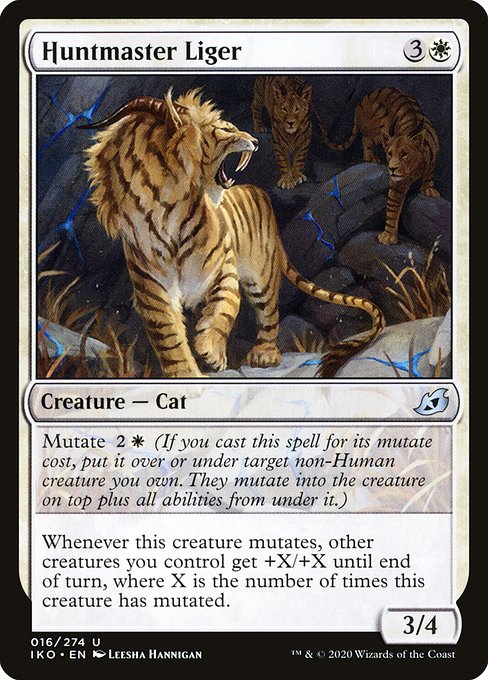
Huntmaster Liger is the textbook tutorial card for the mechanic. Its mutate trigger gives your whole team +X/+X until end of turn, where X is the total number of times the creature has mutated. Resolve three mutations and suddenly your team is getting a temporary +3/+3 every time you add to the pile. It shows off exactly why the compounding trigger design is so powerful.
cards like Mutagenic Growth, Artifact Mutation, Aether Mutation, and Death Mutation have "mutation" in their names but do not use the Mutate keyword. They're unrelated mechanically - just thematically named. Don't let the names fool you when you're searching for Mutate synergies.
History and design context
Mutate has roots in several earlier mechanics. Wizards themselves have pointed to Bestow (Theros, 2013), Emerge (Eldritch Moon, 2016), and Augment (Unstable, 2017) as mechanical ancestors. Like Bestow, a Mutate creature can "fall back" to being a standalone permanent if its target disappears. Like Augment, the entire stack moves between zones together. Like Emerge, it carries a mutation trigger and some static sizing interaction.
The mechanic was first referenced - in typical Magic trivia fashion - on the silver-bordered card Surgeon General Commander in Unsanctioned, before its full debut in Ikoria.
An early design had Mutate restricted by creature type, which explains the heavy concentration of Cats, Beasts, Elementals, Nightmares, and Dinosaurs in IKO. Kaheera, the Orphanguard's companion requirement (requiring a deck with only Cats, Elementals, Nightmares, Dinosaurs, or Beasts) is a direct remnant of that design phase.
Mutate was also conceived as a mechanical evolution of the older Champion mechanic, representing creatures physically evolving - fitting for a world built around massive, kaiju-like monsters.
Why we haven't seen it since
Mutate is beloved by a minority of players, but it has a genuinely high complexity cost. It was confusing for most players to track - especially in paper, where representing a stack of merged cards physically is awkward. Wizards has rated it medium-to-high on the Storm Scale** (their informal measure of how likely a mechanic is to return), citing its complexity and the difficulty of building a balanced environment around it.
Ikoria was also released almost entirely into digital play due to COVID-19, which masked some of the physical complexity issues - the online client handles the rules automatically. In paper, tracking five merged cards, their individual abilities, and how many times the stack has mutated is genuinely difficult.
Finally, because Mutate so thoroughly dominates the mechanical structure of Ikoria, bringing it back would require a set designed around it from the ground up - it's not a mechanic you can slot into an existing set in small numbers.