Freerunning: MTG Mechanic Explained
Freerunning is one of those mechanics where the flavour and the function are in perfect sync. In the Assassin's Creed video games, freerunning is the fluid, acrobatic parkour skill that lets assassins slip through cities unseen - and in Magic, the mechanic rewards you for doing exactly what an assassin would do: land a hit, then follow up with something devastating.
What is Freerunning?
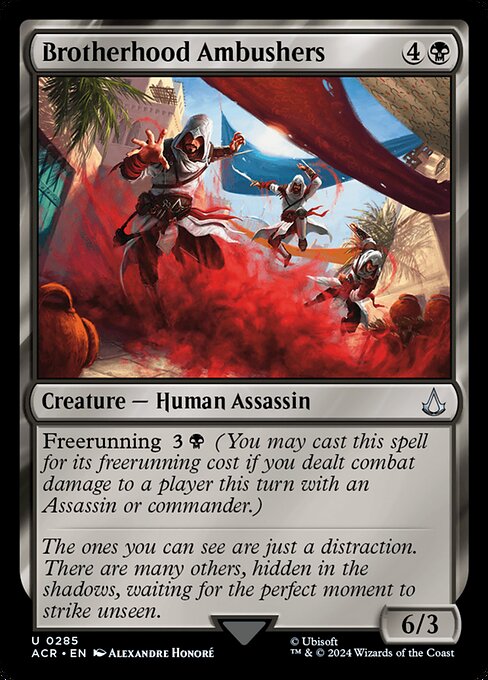
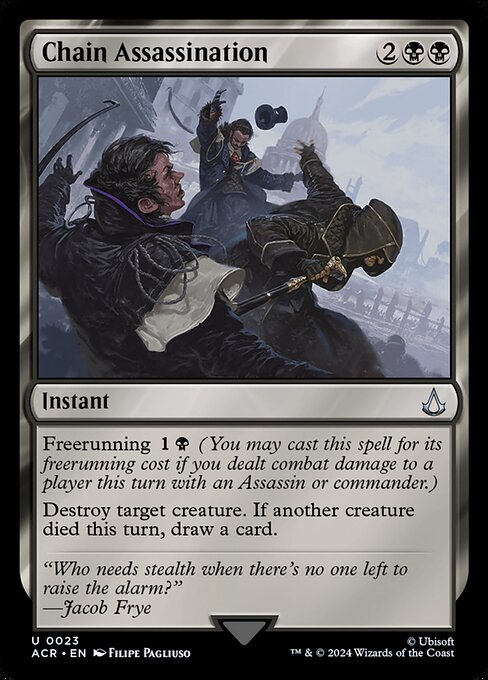
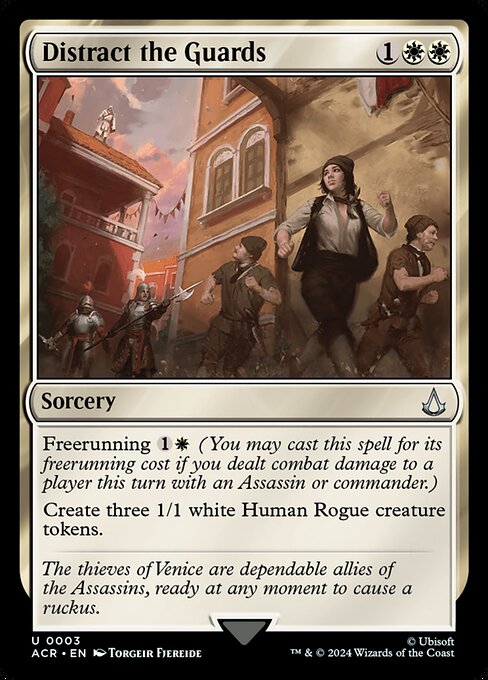
Freerunning is a keyword ability that offers an alternative casting cost for certain spells. Specifically, if you dealt combat damage to a player earlier in the turn with an Assassin creature or your commander, you may cast the spell with the freerunning cost instead of its normal mana cost.
The reminder text captures it neatly: "You may cast this spell for its freerunning cost if you dealt combat damage to a player this turn with an Assassin or commander."
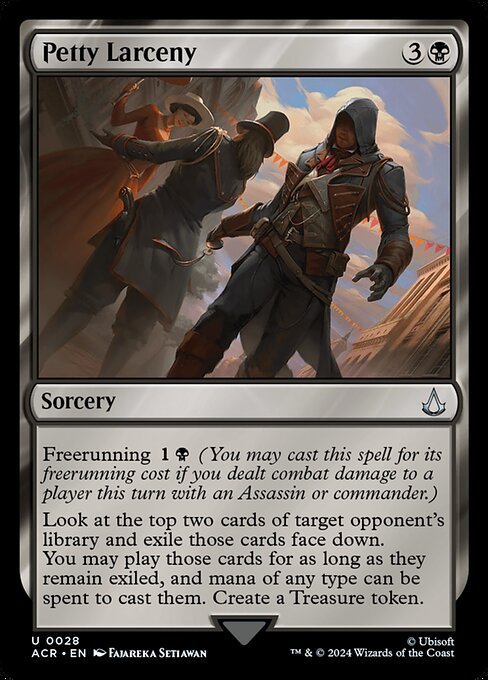
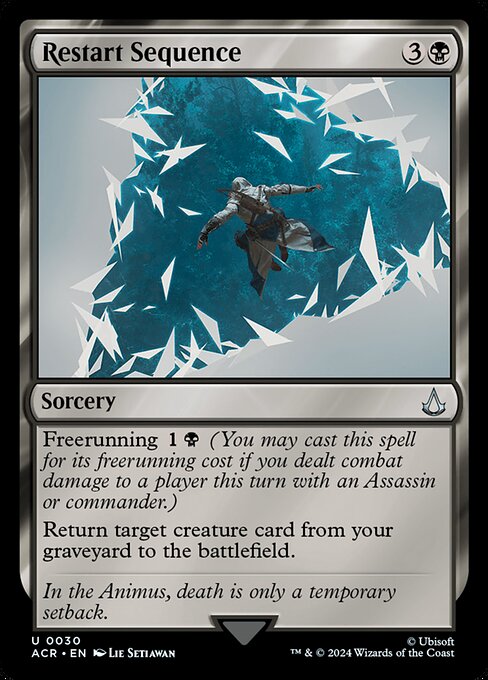
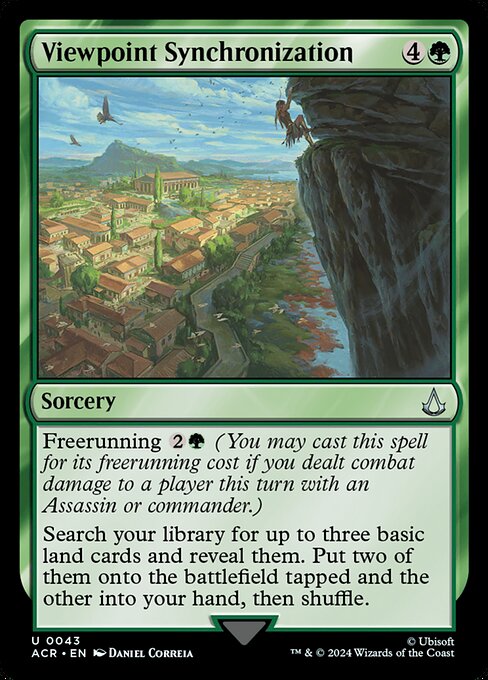
Think of it like a reward for getting through. You ran the gauntlet, your assassin connected, and now the follow-up costs less - or comes with extra value. The mechanic appears across all five colours but is concentrated in black, which makes a lot of flavour sense.
Freerunning rules
Freerunning is a static ability that functions on the stack - it only matters at the moment you're casting the spell. Here's what the Comprehensive Rules say:
"Freerunning [cost] means: You may pay [cost] rather than pay this spell's mana cost if a player was dealt combat damage this turn by a creature that, at the time it dealt that damage, was an Assassin creature or a commander under your control."
- CR 702.173a (Edge of Eternities, November 14, 2025)
A few things are worth unpacking here, because there are some genuinely non-obvious interactions.
The Assassin or commander doesn't need to still be in play
This trips people up. The freerunning condition is checked at the time the damage was dealt, not at the time you cast the spell. If your Assassin connected in combat and then died to a block or a removal spell, freerunning is still active for the rest of the turn. The damage already happened.
It works in all formats, not just Commander
Freerunning references "a commander under your control" as a secondary condition - that addition was specifically made to make the mechanic more relevant in Commander games. But in non-Commander formats, freerunning still functions perfectly well. You just need an Assassin to connect. No commander required.
Casting for freerunning doesn't change mana value
This is standard for alternative costs in Magic. If a spell costs '{5}{B}' normally and you cast it via freerunning for '{2}{B}', its mana value is still 6 for any effect that checks it - things like Isochron Scepter or cost-based counterspells. The discount is real, but the identity of the spell doesn't change.
Freerunning follows standard alternative cost rules
Casting a spell for its freerunning cost follows rules 601.2b and 601.2f-h - the same rules that govern any alternative cost in Magic. You can't apply other alternative costs on top of it (like casting it for free via another effect while also using freerunning), but you can still pay additional costs alongside it.
Rules note: If a creature was an Assassin when it dealt combat damage but lost that type before you cast your spell, freerunning is still unlocked - because the check happens at the time of damage, not when you cast.
Strategy
Playing with Freerunning
Freerunning decks want to do two things in sequence: connect with an Assassin in combat, then spend their mana efficiently on follow-up spells. That sequential structure means you're building towards a kind of two-phase turn - the hit, then the payoff.
The first question to ask when building around freerunning is: how reliably can I deal combat damage with an Assassin? If your Assassin keeps getting chump blocked or removed before it attacks, the freerunning cost never unlocks. Cards that grant evasion - flying, menace, or unblockable effects - become quietly important in this context. You want the hit to land.
The second question is about sequencing your mana. Freerunning doesn't mean the spell is free - it means it costs the freerunning cost instead. Some freerunning costs are dramatically cheaper than the normal cost (great), while others are only slightly discounted. Know which of your spells reward the setup the most and hold up mana for them.
In Commander specifically, the mechanic becomes more flexible because any commander connecting enables freerunning - even a non-Assassin commander. This opens up freerunning cards as includes in a much wider range of decks. If you're playing an aggressive commander who wants to attack anyway, the occasional freerunning payoff is nearly free value.
Playing against Freerunning
The cleanest answer is: don't let the Assassin hit you. Blocking or removing the Assassin before damage is resolved shuts off freerunning entirely for that turn. Once combat damage is dealt, the window is open, so prioritise stopping it before the damage step, not after.
If you can't stop the hit, try to hold up interaction for the spells they cast afterwards - the freerunning spells themselves are often where the real impact lands.
Notable cards with Freerunning
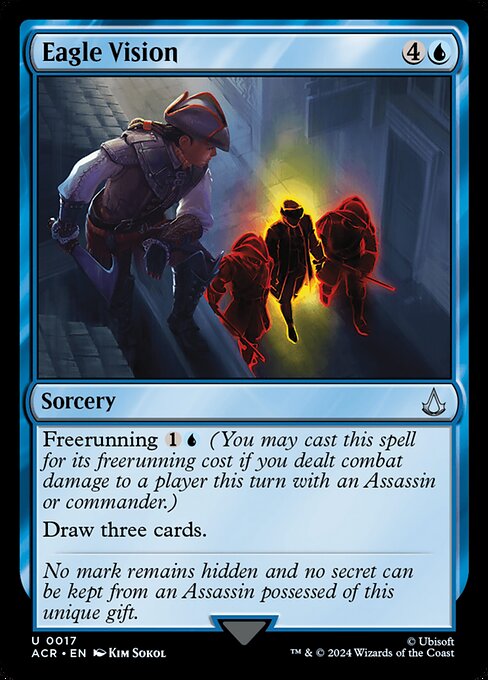
Eagle Vision is the standout efficiency card. Normally a '{4}{U}' Sorcery that draws three cards, its freerunning cost drops that to '{1}{U}'. Drawing three cards for two mana after an Assassin connects is exceptional value by any measure - that's the kind of discount that can break a game open.
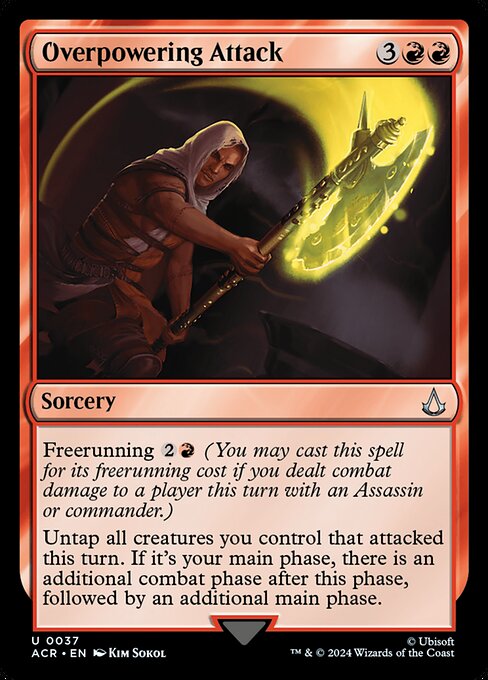
Overpowering Attack is the explosive one. Its base cost is '{3}{R}{R}', but freerunning brings it down to '{2}{R}'. What it does is give you an additional combat phase after this one, plus it untaps all your creatures that attacked this turn. If your Assassin connected in the first combat and you cast this for three mana going into a second combat with a full board, the game can end on the spot.
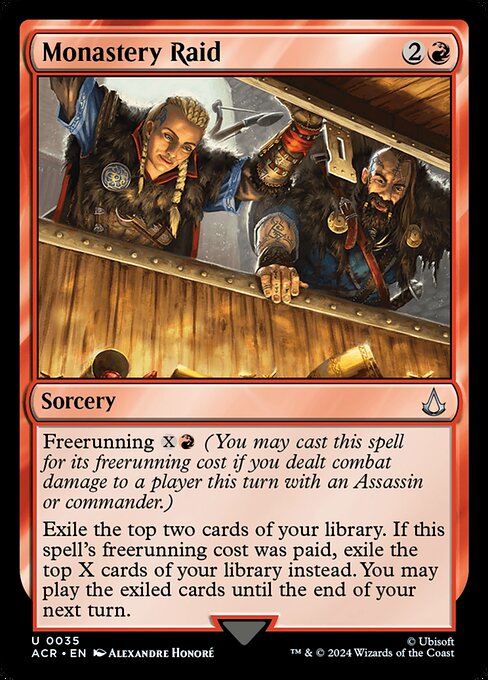
Monastery Raid scales interestingly with freerunning. Normally '{2}{R}', the freerunning cost is '{X}{R}' - where you choose X. Pay more and you exile more cards from the top of your library, all of which you can play until the end of your next turn. The ceiling here is high if you have the mana to invest after your Assassin connects.
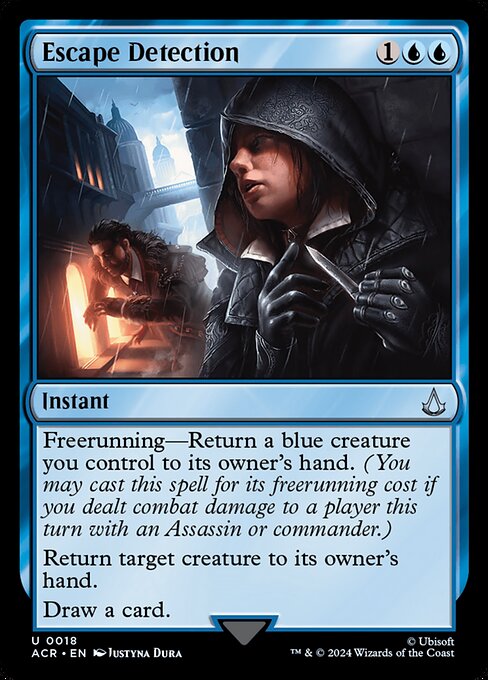
Escape Detection** is the utility piece. Its freerunning cost is unusual - instead of paying mana, you return a blue creature you control to its owner's hand. Normally '{1}{U}{U}', you can cast it for free by bouncing one of your own creatures, then draw a card and bounce a target creature. In the right spot, this is a three-for-one that costs no mana at all.
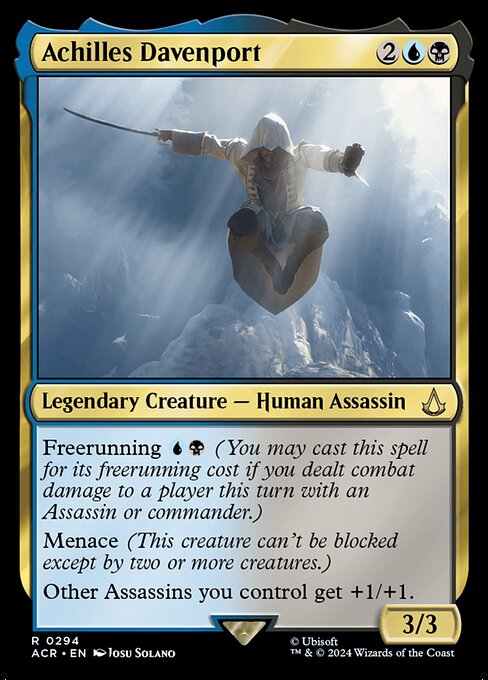
Ezio Auditore da Firenze deserves a mention as the mechanic's champion card. He grants freerunning to all Assassin spells you cast, not just cards that already have it. He's a build-around in the truest sense.
History and origins of Freerunning
Freerunning was introduced in Universes Beyond: Assassin's Creed (2024), Magic's crossover set with the Assassin's Creed video game franchise.
The mechanic is openly a variant of Prowl from Morningtide (2008). Prowl worked the same way - deal combat damage with a creature of the right type, unlock an alternative cost - but Prowl required the spell being cast to share a creature type with the creature that dealt damage. Since Assassin's Creed's set wasn't planning to lean on Kindred (the rules term for tribal) synergies, the designers removed that shared-type restriction. That made the mechanic cleaner and broader: any Assassin connecting enables any freerunning spell you hold.
The name itself is a direct reference to the video game. In Assassin's Creed, freerunning is the acrobatic parkour system the Brotherhood uses to navigate cities - climbing, leaping, and moving with fluid efficiency. Getting through to the target, then striking. The mechanical parallel is elegant.
The mechanic shows up across all five colours in the set, with a concentration in black. The addition of commanders as a secondary trigger was a deliberate design choice to make freerunning cards more broadly usable in Commander, which is where a significant portion of Magic players spend their time.
Format check: Because freerunning originated in a Universes Beyond product tied to a specific IP, it's currently unclear whether the mechanic will appear on future Magic cards outside that context. It may stay exclusive to the Assassin's Creed set, much like other IP-adjacent mechanics.